
Review · COLOMBIA
Santa Marta: Guided Walking Food Experience
Santa Marta’s best food stories are found on foot, one small bite at a time. This four-hour route links the public market, historic center, waterfront, and family-run food businesses, so you get both local flavor and a useful introduction to the city.
I like the chance to try foods you might not order alone, including arepa de huevo, cayeye, fruits, patacones, fresh juice, and coffee. I also like the human scale of the tour: you meet vendors, visit seven places, and hear about Santa Marta from guides such as Alberto, Alvaro, and Javier. The main drawback is the pace. Four hours of walking and eating is a lot, and one stop may require a longer walk than you expect.
Key points to know before booking
- Seven tasting stops: Expect a full afternoon of snacks, meals, fruit, coffee, juice, and traditional Caribbean dishes.
- A working market, not a staged food show: Santa Marta’s public market gives you a look at everyday food culture.
- Hands-on arepa making: You prepare an arepa de huevo at a local kiosk, making this more than a simple tasting route.
- Useful city orientation: The walk includes Catedral de Santa Marta, Bahia de Santa Marta, and Parque de Los Novios.
- Guides add local context: Alberto, Alvaro, and Javier have been singled out by name for their city knowledge, narration, and patience.
- Come hungry and ready to walk: The food adds up, and a four-hour route can feel long if you want only light snacks.
Why this food walk works in Santa Marta
Santa Marta can be easy to reduce to a jumping-off point for the coast and nearby parks. That misses the city’s character. Its food reflects the Caribbean side of Colombia, with tropical fruit, corn-based dishes, plantains, coffee, fresh juices, and local preparations that are not always obvious from a restaurant menu.
This tour gives you a practical way to sample that food while learning where you are. Instead of spending an afternoon choosing restaurants at random, you move through several parts of the city with a guide who can explain what you are eating and why it matters.
The route lasts four hours and includes seven venues. That is enough time to go beyond a single plate, but it also means this is not a quick snack crawl. You should think of it as a walking meal with history and city orientation included.
The exact guide may vary. Alberto is from Santa Marta and knows the city’s corners well. Alvaro has led visitors through the market, food stalls, and cultural sites. Javier is noted for his narration and patience. These details matter because the guide is central to the experience. The food is only half the point. The other half is having someone explain the city as you walk.
More Food Walking Tours in the world:
- Reykjavik Food Walk – Local Foodie Adventure in Iceland
★ 5.0 · 18,952 reviews - New Orleans Food Walking Tour of the French Quarter with Small-Group Option
★ 5.0 · 6,118 reviews - Naples: Street Food Walking Tour with Local Guide
★ 4.9 · 4,976 reviews
Starting at Santa Marta’s public market
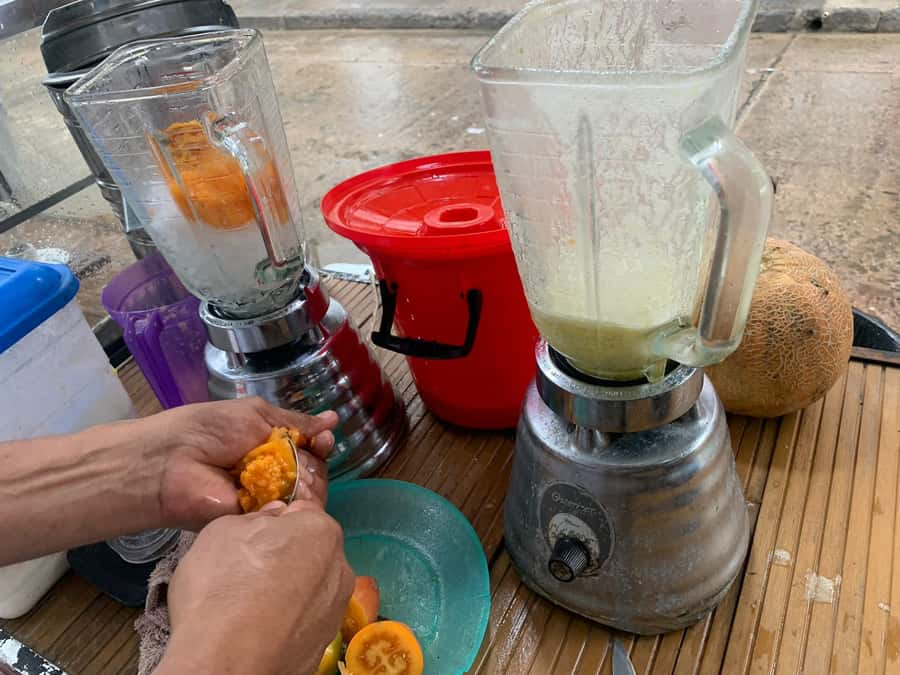
The public market is a strong opening because it gives context to the ingredients and dishes you will taste later. Here, you can expect a more ordinary side of Santa Marta, with food connected to daily life rather than a polished restaurant setting.
A guide can help you identify unfamiliar fruits and explain how local foods fit into Caribbean cooking. This is especially useful if you are not used to Colombian market vocabulary or if you tend to pass over dishes you do not recognize.
One of the strongest features of the route is the chance to try fruit you might not choose for yourself. That makes the market more than a place to look around. You are encouraged to taste, ask questions, and connect what you see with what appears at later stops.
Bring comfortable shoes. The market is part of a walking route, and the tour continues through the center rather than returning to a vehicle after each tasting. Sunscreen is also sensible, since Santa Marta is warm and much of the experience takes place outdoors.
Walking past Catedral de Santa Marta
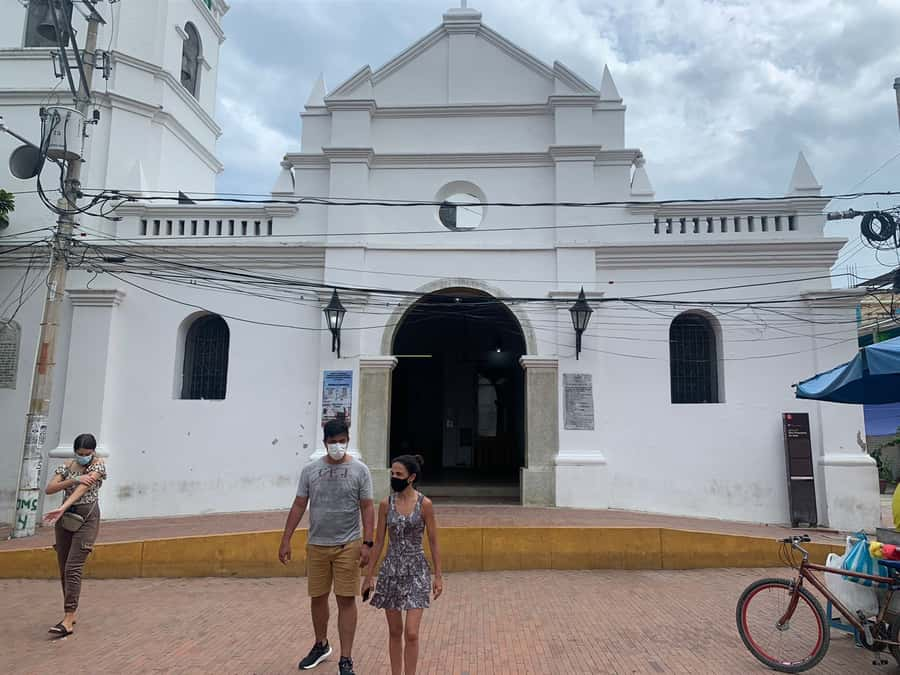
The stop at Catedral de Santa Marta adds a historical marker to the food route. You are not only moving from one snack to the next. You are also seeing important parts of the old city and learning how the city’s past connects with its present.
The cathedral gives the walk a change of rhythm. After the noise and activity of food shopping, a landmark like this creates a quieter moment for orientation and explanation. Your guide can help place the cathedral within the city’s story, rather than treating it as a quick photo stop.
A useful detail from the guide comments is the attention given to Simon Bolivar. One participant especially valued the historical storytelling around him. If you enjoy having names and events attached to the streets you walk through, this part may be as worthwhile as the food.
Do not expect a formal museum visit or a long architectural lecture. The attraction here is the way the landmark fits into a moving city walk. You see a major religious building, hear local context, and then continue into the streets where people live, work, and eat.
Bahia de Santa Marta and the city’s open-air character
The route also reaches Bahia de Santa Marta, giving you a view of the city from its waterfront side. This is a useful contrast with the market and inner streets. Santa Marta’s relationship with the Caribbean is not just a backdrop for photographs. It helps explain the seafood, fruit, drinks, and relaxed outdoor eating that shape the local food culture.
The bay section can also give you a break between tastings. Four hours of eating is surprisingly demanding, so changes in scenery help. You can walk, listen, and let the previous stop settle before the next dish arrives.
Keep your expectations realistic. The tour is not described as a boat trip or a dedicated coastal excursion. You are walking around Bahia de Santa Marta as part of a broader city and food route. If you want a beach day, this is not a substitute. If you want to understand how the waterfront fits into Santa Marta, it is a useful piece of the afternoon.
More sit-down food experiences around the world:
- Sorrento Farm and Food Experience including Olive Oil, Limoncello, Wine tasting
★ 5.0 · 2,524 reviews - Rome: Gourmet Food Tour with Dinner & Barolo Wine
★ 4.9 · 2,347 reviews - Porto Food & Wine Tasting Tour with Lunch or Dinner Option
★ 5.0 · 2,303 reviews - Lisbon: Baixa District Food Tour with Dinner and Drinks
★ 4.9 · 1,997 reviews
Parque de Los Novios and the old center
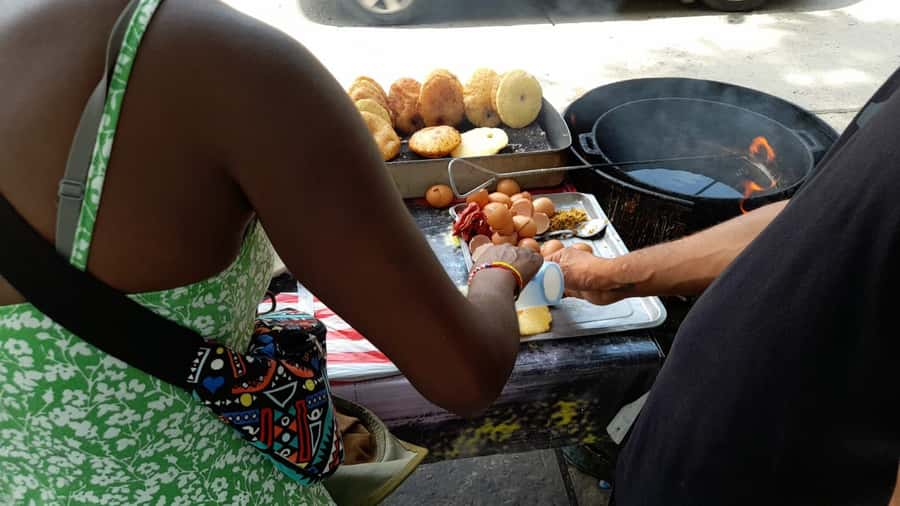
Parque de Los Novios is another key point on the route. It helps you see the social side of central Santa Marta, where public spaces connect restaurants, cafés, streets, and evening life.
A guide can make this stop more useful than a quick pass through a plaza. You can ask where locals eat, which foods are common, and how the center changes during the day. The park also helps you get your bearings if you are staying in or near the historic center.
I like this part of the route because it puts the food in a setting. A plate or snack makes more sense when you have seen the streets, market, waterfront, and public spaces around it. You are not simply collecting samples. You are building a picture of Santa Marta by moving through the places where the city’s daily routines happen.
The walk is not designed for someone who wants to sit in one location. You will spend much of the afternoon on your feet, with food stops breaking up the walking. If you have mobility concerns, the experience is listed as wheelchair accessible, but it is still sensible to ask the provider about the exact walking surfaces and distances before booking.
Making arepa de huevo at a local kiosk
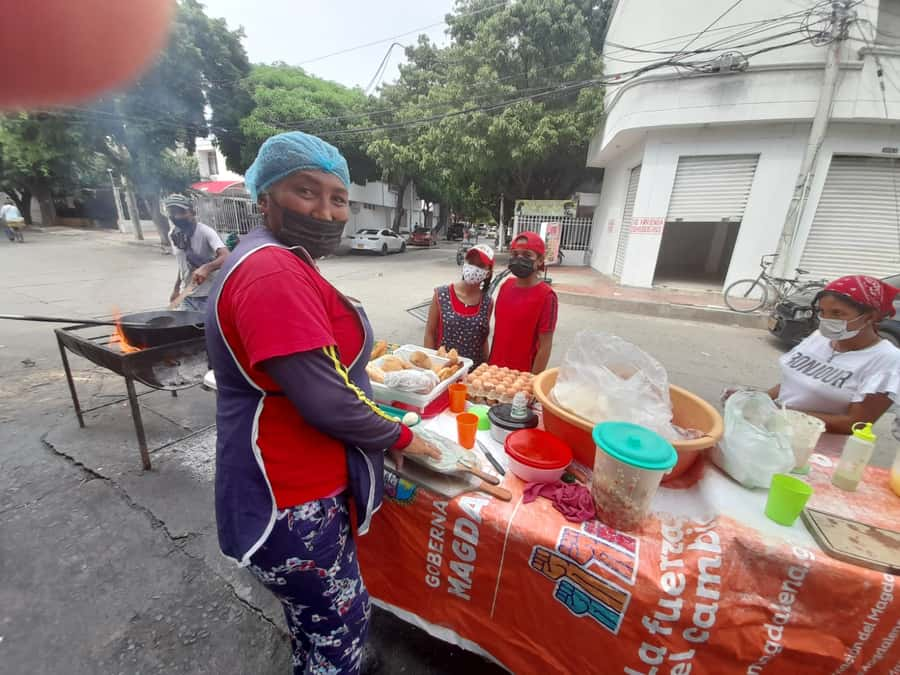
The arepa de huevo stop is one of the most memorable ideas in the program because you do not simply receive a finished dish. You make one at a local arepa kiosk.
Arepa de huevo combines a corn arepa with egg, and preparing it gives you a better sense of the work behind a familiar street food. It also creates a direct connection with a family-owned business. You see the food in the place where it is made and served, rather than only encountering it on a restaurant plate.
This hands-on part suits curious eaters who like to understand technique. It is also helpful if you plan to eat more Colombian food later in your trip. After making the dish, you are more likely to recognize it and feel comfortable ordering it again.
The setting may be simple. That is part of the point, but it also means you should not expect a cooking school with elaborate equipment or a long lesson. This is a local kiosk experience folded into a walking tour, not a full cooking class.
Cayeye, patacones, juice, and a very full afternoon
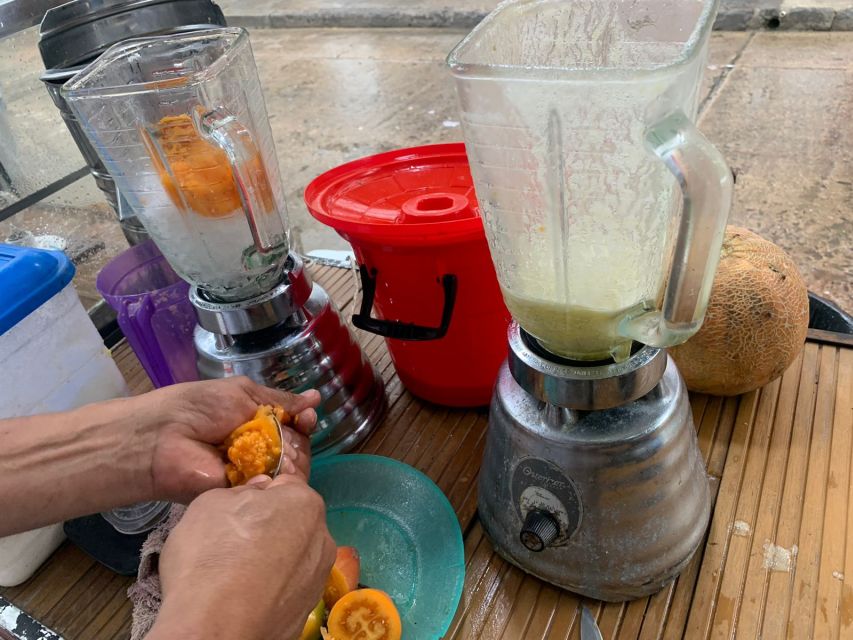
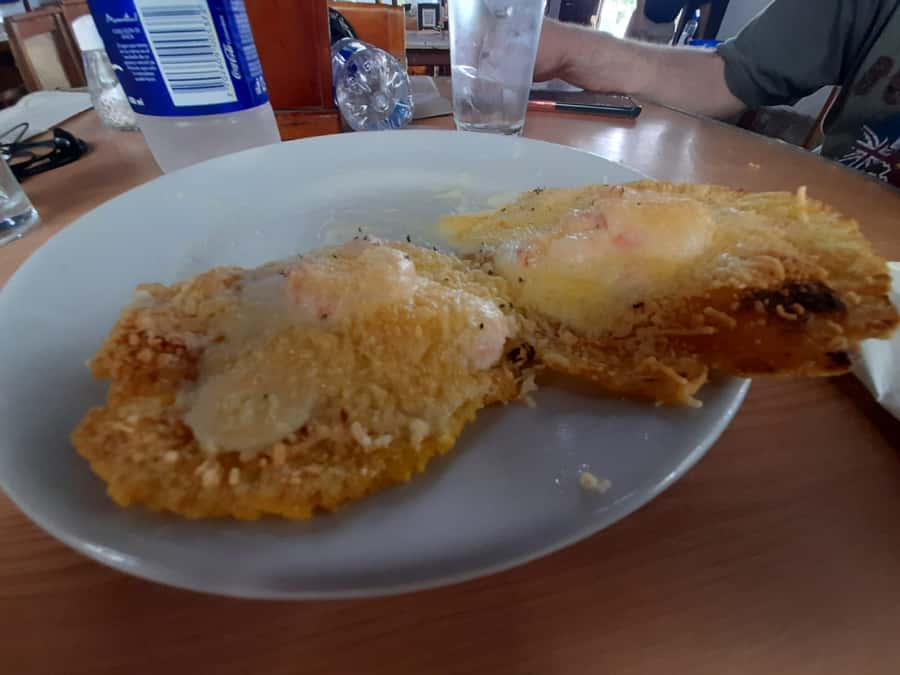
Cayeye is another important local dish included in the food route. It is made with green plantain, and trying it helps you move beyond the most familiar Colombian foods. The tour also includes patacones, which are flattened and fried plantains, along with other special dishes and snacks.
The food builds over the four hours. You may start with fruit, drinks, or small bites, then move toward more filling dishes. Fresh juice helps keep the tasting varied, while coffee and tea add another type of stop.
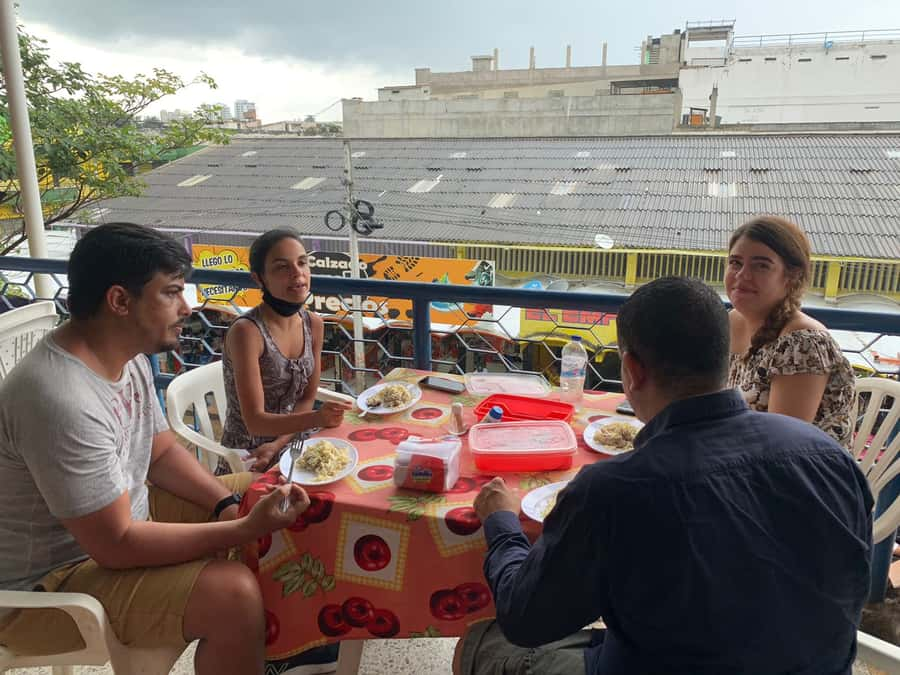
One useful warning: come hungry, but do not arrive expecting only tiny samples. The portions can add up. By the final meal, you may want to take food away rather than finish everything on the spot. That is not a criticism of the food. It is a reminder to pace yourself.
The route may also include a longer walk to reach the final patacone stop. If you enjoy walking through the city, this gives you more time to see Santa Marta between meals. If your priority is maximum food and minimum walking, the distance may feel less efficient.
The coffee stop with local baristas
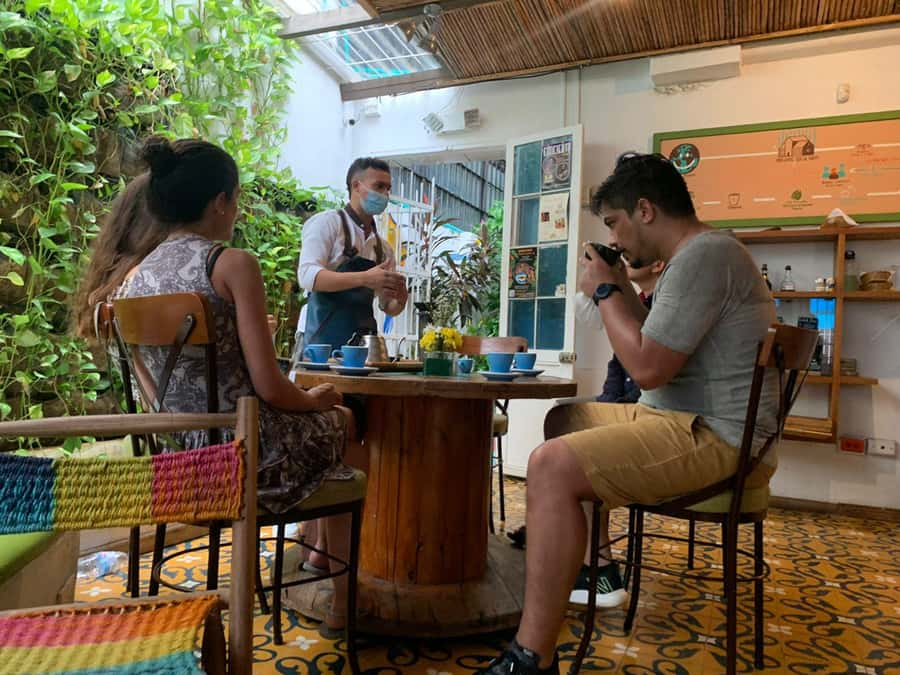
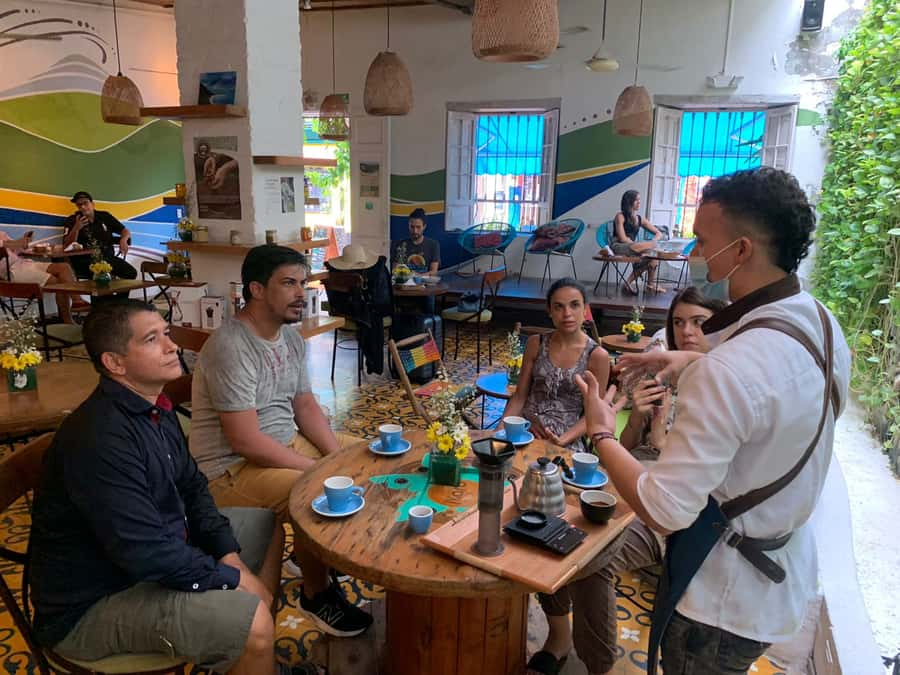
The coffee visit brings a different note to the tour. You meet professional baristas from the area and have coffee or tea in a dedicated coffee shop rather than treating caffeine as an afterthought.
This stop is valuable if you want to understand more of Colombia’s coffee culture while staying on the Caribbean coast. Coffee often gets associated with other parts of the country, but this experience lets you see how local specialists prepare and serve it in Santa Marta.
The inclusion of coffee also gives the afternoon a welcome pause. After market food, fruit, juice, and heavier dishes, a well-made drink can reset your palate. You may also choose tea, depending on what is available and your preference.
The description does not promise a full coffee farm visit or a technical tasting class. Expect a quality café stop with professional baristas as part of the wider route. That makes it a good addition, but not a reason by itself to book the entire tour if coffee is your only interest.
What the $54 price includes
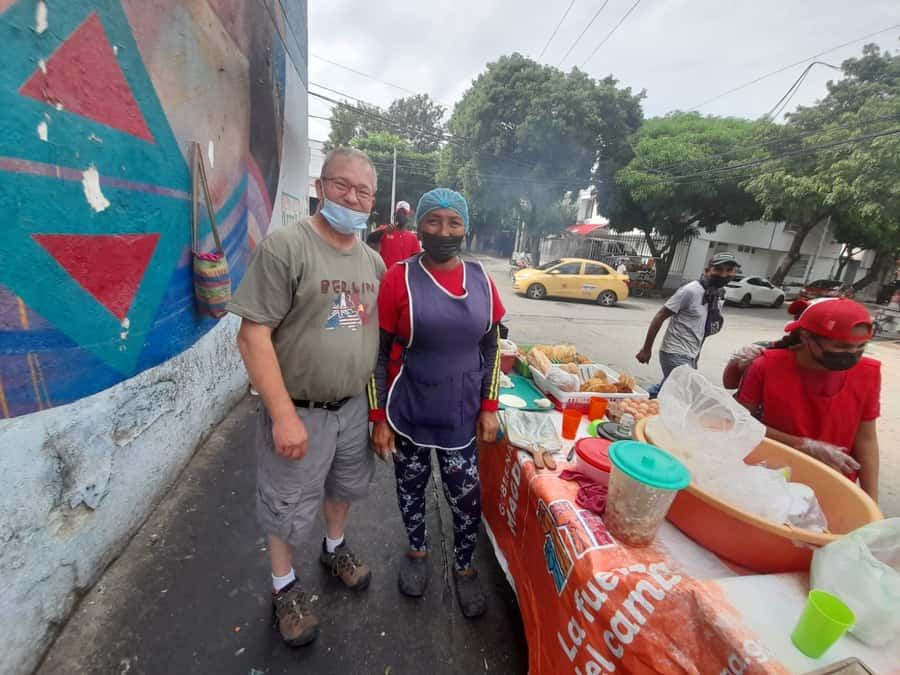
At $54 per person, the value depends on how much you would otherwise spend eating and exploring independently. The fee covers the guide, seven venues, snacks, coffee or tea, bottled water, fresh juice, and the food tastings along the way.
That is a fair structure for a four-hour experience. You are paying for several small meals, local introductions, city orientation, and the convenience of having someone choose and connect the stops. You also avoid the risk of ordering an unfamiliar dish without knowing what it is.
The value is strongest if you are happy to treat the tour as lunch and an afternoon activity combined. It is weaker if you eat very little, dislike walking, or prefer to choose every dish yourself.
Beer and other alcoholic drinks are not included. Transportation to the meeting point is also not included, so you need to make your own way there. Bottled water is listed among the inclusions, but you are still advised to bring water, especially in Santa Marta’s heat.
Dietary needs, weather, and practical comfort
Vegetarian and vegan preferences can be accommodated. Tell the provider in advance so the food stops can be handled properly. The tour includes several types of food, so clear communication matters more than simply hoping a suitable dish appears.
The experience runs rain or shine. Bring an umbrella if rain is possible, and wear shoes that can handle several hours of walking. Sunscreen is recommended, and comfortable clothing will make the market and city sections easier.
English and Spanish tours are available. If you want to ask detailed questions about ingredients, preparation, or local history, choose the language in which you can comfortably follow a fast-moving conversation.
The tour is wheelchair accessible according to the activity information. Since this is a walking route through a market, streets, plazas, and food businesses, ask about the specific meeting point and route conditions if you need detailed accessibility information.
Who should book this Santa Marta food tour?
I would choose this experience if you are new to Santa Marta and want a quick, food-centered orientation. It suits people who prefer local stalls and family-owned businesses to a formal restaurant meal.
It is also a good match for adventurous eaters. You will try fruits, dishes, drinks, and preparations that you may not think to order alone. The arepa-making stop adds a hands-on element, while the market and historic sites keep the afternoon from feeling like a sequence of restaurant visits.
Families and couples can enjoy it, provided everyone is comfortable walking and eating several times in one afternoon. It may be less suitable for anyone looking for a relaxed sit-down meal, a short activity, or a focused cooking class.
The guide can shape the quality of the experience. Alberto, Alvaro, and Javier have each been praised for different strengths, including local knowledge, storytelling, and patience. You cannot assume which guide you will receive, but the named examples show why asking questions and engaging with the guide should be part of your plan.
Should you book the four-hour food walk?
Book it if you want to taste your way through Santa Marta while learning about the city’s streets, landmarks, and people. The combination of seven venues, market food, arepa de huevo preparation, fresh juice, local coffee, and historic stops gives you more range than a standard restaurant meal.
Skip it if you want a short tasting, a quiet café afternoon, or complete control over what and when you eat. The route is generous, and the food can be filling. For most visitors, I would schedule it early in the trip. You will learn dishes to look for later, get familiar with the center, and have a guide to ask about other places to eat.
Free cancellation is available up to 24 hours before the start time, and you can reserve now and pay later. Those options make it easier to fit the tour into a changing itinerary, but the real decision is simple: if you like walking, local food, and trying something unfamiliar, the $54 price buys a substantial afternoon.
FAQ
How long does the Santa Marta food experience last?
The experience lasts four hours.
How many food venues does the tour visit?
The route includes stops at seven different venues.
Which languages are available?
The live tour is available in English and Spanish.
Is food included in the price?
Yes. Snacks, food tastings, fresh juice, coffee or tea, and bottled water are included.
Are alcoholic drinks included?
No. Beer and other alcoholic beverages are not included.
Can vegetarian or vegan preferences be accommodated?
Yes. The tour can accommodate vegetarian and vegan preferences.
Is the experience wheelchair accessible?
Yes. The activity is listed as wheelchair accessible.
What should I bring?
Bring comfortable shoes, sunscreen, and water. If rain is possible, bring an umbrella because the tour runs rain or shine.
Fresh off the menu around the world
- Taste of Chiang Mai: Michelin Guide & Street Food Tour★ 4.9 · 159 reviews
- Eat Porto Like a Local: The Ultimate Full-Meal Food Tour★ 5.0 · 97 reviews
- Vienna: The Ultimate Full Meal Austrian Food Tour★ 4.8 · 112 reviews
- Jerez: Traditional Tapas Tour★ 4.6 · 138 reviews
- Taste my Fribourg Self-Guided Food Tour★ 4.5 · 29 reviews
- Taste of Albania: Tirana Food Tour★ 5.0 · 26 reviews
- Taormina Pizza making class★ 4.8 · 140 reviews
- Taormina: Pizza Making Class with Lunch and Wine Tasting★ 4.8 · 145 reviews
Colombia Food Tours, compared.

Medellin: Comuna 13 Graffiti Tour, Cable Car & Street Food
Read our review →
Medellín: Comuna 13 True Story and Street Food Tour
Read our review →
Cartagena: Guided Street Food Tour with Tastings
Read our review →
Medellin: Street Food and Poblado Rooftop Tour with a Local
Read our review →
Medellin: Party Bus with DJ & Street Food Tastings
Read our review →
Medellin: tasting Street Food with Rooftops of El Poblado
Read our review →Browse the lists this tour appears in