
Review · PORT LOUIS
Port Louis: Street Food & City Tour
Port Louis is best understood one bite at a time. This three-hour walk moves from the Caudan Waterfront into the city’s food stalls, market lanes, Company Gardens, and Chinatown, pairing local dishes with the stories behind Mauritius’s Indian, Creole, Chinese, and French influences. I like the small group of up to eight and the generous spread of about seven tastings. I also like that guides such as Christopher, Rudy, Ash, and Adrien bring history, nature, and everyday city life into the walk.
The main catch is the nearly 4km on foot, often in sun or rain, with few long pauses. The tour is not suitable for vegans or people with gluten intolerance, and anyone with limited mobility should think carefully before booking. Come hungry: several people finished very full.
Key points at a glance
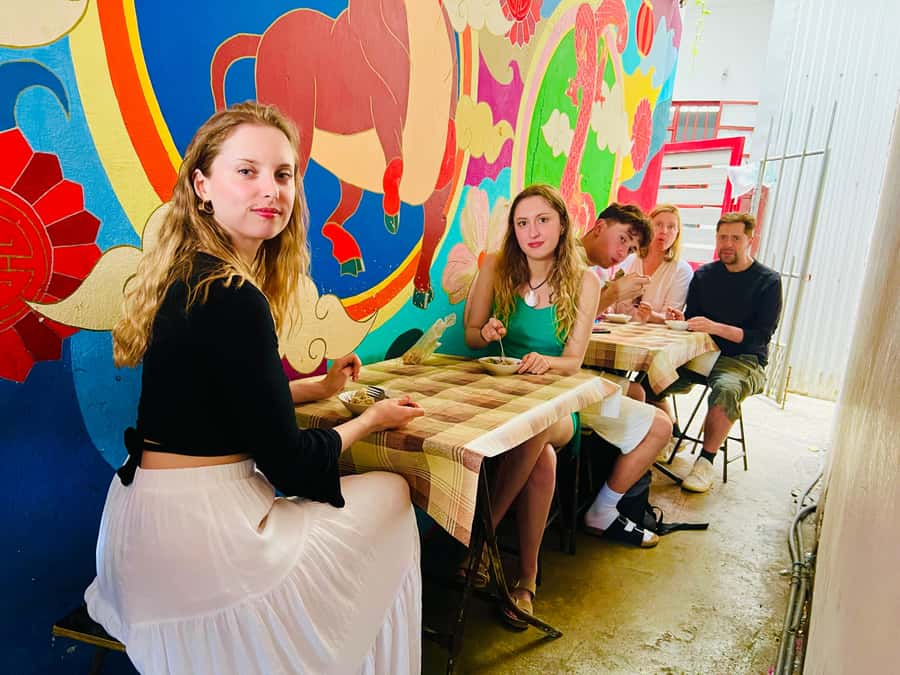
- Seven generous tastings: Try faratas with rougaille, Sino-Mauritian dumplings, noodles, pastries, and other local favorites.
- A real Port Louis route: See Company Gardens, Chinatown, the Central Market, old buildings, street art, and lesser-known corners.
- Small-group format: The maximum of eight people makes it easier to ask questions and keep pace in crowded streets.
- Food with context: Guides connect dishes to the island’s migration, trade, religion, and mixed cultural identity.
- Nearly 4km of walking: Comfortable shoes, sun protection, water, and a flexible attitude toward weather matter.
- Good value at $58: The price covers the guide, about seven tastings, and a bottle of water, but not hotel transport.
Starting at Caudan Waterfront and walking into Port Louis
Meet in front of the casino, opposite Café LUX at Caudan Waterfront. This is a practical starting point because Caudan gives you an easy landmark near the harbor, while the tour quickly leaves the polished waterfront behind and heads into the working center of Port Louis.
You are not being driven from one sight to another. You walk. That is important here. The city makes more sense when you see the change from modern waterfront buildings to old streets, shopfronts, food counters, market activity, and Chinatown. You also get a better feel for how compact the central area is.
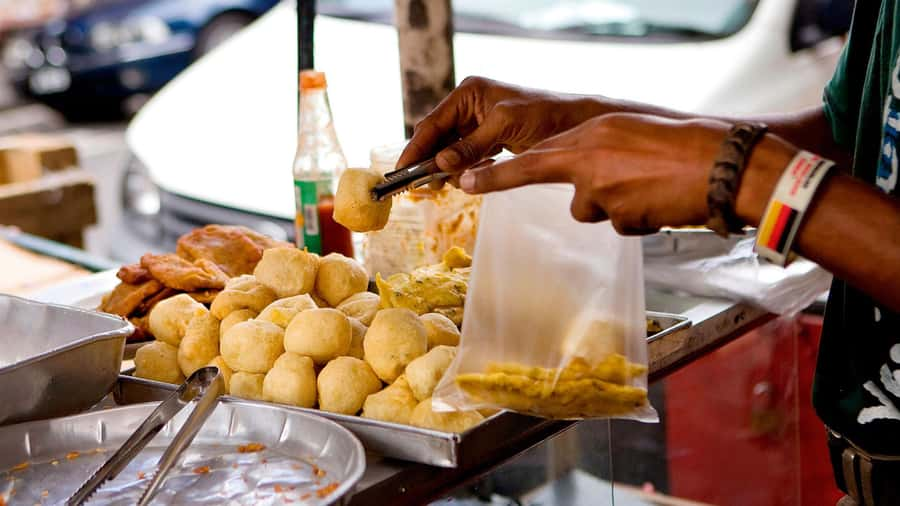
The group is capped at eight people. In a city where sidewalks and market lanes can become tight, that limit matters. Your guide can answer questions without shouting across a large crowd, and the group can gather around a food counter without taking over the street.
The tour runs in English or French. Guides vary by date, but names that appear in the tour team include Christopher, Rudy, Ash, Ashvin, Adrien, and Adrian. Christopher is especially noted for bringing in extra context about Mauritian nature, birdlife, and the island’s past, while Rudy is known for an energetic and humorous approach. Your exact guide is not guaranteed, but the experience depends heavily on the person leading it.
More Street Food Tours in the world:
- Dubai: Old Town, Creek, Museums, Souks, & Street Food Tour
★ 4.8 · 10,816 reviews - Ho Chi Minh City Street Food Tour & Sightseeing By Motorbike
★ 5.0 · 9,413 reviews - Medellin: Comuna 13 Graffiti Tour, Cable Car & Street Food
★ 4.8 · 9,046 reviews
Company Gardens and the city’s older stories
The first major stop is Les Jardins de la Compagnie, also called the Company Gardens. You have about 15 minutes for a photo stop beneath the large hanging banyan trees.
This is a useful early pause. The gardens offer shade and a quieter setting before the food stops begin in earnest. Your guide can explain how Port Louis grew as a port and how different communities shaped the island’s public life, trade, and cooking.
Do not expect a long formal garden tour. Fifteen minutes is enough to look around, hear the main background, and take photographs, but not enough for a detailed museum-style visit. The value is in seeing the trees and setting as part of the city walk, then carrying that context into the food stops that follow.
The route may also include the Natural History Museum, depending on how the walk is run that day. That detail appears in several descriptions of the experience, but it is not listed as a fixed stop in the timing. Treat it as a possible extra, not a promise.
Faratas, rougaille, and the first local food stops
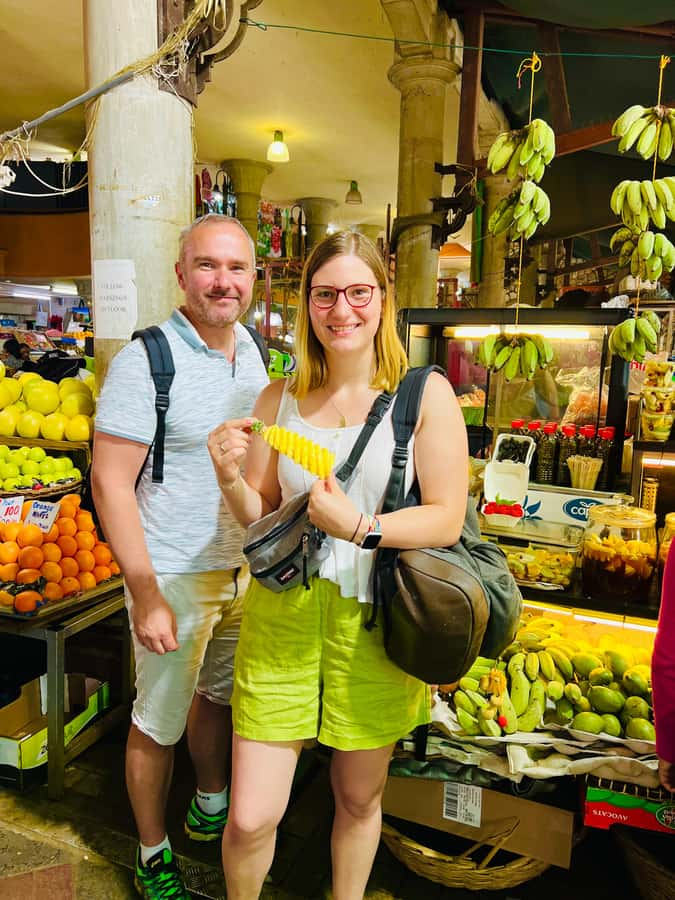
The food section begins at small local restaurants and food counters rather than a single sit-down meal. The route includes roughly seven tastings, with about 15 minutes allowed at each of the first three food stops.
One key pairing is an Indo-Mauritian farata with Creole rougaille. Farata is a fried dough bread, while rougaille is a tomato-based dish often served as a sauce or accompaniment. Together, they show how Mauritian food is not divided into neat boxes. Indian techniques and ingredients meet Creole cooking in a practical, everyday dish.
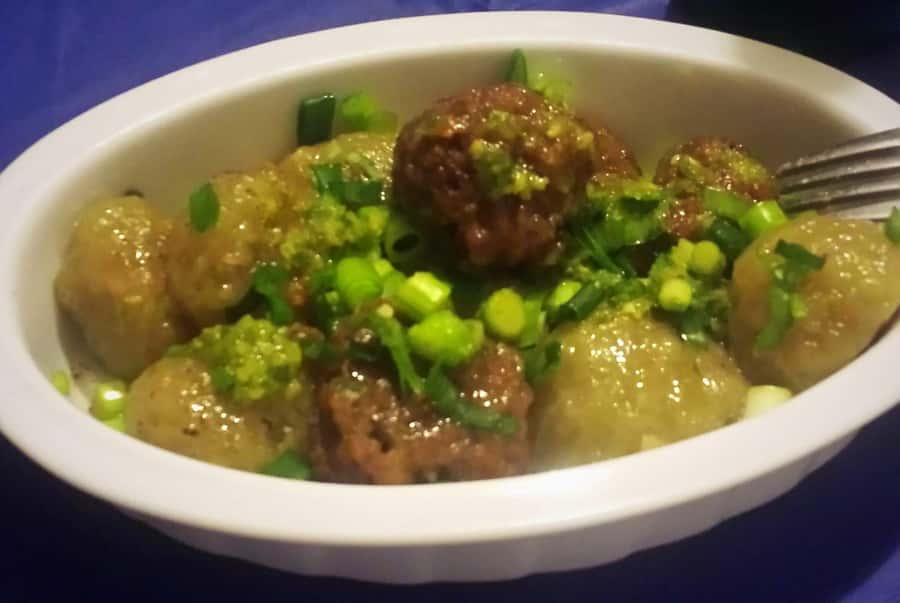
You may also try Sino-Mauritian boulettes, or dumplings, along with noodles and Franco-Mauritian pastries. The point is not simply to sample snacks. Each stop gives your guide a way to explain how people arrived on Mauritius, built communities, traded, worked, and kept familiar foods alive.
The portions can be surprisingly large for a tasting walk. Several people found they had eaten far more than expected by the finish, so I would skip a full breakfast. This is not a token sample at each stop. Depending on the day and the group, you may share portions or receive individual servings.
That variety is one of the tour’s strongest features. You are not eating the same kind of pastry or fried snack seven times. Instead, the food moves between Indian, Creole, Chinese, and French influences. Some dishes may suit you more than others, but the range gives you a useful first map of Mauritian cooking.
The secret stop and Port Louis’s overlooked corners
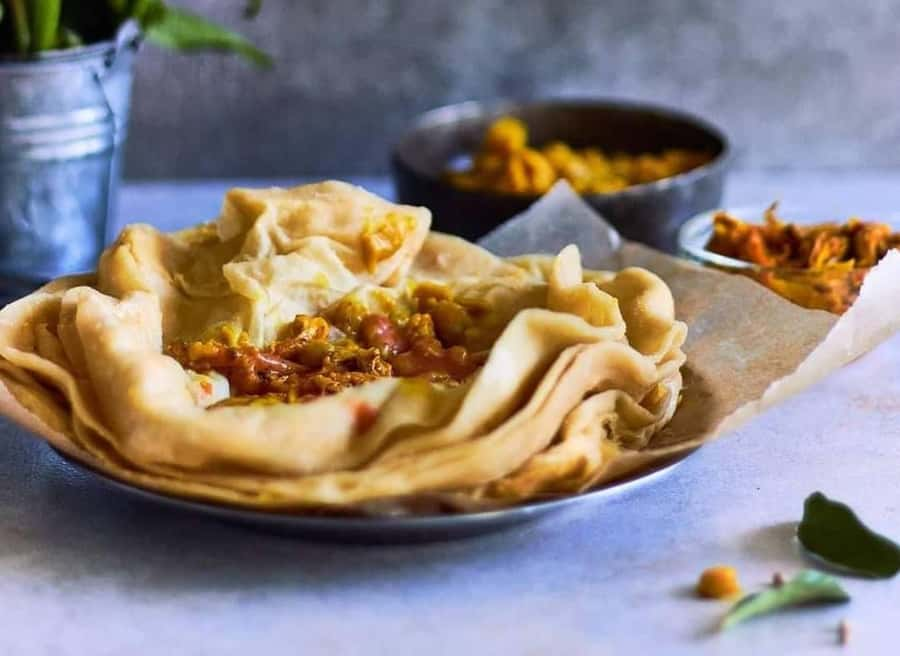
After the first food stops, the walk includes a 10-minute photo stop at a secret location. The exact place is not specified in advance, which is part of the appeal. It may be a small street, an unusual view, a piece of street art, or a corner that is easy to miss without someone pointing it out.
Keep your expectations sensible. This is not a major attraction with a long visit. It is a short chance to notice the city beyond its headline sights. The guide’s local knowledge matters here because the interest comes from the setting and the story attached to it.
This stretch also gives your stomach a little time to catch up. The route places walking and short explanations between tastings, so the tour does not feel like one long meal. Still, the pace stays active, and one person’s ideal rhythm may feel too quick for another.
More food tours around the world:
- Reykjavik Food Walk – Local Foodie Adventure in Iceland
★ 5.0 · 18,952 reviews - Madrid: Live Flamenco Show with Food and Drinks Options
★ 4.5 · 9,901 reviews - From Split: Krka Waterfalls, Food & Wine Tasting Tour
★ 5.0 · 9,326 reviews - Montserrat Half-Day Tour with Tapas and Gourmet Wines
★ 5.0 · 7,359 reviews
Chinatown and the food traditions it protects
The tour then reaches Chinatown, with about 10 minutes for a photo stop and another food tasting. Chinatown is valuable not only as a place to eat but as a visible reminder of the Chinese-Mauritian community and its role in Port Louis.
Your guide can explain how the area has worked to preserve its culture while remaining part of a changing capital. The food stop here may include dumplings, noodles, or another Sino-Mauritian specialty. These are the kinds of dishes you might walk past without knowing what to order, which is where a guide earns their keep.
This is also a good place to ask questions. The tour’s best guides do not simply name a dish and move on. They explain ingredients, connections between communities, and why certain foods belong to street stalls rather than hotel menus. Christopher, Rudy, and Adrien are among the guides associated with the tour, and their style is conversational rather than formal.
If you are curious about food but cautious about unfamiliar dishes, this format works well. You can try a small portion first, ask what it contains, and learn how locals eat it. The limitation is dietary choice. The tour does not cater to vegan or gluten-free diets, and faratas, pastries, dumplings, and other foods may include wheat, meat, dairy, or other ingredients you need to avoid.
The Central Market: color, noise, and daily life
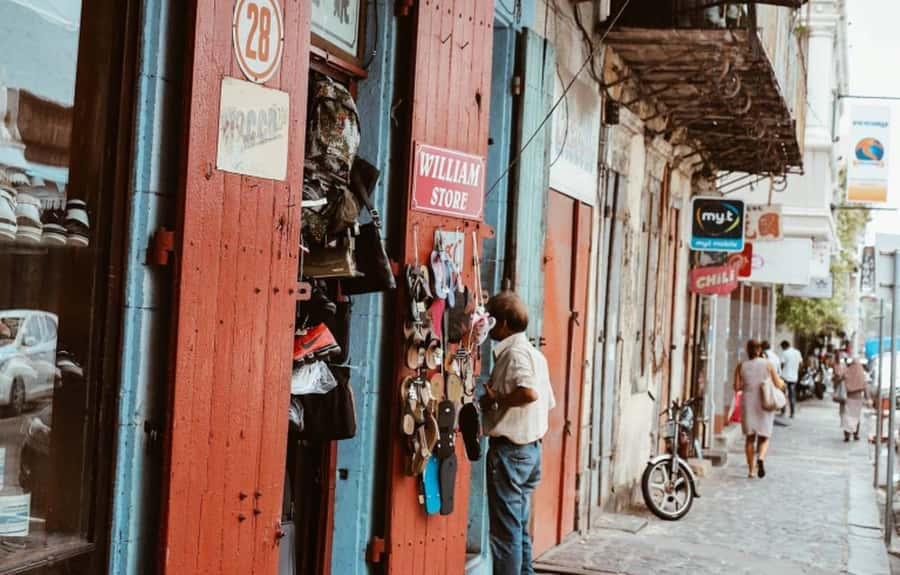
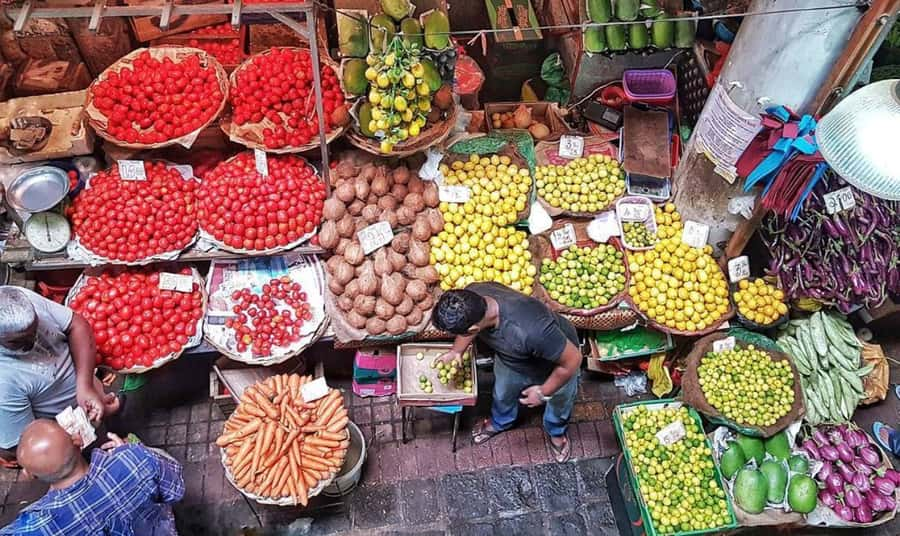
The Central Market receives about 25 minutes, making it the longest scheduled stop. That is appropriate. The market is where the food tour broadens into a portrait of daily Port Louis.
Expect a busy, colorful setting filled with voices, produce, prepared food, and local shopping. Your guide helps you read the place rather than simply pass through it. You can learn what people buy, how the market fits into the city, and how ingredients connect with the dishes you have already tasted.
This stop is less polished than the waterfront and more useful for understanding ordinary city life. Watch your footing, keep your belongings secure, and stay close enough to hear the guide. The market can be crowded, and a group of eight needs to regroup from time to time.
The 25-minute visit is long enough to take in the main atmosphere, but not long enough for a slow, independent market shop. If you want to browse every stall or buy ingredients, you may need to return on your own. That is not a flaw in the tour. It is simply the trade-off for fitting food, history, Chinatown, and several central streets into three hours.
How the walking pace affects the experience
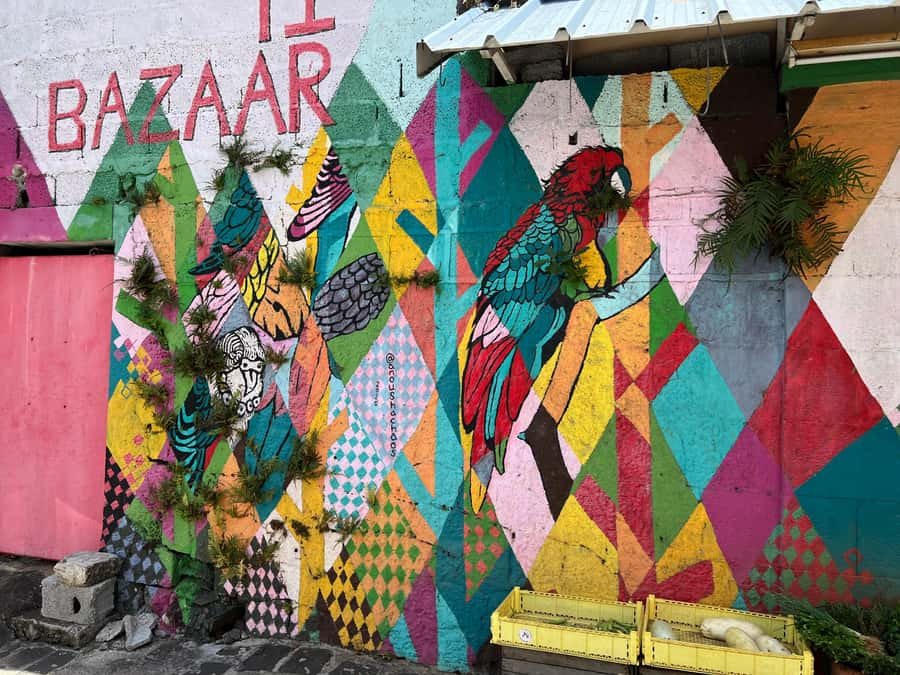
The route covers just under 4km. On paper, that is manageable for most active visitors, but the tropical heat, uneven streets, stops at food counters, and time spent standing can make it feel longer.
Wear comfortable shoes and light clothes. A sun hat, sunscreen, and an umbrella are sensible. Rain gear is also worth carrying because the tour normally runs in poor weather unless authorities issue a specific warning. The bottle of water included in the price helps, but you may want more water for a hot day.
The tour is described as wheelchair accessible, yet it is not recommended for people with limited mobility. Those two points are not contradictory. The activity may be possible, but the distance, busy streets, standing, and changing surfaces could make it tiring or awkward.
There is no hotel pickup or drop-off. You arrange your own way to Caudan Waterfront and return from there. If you are staying elsewhere in Mauritius, allow time to reach Port Louis before the meeting time.
Is $58 fair for this Port Louis food tour?
At $58 per person, the price is reasonable if you want a guided introduction rather than a simple meal. You receive about seven tastings, a bottle of water, a three-hour city walk, and a guide who ties the dishes to Mauritian culture and history.
The value is strongest for first-time visitors to Port Louis. Without a guide, you could see the waterfront, market, gardens, and Chinatown, but you might miss the small food counters or hesitate over unfamiliar menus. You are also paying for the explanations and route planning, not just the food.
It is less attractive if you mainly want a relaxed lunch, a private tour, or a long sit-down meal. The group is small but not private, and the route keeps moving. You also need to arrange your own transport and accept that not every tasting will become a personal favorite.
For many people, the amount of food alone makes the price feel fair. I would think of it as a guided meal spread across Port Louis, with sightseeing included.
Who should book this experience?
This tour suits curious eaters, first-time visitors, couples, families with older children, and anyone who wants an efficient introduction to Port Louis. It is especially useful if you would like to understand why Mauritian food blends Indian, Chinese, Creole, and French traditions.
It also works well at the start of a Mauritius trip. You can learn what dishes to look for later, ask your guide for local tips, and get your bearings in the capital without spending a full day there.
You should think twice if you dislike walking in heat, need long seated breaks, or have strict dietary restrictions. Vegans and people with gluten intolerance should not book this tour. People with limited mobility may find the route difficult even though the activity is described as wheelchair accessible.
Book with an empty stomach, but not without breakfast if you need food for medical reasons. The tastings are plentiful, and the schedule leaves little room for a separate lunch.
Final verdict: a strong first taste of Port Louis
I would book this tour if I wanted one compact experience that combines local food, city sights, and useful context. The strongest part is the link between what you eat and the people who shaped Mauritius. Faratas, rougaille, dumplings, noodles, and pastries become more than snacks when someone explains how they fit into the island’s story.
The practical drawbacks are clear: nearly 4km of walking, exposure to weather, no hotel transport, and limited dietary flexibility. If those suit your needs, $58 buys a generous and well-organized introduction to the capital. Come hungry, wear sensible shoes, and let the food stalls lead you into Port Louis.
FAQ
How long does the Port Louis street food tour last?
The tour lasts three hours.
How much walking is involved?
The route covers just under 4km on foot.
Where does the tour begin?
It begins in front of the casino, opposite Café LUX at Caudan Waterfront in Port Louis.
Where does the tour finish?
The tour returns to the Taste Buddies Port Louis Street Food Tour meeting point.
How many food tastings are included?
The experience includes approximately seven food tastings.
What types of food might I try?
The tastings can include Indo-Mauritian faratas with Creole rougaille, Sino-Mauritian boulettes and noodles, and Franco-Mauritian pastries.
Is bottled water included?
Yes. One bottle of water is included.
Is the tour offered in English?
Yes. The live guide speaks English or French.
Is the tour suitable for vegans or people with gluten intolerance?
No. The tour does not cater to vegan or gluten-free diets and is not suitable for people with gluten intolerance.
What should I bring?
Bring comfortable shoes, a sun hat, sunscreen, an umbrella, rain gear, and comfortable clothes.
Fresh off the menu around the world
- Taste of Chiang Mai: Michelin Guide & Street Food Tour★ 4.9 · 159 reviews
- Eat Porto Like a Local: The Ultimate Full-Meal Food Tour★ 5.0 · 97 reviews
- Vienna: The Ultimate Full Meal Austrian Food Tour★ 4.8 · 112 reviews
- Jerez: Traditional Tapas Tour★ 4.6 · 138 reviews
- Taste my Fribourg Self-Guided Food Tour★ 4.5 · 29 reviews
- Taste of Albania: Tirana Food Tour★ 5.0 · 26 reviews
- Taormina: Pizza Making Class with Lunch and Wine Tasting★ 4.8 · 145 reviews
- Taormina: Shared or Private Food & Wine Walking Tour★ 4.6 · 167 reviews
Street Food Tours, compared.
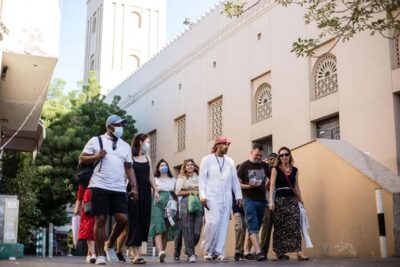
Dubai: Old Town, Creek, Museums, Souks, & Street Food Tour
Read our review →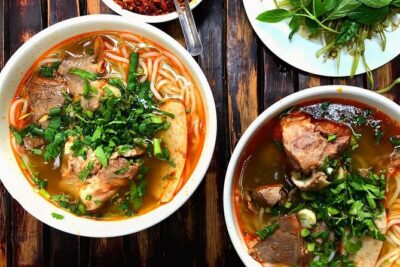
Ho Chi Minh City Street Food Tour & Sightseeing By Motorbike
Read our review →
Medellin: Comuna 13 Graffiti Tour, Cable Car & Street Food
Read our review →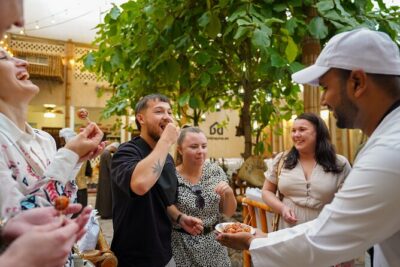
Dubai: Old Town, Souks, Street Food, Guided Tour & Abra Ride
Read our review →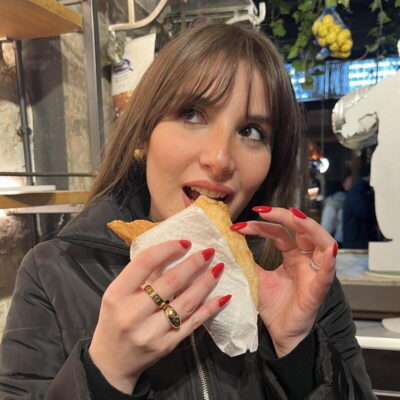
Naples: Street Food Walking Tour with Local Guide
Read our review →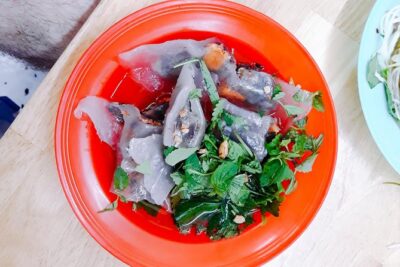
Small Group Hanoi Street Food Tour with a Real Foodie
Read our review →
Saigon By Night and Street Food By Motorbike | Opt: Ao Dai Riders
Read our review →Browse the lists this tour appears in