Review · BANGKOK
Bangkok: Street Food Tasting Tour at Night
Bangkok’s Chinatown is at its most interesting after dark, when Yaowarat’s narrow lanes fill with food carts, small kitchens, and locals stopping for a quick meal. This 150-minute walk takes you to six tasting stops for Thai-Chinese dishes, sweets, dumplings, and a featured homemade menu with a secret ingredient. I like the mix of food and neighborhood stories, and I like that you travel by MRT straight into the heart of Chinatown instead of losing time in traffic.
The main drawback is dietary flexibility. This tour is not a good fit for vegans, vegetarians, people with gluten intolerance, or anyone allergic to shrimp, peanuts, pork, or dairy. You should also note that the itinerary describes the Chinatown portion as three hours, while the activity duration is listed as 150 minutes, so allow some flexibility.
Key points to know before booking
- Six planned tasting stops: You sample several Thai-Chinese dishes rather than sitting down for one large meal.
- Sophie has received special praise: Her food explanations, Bangkok stories, and personal attention have been highlighted by several people who booked the tour.
- Wat Mangkon MRT is the smart meeting point: Exit 3 is easy to reach, and avoiding a taxi helps you bypass Chinatown traffic.
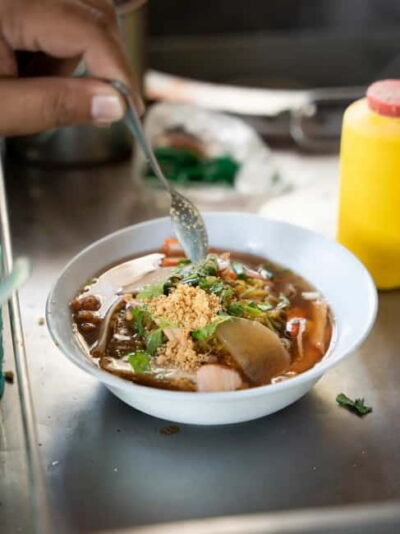
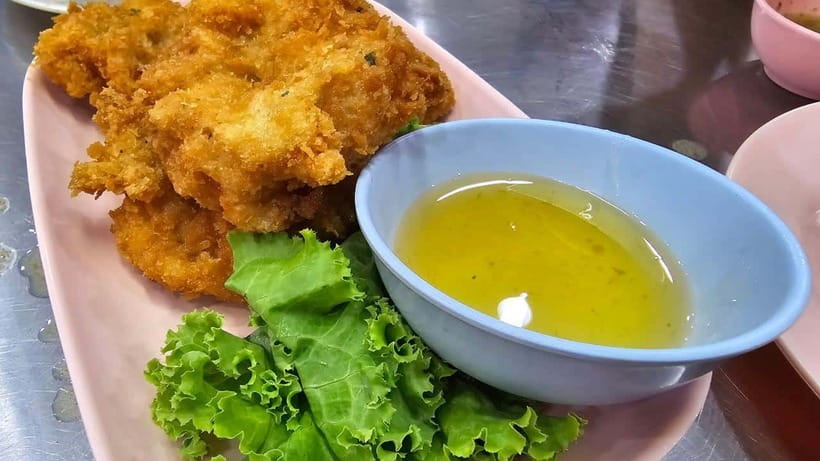
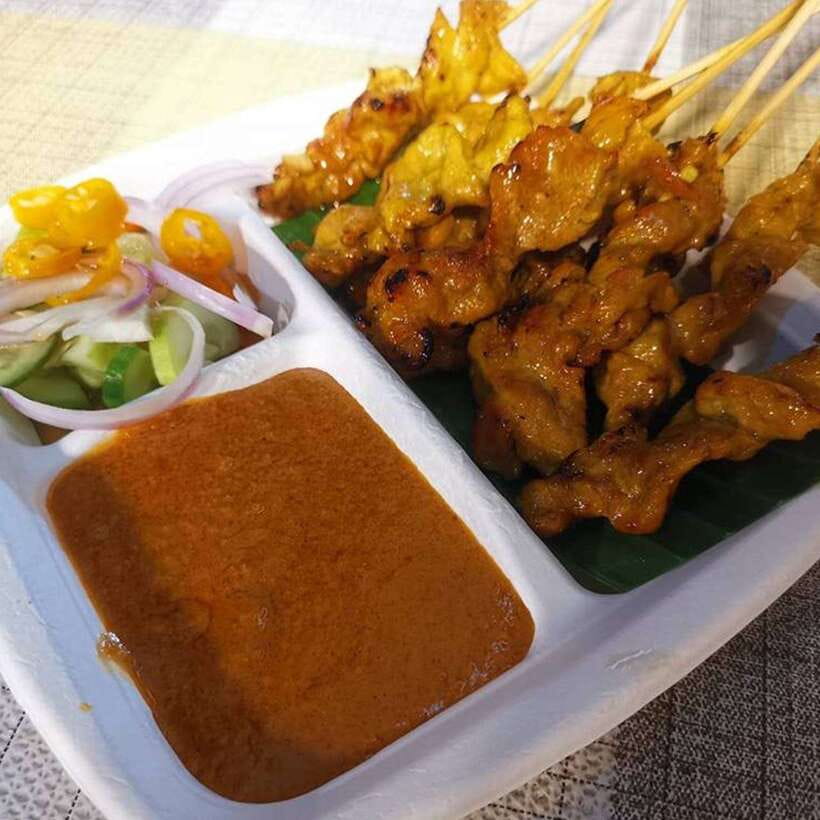
- The food is local and varied: Expect savory dumplings, pastries, popular neighborhood dishes, and a homemade item with a secret ingredient.
- The exact menu can change: Public holidays, seasonal closures, and ingredient availability may affect what you eat.
- This is a walking tour in crowded streets: Comfortable shoes matter, and the route is not suitable for wheelchair users or people with mobility concerns.
Starting at Wat Mangkon and entering Chinatown
The tour begins outside Wat Mangkon MRT station at Exit 3, at 449 Charoen Krung Road. This is one of the most useful details in the whole plan. Bangkok traffic around Chinatown can be slow, especially at night, so the MRT is the sensible way to arrive. If you take a taxi, give yourself extra time and expect delays close to Yaowarat Road.
Your guide leads the group from the station into the Chinatown food zone. This opening walk matters because it helps you see the area as a neighborhood, not just a string of food stalls. The route passes through narrow lanes and busy streets, with the guide explaining how Thai and Chinese influences shape the menus.
The tour is in English. Sophie, also spelled Sofie in one account, has been praised for explaining both the food and the story of Bangkok. Several bookings were private or nearly private, including tours for only two people, but group size is not specified as a standard feature. Do not book expecting a private guide unless your reservation confirms it.
Wear shoes you can walk in for more than two hours. The route is not suitable for wheelchair users, people with mobility impairments, or people with claustrophobia. Narrow lanes and tight food-market spaces are part of the setting, so this is not the right choice if you need wide, quiet paths.
More Evening Food Tours in Thailand
- Bangkok Tuk-Tuk Tour by Night with Chinatown Street Food Meal
★ 5.0 · 635 reviews - Bangkok by Night Food Tour with 10+ Tastings in Chinatown
★ 5.0 · 545 reviews - Bangkok: E-Scooter Night Tour with Local Street Food
★ 4.8 · 488 reviews
Six stops built around Thai-Chinese favorites
The central promise is six different food stops. That makes the tour more useful than a single restaurant meal because you can compare flavors, cooking styles, and small portions across the neighborhood. One account described seven or eight food stations, so the exact number may vary. Treat six as the reliable baseline and any extra tasting as a bonus, not a guarantee.
The stops are not named in advance, and the supplied details do not identify every dish. You can expect a mix of local best sellers, Thai-Chinese-style food, sweet pastries, dumplings, and a featured homemade menu. That uncertainty is normal for a street-food walk. Vendors may close, ingredients may change, and seasonal menus may disappear.
Here is what each part of the tasting sequence offers:
- The first stop helps set the tone: You begin with a local dish selected for the group, rather than wandering around and guessing what to order. This is useful if Chinatown is your first food stop in Bangkok.
- The savory stops show Thai-Chinese cooking: Dumplings and other popular dishes give you a taste of the neighborhood’s Chinese roots alongside Thai flavors. Your guide explains what you are eating and how it fits into local food habits.
- The best-selling dishes offer a practical introduction: If you have limited time in Bangkok, tasting popular items gives you a quick sample of what people come to this part of town to eat.
- The homemade menu adds a personal touch: One highlighted dish includes a secret ingredient. The details are not given ahead of time, so you will need to try it before you know what makes it different.
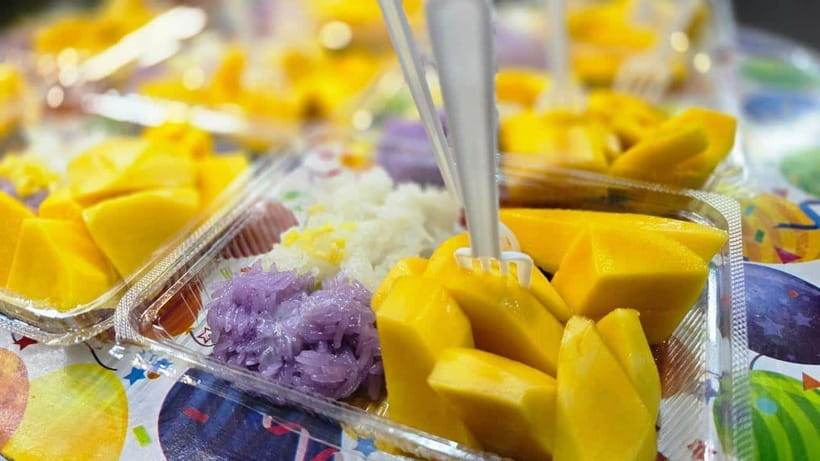
- The sweet stop changes the pace: Pastries and other desserts keep the tour from becoming a long run of salty food. They also show the Chinese bakery and snack influence found in Chinatown.
- The final tastings help complete the picture: By the end, you should have tried a broad set of flavors rather than one repeated type of dish.
Do not expect six full meals. This is a tasting walk, and the value comes from variety, guidance, and access to places you might not choose on your own. If you arrive hungry, eat lightly beforehand rather than starting completely empty. The tour includes food at six places, but it does not promise a large dinner portion at each one.
How the Thai-Chinese food focus adds value
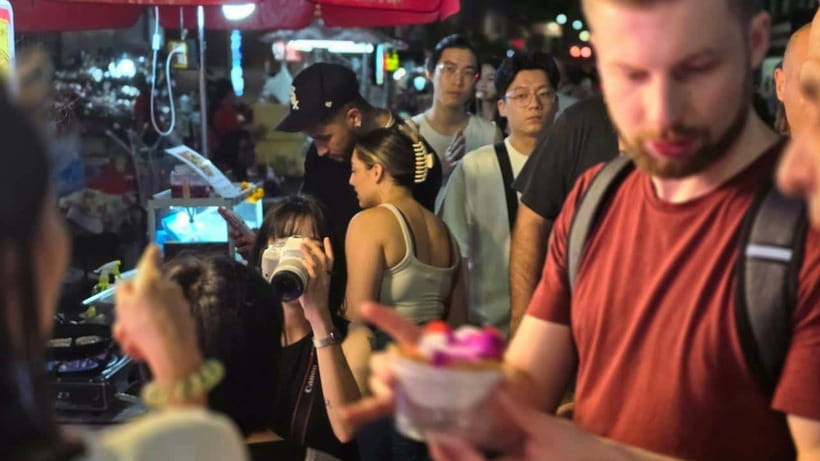
Bangkok’s Chinatown is not simply a place to find generic Thai food. Its menus reflect Chinese migration, family cooking, snack traditions, and Thai adaptations. That is why the Thai-Chinese angle is useful. You are not just checking off dishes. You are learning why certain foods belong in this neighborhood.
Your guide explains the history and culture connected with the dishes. The details will depend on the guide and the evening’s stops, but the tour is designed to connect food with place. A dumpling, pastry, or noodle dish becomes more memorable when you understand its local role and why it is popular here.
I especially like this format for a first night in Bangkok. You get a quick introduction to the neighborhood and a list of foods to seek out later. The guide can also help you understand what you are tasting, which is useful when menus are not written in English.
The food is intended for a broad local palate, not for travelers seeking a carefully controlled tasting menu. Flavors may be unfamiliar, and the tour does not promise substitutions for allergies or special diets. The company specifically warns against booking if you have allergies to shrimp, peanuts, pork, or dairy, or if you need gluten-free, vegan, or vegetarian food.
Walking through Yaowarat after dark
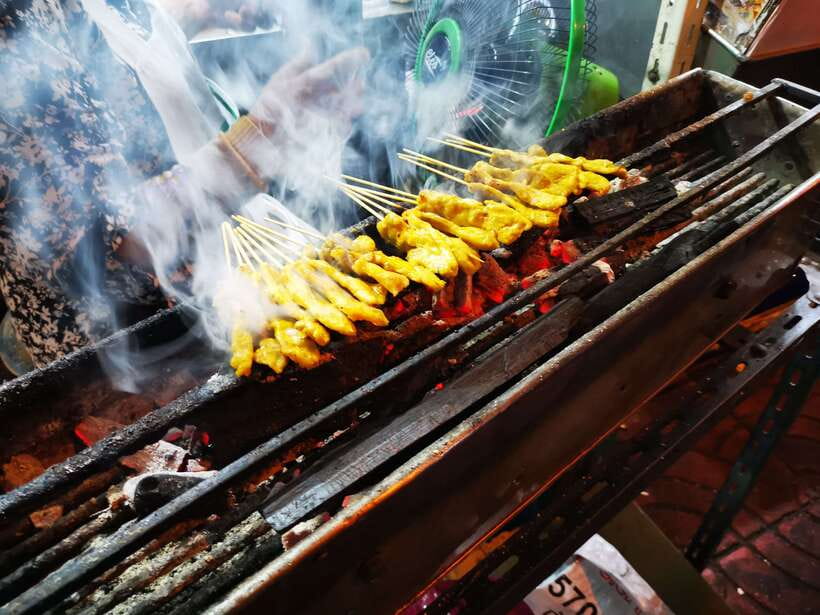
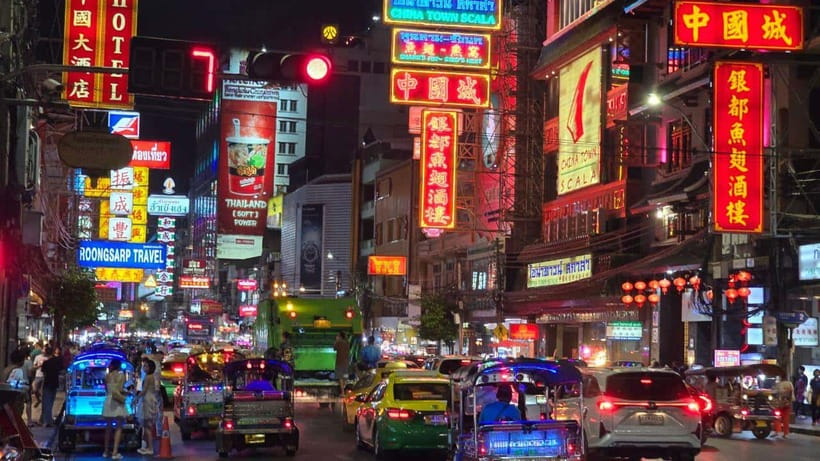
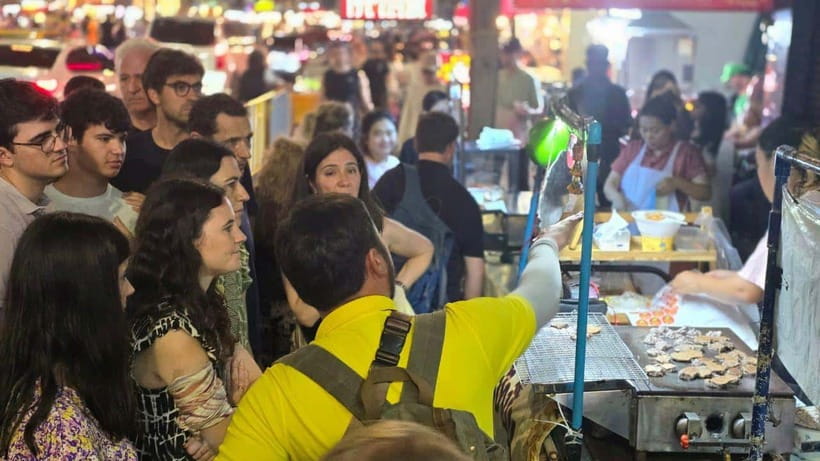
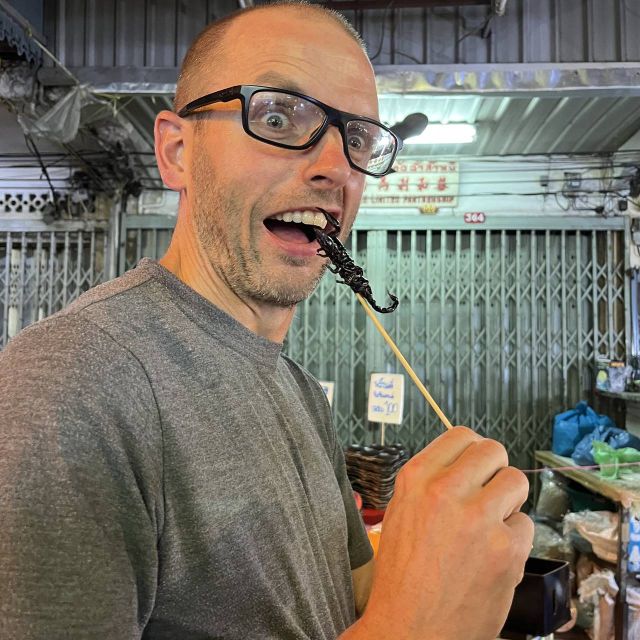
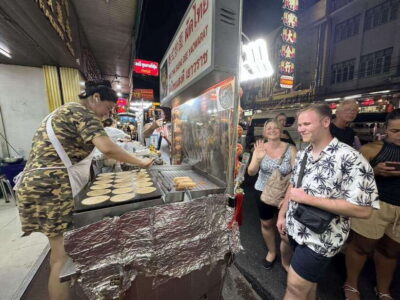
The streets are a major part of the experience. You move through Chinatown rather than remaining in one restaurant, so you see food vendors, narrow alleys, and the nighttime rhythm of Yaowarat. The setting can feel crowded and close, especially in popular market areas. That is part of the appeal, but it also requires patience.
Do not treat this as a relaxed sightseeing walk with long stops for photographs. The main purpose is food, and the guide needs to keep the group moving between tastings. You may have short pauses to hear about the neighborhood, but the supplied details do not promise a dedicated sightseeing itinerary beyond Chinatown itself.
The tour ends at 491-493 Yaowarat Road in Samphanthawong. That is convenient if you want to continue eating or exploring after the guide says goodbye. It also means you finish in the middle of the action rather than returning to the starting station.
Electronic devices are listed among the items not allowed. That is unusual for a modern food tour, so clarify the rule before booking if you need to carry or use a phone for translation, photography, payments, or navigation. Alcohol and drugs are not allowed, and bare feet are not suitable.
More Street Food Tours in Bangkok
- Bangkok: Michelin Guide Street Food Tour by Tuk Tuk
★ 4.4 · 1,274 reviews - Bangkok Tuk-Tuk by Night with Chinatown Street Food Meal
★ 4.6 · 263 reviews - Bangkok: Chinatown Food Tour with Michelin Food Stalls
★ 4.8 · 226 reviews - Bangkok: Street Art and Street Food Walking Tour
★ 4.1 · 58 reviews
What the $49 price really covers
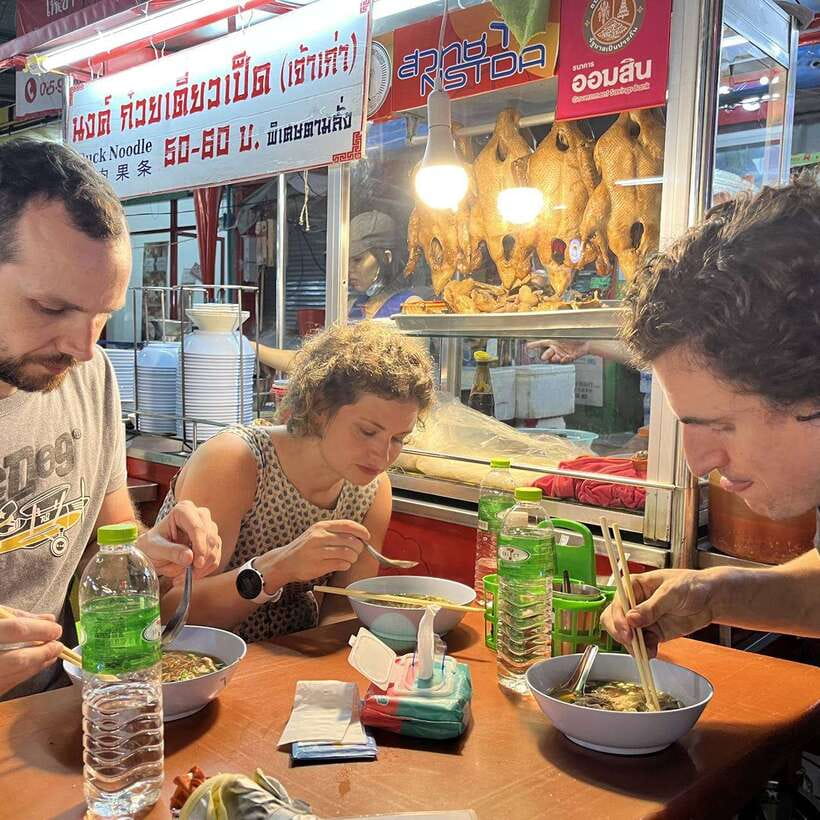
At $49 per person, this is not the cheapest way to eat in Bangkok. You can buy individual street dishes for much less. The price makes more sense if you value a guide, a planned route, explanations, and the chance to sample six places without working out the menu yourself.
You are paying for the guide and the food tastings. Hotel pickup, drop-off, and alcoholic drinks are not included. Since the meeting point is at an MRT station, the lack of hotel transport is less serious than it would be for a tour meeting in a distant suburb. You still need to arrange your own way to Wat Mangkon and back from Yaowarat.
The value improves if this is your first visit to Bangkok’s Chinatown or your first evening exploring Thai food. A good guide saves you from ordering blindly and gives you useful context. It is less compelling if you already know Yaowarat well, speak Thai, and are comfortable choosing stalls on your own.
The tour has a 4.4 rating from 48 reviews, with particularly strong praise for the food, the guide’s explanations, and the walk through the neighborhood. Sophie received repeated praise for making small groups feel personal and for adding facts about Bangkok, Thailand, and Chinatown. That is a real strength, though the food and guide experience can vary by date.
Timing, menu changes, and practical limits
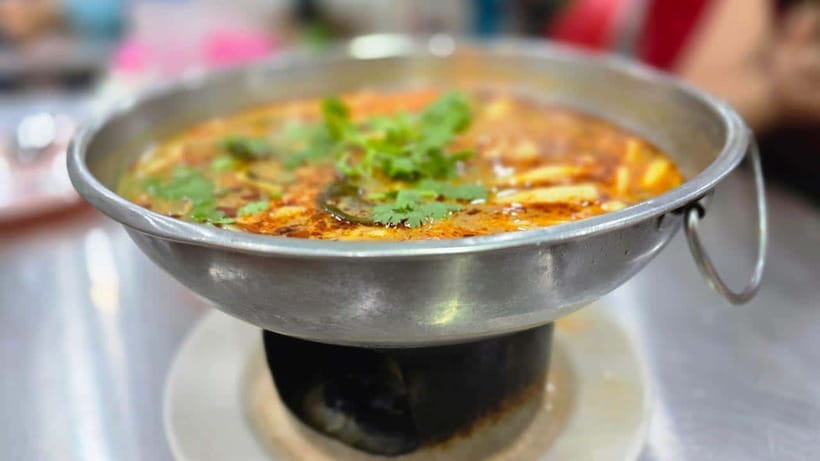
The activity duration is listed as 150 minutes, or two and a half hours. The itinerary also labels the Chinatown section as three hours. Plan for roughly two and a half to three hours, especially if the group is larger, a stall is busy, or the guide spends extra time explaining a dish.
Menu changes are clearly possible. Public holidays and the end of a season may make some items unavailable. This matters because the tour highlights particular local dishes and a homemade recipe, but no exact menu is guaranteed. If one favorite item is missing, the replacement may be different from what you expected.
The tour is not designed for people with serious mobility needs. You will walk through narrow streets and market areas, and the experience is not suitable for wheelchair users or people with visual impairments. Claustrophobia may also be a concern because some lanes and food spaces can feel confined.
Food allergies deserve more attention than usual here. The operator does not present this as an allergy-friendly experience, and the warning includes several common ingredients. If you have a food allergy, gluten intolerance, or strict dietary rule, I would not rely on casual explanations at the stops. Choose a tour built around your needs instead.
Free cancellation is available up to 24 hours before the activity for a full refund. You can also reserve now and pay later, which helps if your Bangkok plans may shift. Those policies make booking less risky, but they do not change the food restrictions or walking demands.
Who will enjoy this Chinatown food walk?
I would recommend it most strongly to first-time Bangkok visitors who want an easy introduction to Yaowarat. It suits you if you like trying several small dishes, walking through active night streets, and hearing local stories between bites.
It also works well for couples and small groups. The personal attention described on Sophie’s tours is most likely when the group is small, but no fixed group size is given. Families should consider the walking conditions and the food restrictions before booking.
You should skip it if you want a quiet restaurant dinner, a guaranteed menu, a fully accessible route, or careful control over every ingredient. You should also skip it if your diet excludes pork, seafood, peanuts, dairy, or gluten. The operator specifically says the tour may not suit you in those cases.
Should you book the Bangkok Chinatown food tour?
Book this tour if you want a guided first taste of Yaowarat and prefer a planned route to choosing stalls at random. The strongest reasons are the six-stop format, the Thai-Chinese focus, and guides such as Sophie who add food and Bangkok history to the walk.
Do not book it for a guaranteed private tour, a fixed list of dishes, or a large sit-down dinner. The menu can change, the timing may run closer to three hours, and the route is a poor match for anyone with food allergies or limited mobility.
For the right person, $49 is a fair price for a short, guided introduction to one of Bangkok’s best-known eating districts. Arrive by MRT at Wat Mangkon Exit 3, wear comfortable shoes, keep dinner plans flexible, and come ready to taste what is available that night.
FAQ
Where does the tour meet?
The meeting point is outside Wat Mangkon MRT station at Exit 3 in Chinatown, at 449 Charoen Krung Road.
How long does the tour last?
The activity duration is listed as 150 minutes. The itinerary describes the Chinatown portion as three hours, so allow some flexibility.
How many food stops are included?
The tour includes tastings at six different places. One account described seven or eight food stations, so the exact number may vary.
What kind of food will I taste?
You can expect Thai-Chinese-style local dishes, popular neighborhood foods, savory dumplings, sweet pastries, and a highlighted homemade menu with a secret ingredient.
Is the tour conducted in English?
Yes. The live tour guide language is English.
Is hotel pickup included?
No. Hotel pickup and drop-off services are not included. You need to make your own way to the meeting point and from the end point.
Can I join if I am vegetarian, vegan, gluten-free, or have food allergies?
The tour is not suitable for vegans, people following vegetarian or gluten-free diets, or people with allergies to shrimp, peanuts, pork, or dairy. The operator advises people with these restrictions not to book.
How do I get to the meeting point?
The recommended way is the MRT metro train to Wat Mangkon station, followed by Exit 3. Taking a taxi is discouraged because traffic around Chinatown can be heavy.
More Evening Food Tours in Bangkok
- Winner 2025 Rome Twilight Trastevere Food Tour by Eating Europe
★ 5.0 · 5,157 reviews - Winner 2025 Florence Sunset Food & Wine Tour by Eating Europe
★ 5.0 · 5,015 reviews - Saigon By Night and Street Food By Motorbike | Opt: Ao Dai Riders
★ 5.0 · 4,066 reviews - Private Street Food Evening Walking Tour in Ho Chi Minh City
★ 5.0 · 3,175 reviews
More Street Food Tours in Thailand
- Bangkok Electric Tuk Tuk: Street Food & Markets
★ 4.6 · 42 reviews - Bangkok: Talad Noi Hidden Gems & Street Food Adventure
★ 4.6 · 29 reviews - Bangkok: Chinatown Street Food Tour with 8+ Local Dishes
★ 4.6 · 27 reviews - Bangkok: Lebua Sky Bar & China Town Street Food by Tuk Tuk
★ 4.4 · 22 reviews
Fresh off the menu around Bangkok
- Local Life, Culture & Food Walking Tour at Chinatown★ 4.7 · 119 reviews
- From Bangkok: Maeklong Railway and Floating Market Food Tour★ 4.9 · 224 reviews
- Bangkok: Street Art and Street Food Walking Tour★ 4.1 · 58 reviews
- Bangkok: Talad Noi Hidden Gems & Street Food Adventure★ 4.6 · 29 reviews
- Bangkok: Old Siam Food Tour with 15+ Tastings★ 4.9 · 559 reviews
- Bangkok: Must-Try Hidden Bike & Food Experience★ 4.9 · 613 reviews
- Bangkok Electric Tuk Tuk: Street Food & Markets★ 4.6 · 42 reviews
- Thai Bus Food Tour Experience in Bangkok★ 4.4 · 53 reviews
Bangkok Food Tours, compared.
Bangkok: Backstreets Food Tour with 15+ Tastings
Read our review →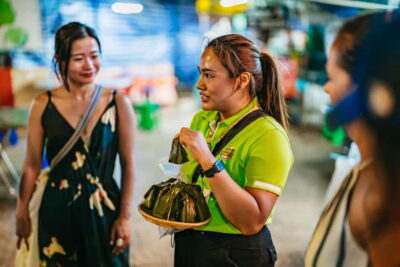
Bangkok: Michelin Guide Street Food Tour by Tuk Tuk
Read our review →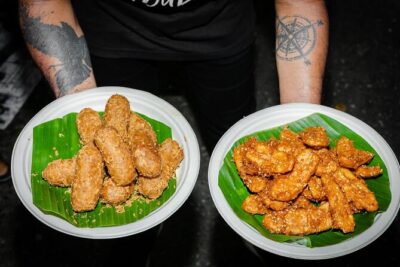
Bangkok Authentic Tasting Thai-Chinatown Walking Food Tour
Read our review →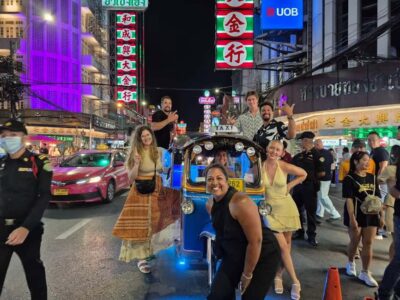
Bangkok: Tuk Tuk Adventure Chinatown Michelin Food & Temples
Read our review →
Bangkok Tuk-Tuk Tour by Night with Chinatown Street Food Meal
Read our review →