
Review · AMSTERDAM
Amsterdam: Private Food Tour with a Local
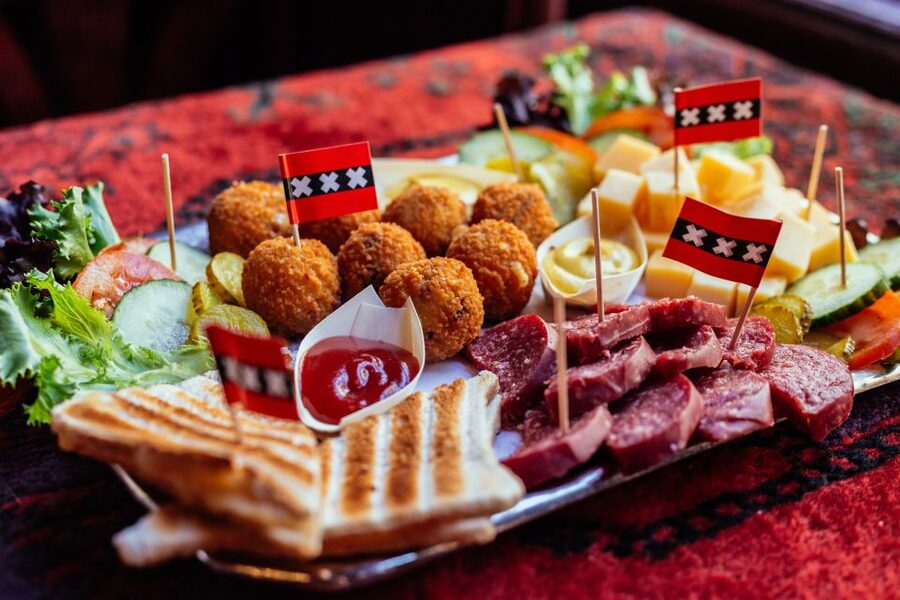
Amsterdam’s food story is much bigger than cheese and pancakes. This private walk takes you through De Pijp, Amsterdam’s lively neighborhood of cafés, bars, family restaurants, and market stalls, with ten food and drink tastings along the way. You might sample stroopwafel, bitterballen, herring, fried cod, local cheese, or Indonesian and Surinamese snacks.
I like the personal scale of this tour. Your guide can adjust the pace and explain what you are eating, rather than simply pointing out a row of stalls. I also like the mix of Dutch classics and foods shaped by Amsterdam’s international communities. The main drawback is the price: at $224 per person, it is a serious splurge for a three-hour walk, especially since extra food and drinks cost more.
Key points
- Ten tastings included: Expect Dutch specialties, drinks, and international flavors, with vegetarian alternatives available.
- De Pijp at street level: Walk beyond the main museum zone into one of Amsterdam’s most interesting food districts.
- Private English-speaking guide: The small format gives you room to ask questions and request food preferences.
- Dutch classics with a twist: Stroopwafel and bitterballen share the stage with herring, fried cod, Surinamese food, and Indonesian snacks.
- Market and café culture: The route includes Amsterdam’s famous large market area, local cafés, bars, and family-run food spots.
- Plan for walking: Comfortable shoes are essential, and the tour is not suitable for wheelchair users or people with mobility impairments.
Why this food walk is different from a standard Amsterdam tour
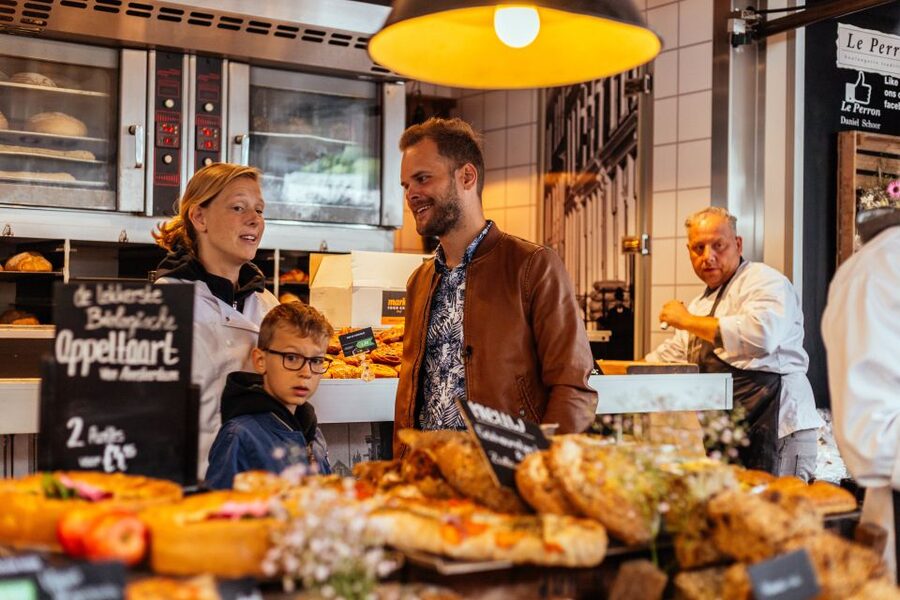
A typical first visit to Amsterdam can become a parade of canals, museums, and photo stops. This experience gives you another way into the city, through the foods people eat between sightseeing, work, and a night out.
The tour begins near Museumplein, a handy meeting area if you are already visiting the Rijksmuseum, Van Gogh Museum, or Stedelijk Museum. From there, you move toward De Pijp, where the mood shifts from grand cultural institutions to cafés, bars, market stands, and small restaurants.
That change matters. Amsterdam’s food culture does not sit in one formal district or historic hall. It appears in casual snack counters, family businesses, neighborhood bars, and restaurants shaped by migration. A private guide can connect those places to daily life in a way a standard sightseeing route usually cannot.
The format is also more relaxed than a large group food crawl. You have one guide and your own private group, so you can ask why a dish matters, how it is eaten, or where to return later. Guides such as Raoul, Dina, Olav, Louke, Tania, and Zohair have each led versions of this experience over the years, though your guide will depend on the date and availability.
More Food Tours with Locals in Amsterdam:
- Naples: Street Food Walking Tour with Local Guide
★ 4.9 · 4,976 reviews - Rome: Street Food Tour with Local Guide
★ 4.8 · 4,077 reviews - Eat Like a Local: Venice 3-Hour Small-Group Food Tasting Tour
★ 5.0 · 3,137 reviews
Starting near Museumplein and moving into De Pijp
Meet your guide in front of Otemba Gyoza Bar. The exact starting point is useful to note because Museumplein is broad, and it is easy to waste time searching for a guide if you have not checked the restaurant entrance carefully.
The first part of the walk helps you shift from the museum district to De Pijp. This neighborhood is known for its mix of old and new: hip cafés sit beside local bars, and long-established family restaurants share streets with newer food businesses.
I like this setting for a food tour because the surroundings do real work. You are not only eating isolated samples. You are seeing the kind of neighborhood where people stop for coffee, buy something quick, or meet friends for a drink.
Your guide also provides the context. You can ask about family restaurants passed from one generation to the next, the way international cuisines have become part of Amsterdam’s everyday food, and the difference between a snack intended for a quick bite and a dish meant for a full meal.
The walk lasts three hours, so expect a steady combination of strolling and tasting rather than a long sit-down meal. Bring comfortable shoes. The tour is specifically not suitable for wheelchair users or people with mobility impairments, and the walking format may also be tiring if you need frequent rests.
The market stop and Amsterdam’s casual food culture
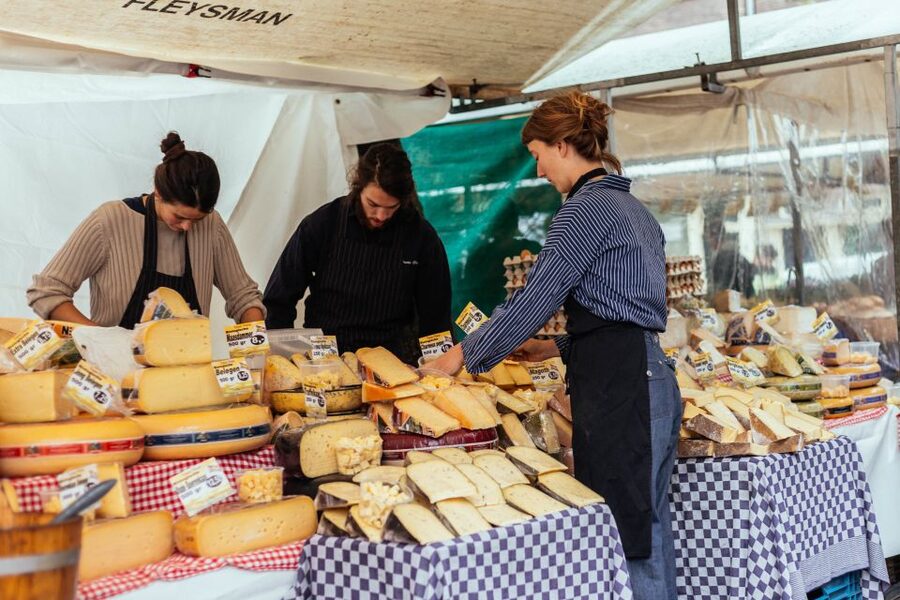
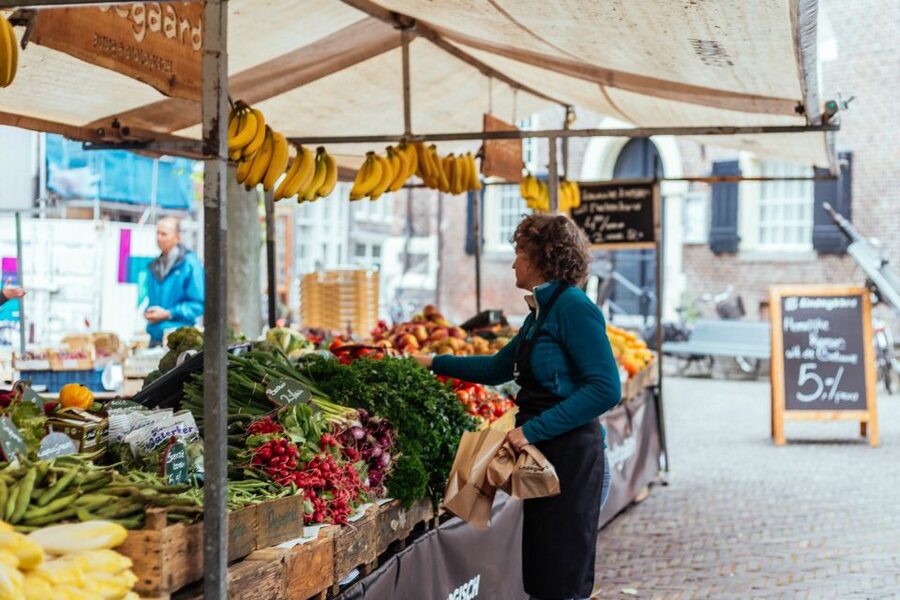
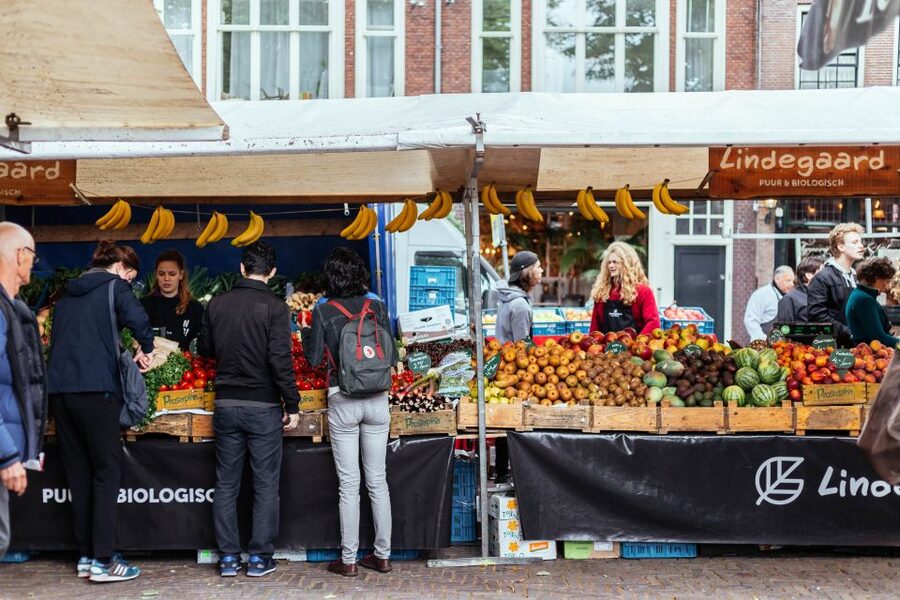
One highlight is a visit to the largest market in Europe. The supplied details do not name the market, so you should confirm the precise route and market stop when booking or meeting your guide. Still, the market setting gives the tour a useful anchor.
Markets show Amsterdam at its most practical. You see food sold for everyday use, not only dishes prepared for sightseeing. Stalls, snacks, and quick meals help explain why Dutch food culture often feels informal and portable.
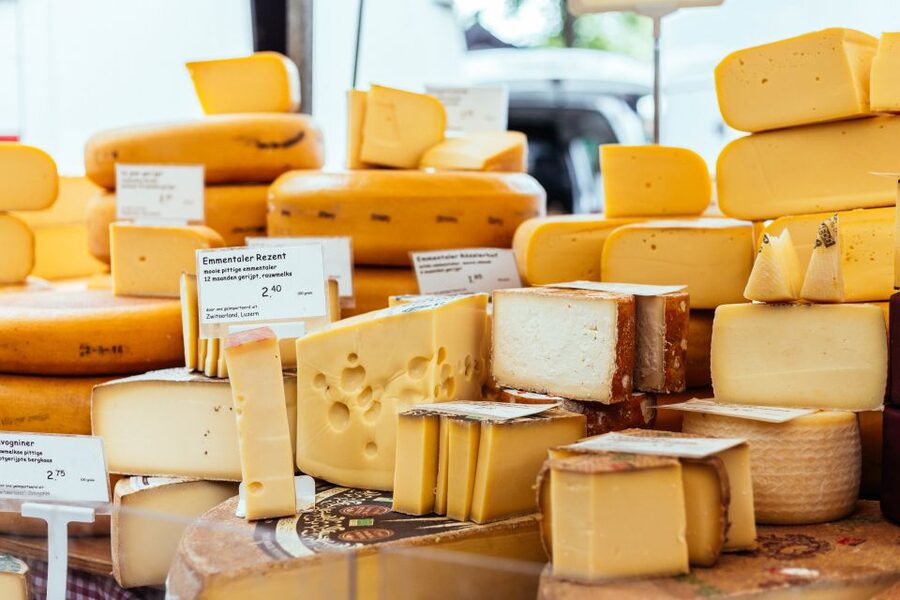
This is where you may encounter some of the more surprising tastes. One past route included pickled herring and fried cod, while another included local cheese, pork ribs, beer, and gelato. The exact stops can change, but the point is to sample food that a local guide considers part of the city’s normal eating habits.
The herring is worth approaching with an open mind. It is not as sweet or familiar as a stroopwafel, but that contrast is part of the fun. If you are unsure, ask your guide how locals usually eat it and whether there is a milder option.
Do not expect every market stop to feel polished or staged. The charm comes from the ordinary setting, and that may mean standing while you eat or sharing space with shoppers. If you want a formal meal with a guaranteed seat, this is not the right format.
Stroopwafel, bitterballen, and the Dutch snack lesson
Two promised specialties are stroopwafel and bitterballen. They are very different, which makes them a good pair for understanding Dutch snack culture.
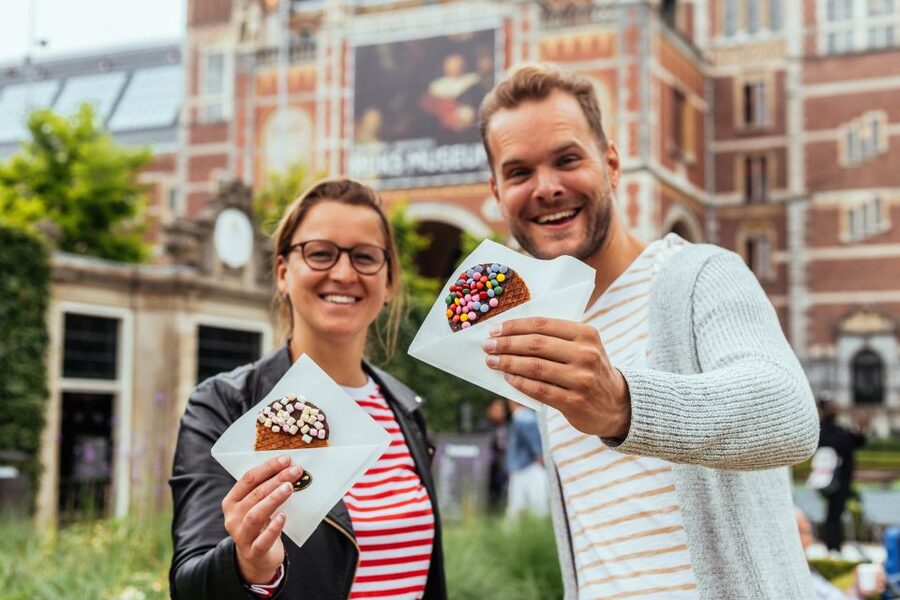
A stroopwafel consists of thin waffle layers with syrup between them. It is sweet, compact, and easy to carry. Bitterballen are small fried snacks with a savory filling, commonly served in a bar setting. They are usually eaten as a quick bite with a drink, so they give you a sense of how Dutch cafés and bars work.
The value here is not simply tasting ten items. It is learning how the food fits into local routines. A guide can explain which foods are everyday snacks, which are treats, and which are tied to social occasions.
The tour promises ten food and drink tastings per person, with vegetarian alternatives available. That is a useful safeguard if you do not eat meat, though you should tell the guide your needs as early as possible. The menu is not presented as a fixed list, and one past guest received four types of food rather than the seven expected, so you may want to confirm how the ten tastings are counted. Drinks may be small samples rather than full beverages, and extra food or drinks are not included.
More Private Food Tours in Amsterdam:
- Lisbon Exclusive PRIVATE Food Tour with 6 or 10 Tastings
★ 4.5 · 1,113 reviews - The Award-Winning PRIVATE Food Tour: 10 Tastings of 3 Cultures
★ 4.5 · 1,017 reviews - Rome Private Food Tour with 6 or 10 Tastings
★ 4.5 · 902 reviews - Lisbon Private Food Tour – Taste 10+ Local Dishes & Wines
★ 5.0 · 896 reviews
Herring, fried cod, cheese, and other local bites
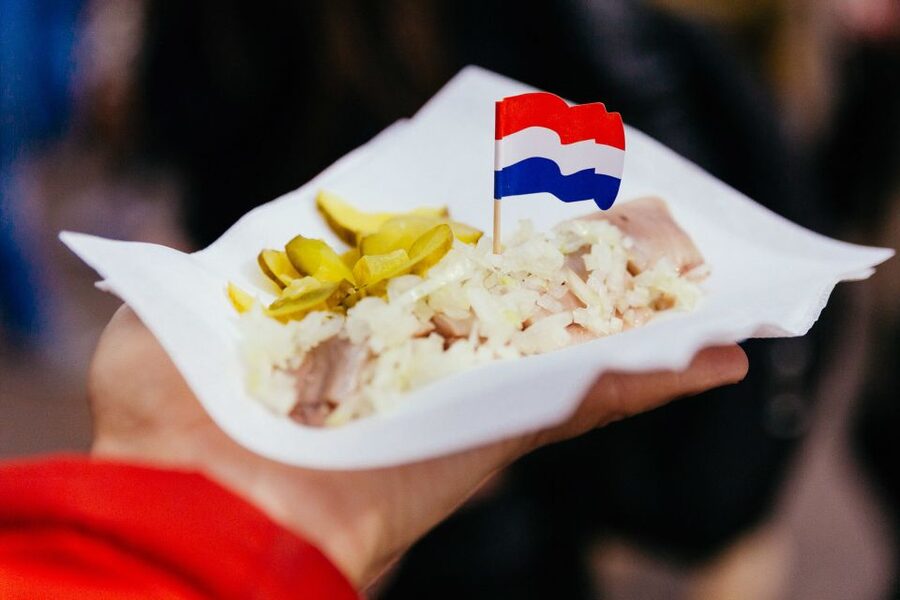
The most interesting food stops may be the ones you would not choose on your own. A past route included herring and fried cod from favorite local spots, followed by a small bar serving Dutch cheeses. Another included pickled fish, warm waffles, beer, and pork ribs.
That range gives the tour its character. You get sweet and savory, warm and cold, familiar and less familiar. The food is not limited to one polished restaurant, so you see several ways Amsterdam handles a quick meal.
The guide’s role is important here. A snack can seem ordinary if you do not know what to notice. With a local explanation, you can understand why a particular preparation is popular, how it is served, or how it differs from the tourist version.
There is also a practical advantage to tasting several small portions. If you are not sure about herring or bitterballen, you do not have to order a full plate. You can try a bite, ask questions, and move on to something else.
Still, keep your expectations flexible. The exact food selection depends on the day, the guide, and what is open. Allergies, religious dietary rules, and strong dislikes should be discussed before you book, since the supplied information confirms vegetarian alternatives but does not promise solutions for every dietary restriction.
Surinamese and Indonesian flavors in Amsterdam
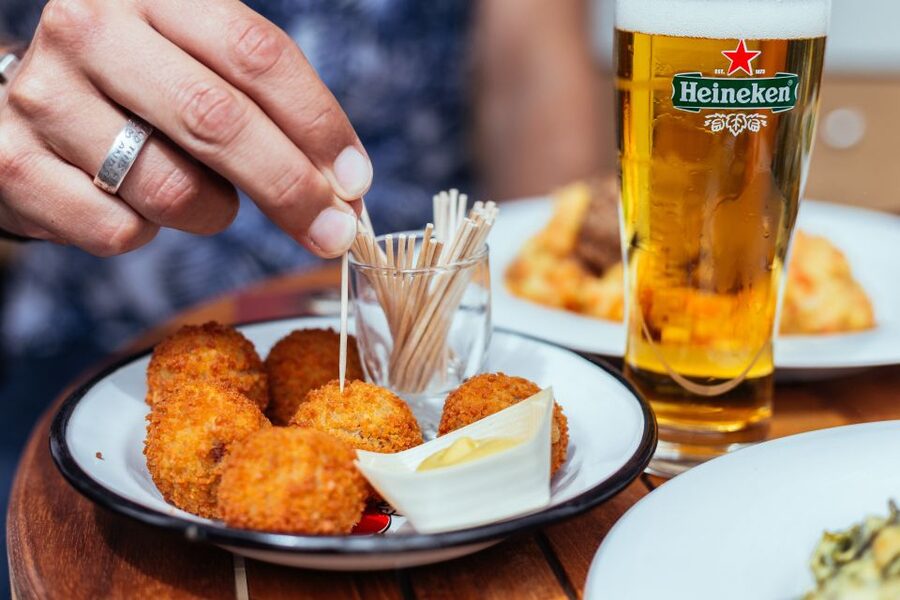
The international side of the tour is one of its best features. You visit a Surinamese family-run restaurant and may finish with Indonesian snacks. These stops show how Amsterdam’s food culture has been shaped by communities from outside the Netherlands.
Surinamese food is especially useful in this context because it gives you a taste of a cuisine that many visitors might miss if they stay with Dutch standards such as cheese, herring, and waffles. The family-run setting also fits the tour’s focus on long-standing local food businesses.
Indonesian food has a place in Amsterdam’s food identity as well, and an Indonesian stop adds another layer to the route. The experience is not presented as a separate international food tour. Instead, these dishes appear alongside Dutch snacks, which makes the city’s mixed eating habits easier to understand.
This part is also where a private guide earns the fee. You can ask what flavors to look for, how the dishes are eaten, and which restaurants might suit you later. One former route included Indonesian snacks at the end, while another finished with recommendations for the rest of the visitor’s stay.
Do not assume that every guide will use the same restaurants. The experience is built around a local host, so the stops can differ. That flexibility is a strength if you enjoy personal recommendations, but it is less useful if you want a fixed menu printed in advance.
Local cafés, bars, and family restaurants
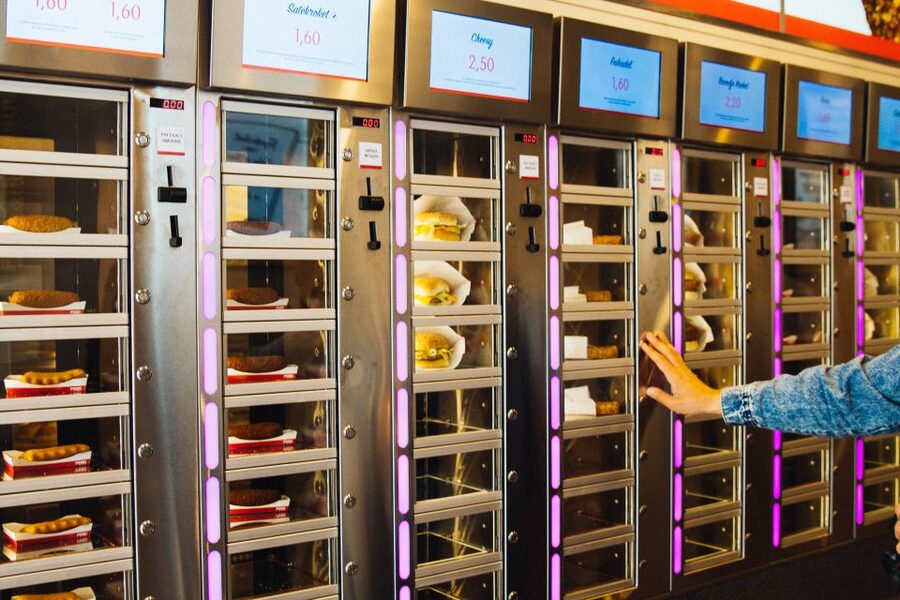
Between tastings, you walk through streets lined with cafés and bars. This keeps the experience from becoming a chain of food counters. You get a look at the neighborhood’s social life and a chance to understand how people use these places.
One route included an interesting café that the guide chose personally. Other stops included a small cheese bar and a gelato shop. These details suggest that the best parts may be the places selected by the guide, not only the famous dishes named in the tour description.
I would use the guide for restaurant advice. Several hosts have offered suggestions for later meals, and that can save you from choosing a restaurant based only on a crowded street or a glossy menu. Ask for recommendations that fit your budget and preferred style before the tour ends.
The route may also include short explanations of Amsterdam’s past and the way of life in the city. Do not expect a full city-history walk. The history is there to frame the food and streets, not to replace a museum visit or guided canal tour.
What you get for $224 per person
At $224 per person, this is expensive for three hours of sightseeing and tasting. The price makes more sense if you value private guiding, personal food advice, and a route that combines ten tastings with neighborhood exploration.
You are paying for more than the ingredients. A private guide can adjust the walk to your interests, explain unfamiliar foods, and help you avoid spending several meals on dishes you may not enjoy. For a couple or family who wants a personal introduction to Amsterdam’s food culture, that may be worthwhile.
The value is weaker if your main goal is simply to eat as much as possible. Extra food and drinks are not included, and a market snack or café purchase later adds to the bill. You might spend less by visiting De Pijp and its food spots independently, but you would lose the guide’s introductions and local recommendations.
The carbon-neutral format may also matter to you. It does not change the route or the food, but it is a useful feature when comparing similar activities.
Who should book this Amsterdam food tour
This tour suits you if you want food and city orientation in one outing. It works particularly well near the start of a stay, when you can use the guide’s restaurant suggestions for later days.
I would recommend it to couples, families with older children, and small private groups who enjoy trying unfamiliar snacks. It is also a good fit if you want to ask questions freely or avoid a large group.
Vegetarians have a clear advantage here because alternatives are available, but you should still state your preferences when booking. The menu changes, so do not assume every named specialty will be replaced in the same way.
This is less suitable for anyone with limited mobility, wheelchair users, or people who dislike walking between several casual stops. It may also disappoint you if you expect a full lunch, fixed dishes, or a formal restaurant meal.
The tour is conducted in English. The meeting point is in front of Otemba Gyoza Bar, and you will need to arrange your own way there and back because pickup and drop-off are not included.
Should you book it?
Book this tour if you want to understand Amsterdam through everyday food, not just monuments. The strongest reasons are the private guide, the mix of Dutch and international flavors, the De Pijp walk, and the chance to try foods such as herring, bitterballen, stroopwafel, Surinamese snacks, and Indonesian bites in context.
Skip it if $224 feels high for ten small tastings, or if you need a guaranteed menu and seated meal. Before paying, confirm your dietary needs, ask how the ten tastings are arranged, and wear shoes suited to three hours on foot.
For food-focused visitors who value local guidance and flexibility, this is a well-rounded first taste of Amsterdam. Just treat it as a guided neighborhood walk with snacks, not as an all-you-can-eat lunch.
FAQ
How long does the Amsterdam food tour last?
The tour lasts three hours.
How much does the tour cost?
The listed price is $224 per person.
Where does the tour meet?
Meet your English-speaking guide in front of Otemba Gyoza Bar, near Museumplein.
How many tastings are included?
Ten food and drink tastings are included per guest.
Are vegetarian alternatives available?
Yes, vegetarian alternatives are available.
Is the tour private?
Yes. The experience is for a private group with a live English-speaking guide.
Are pickup and drop-off included?
No. You must make your own way to the meeting point, and drop-off is not included.
Is the tour suitable for wheelchair users?
No. The activity is not suitable for wheelchair users or people with mobility impairments. Comfortable shoes are recommended.
Fresh off the menu around Amsterdam
- Amsterdam: Private Red Light District and Food Tour★ 4.8 · 62 reviews
- Amsterdam: Guided Food Tour with Tastings★ 4.9 · 49 reviews
- Amsterdam: Guided Cultural Food Tour in English or German★ 4.9 · 137 reviews
- Amsterdam: Jordaan District Local Food Walking Tour★ 4.8 · 311 reviews
- Amsterdam: Food Tour with Drinks by Spui, Canals and Jordaan★ 4.8 · 128 reviews
- Amsterdam: Jordaan Food Tour of 10+ Local Classic Tastings★ 4.9 · 31 reviews
- Amsterdam: Ben’s Local Food Tour – 8 Tastings★ 4.9 · 24 reviews
- Amsterdam canal cruise with culinary burger or cheese & wine★ 4.2 · 29 reviews
Amsterdam Food Tours, compared.

Amsterdam: Guided Zaanse Schans, Windmills & Cheese Tour
Read our review →
10 Tastes of Amsterdam: Food Tour by UNESCO Canals and Jordaan
Read our review →
Amsterdam Jordaan Food & Drinks Tour with Eating Europe
Read our review →
Amsterdam: Food and Culture Walking Tour with Tastings
Read our review →
Amsterdam: Jordaan District Local Food Walking Tour
Read our review →
Amsterdam: Guided Cultural Food Tour in English or German
Read our review →
Amsterdam: Food Tour with Drinks by Spui, Canals and Jordaan
Read our review →
Amsterdam: Private Red Light District and Food Tour
Read our review →Browse the lists this tour appears in