
Review · USA
St. Augustine’s Wine, Cocktail and Food Experience
St. Augustine’s Wine, Cocktail and Food Experience turns a restaurant crawl into a useful introduction to the city. You’ll eat a real lunch, sample wine and cocktails, and walk through the oldest part of town while your guide explains the streets, buildings, and odd corners that are easy to miss on your own. Guides such as Garry, Russ, and Alex bring different personalities, but the strongest tours pair local food with clear, entertaining history.
I like the small maximum of eight people, which keeps the group easy to manage in crowded historic streets. I also like that the $159 price includes food, wine, cocktails, and water rather than leaving you to count every sample as the afternoon goes on. The main caution is that this is a walking tour, and guests with strict dietary restrictions may find the menu quite limited.
Key reasons to consider this St. Augustine food tour

- A proper meal, not just nibbles: Several portions are substantial enough that some people skip dinner afterward.
- Three kinds of tasting in one afternoon: Expect food, wine, and cocktails, with nonalcoholic drinks available.
- A tiny group: The tour accepts no more than eight people, making conversation and questions easier.
- History between restaurant stops: You’ll pass the Castillo de San Marcos, the old city gates, Plaza de la Constitución, and major churches and civic buildings.
- Guides with distinct styles: Garry is known for stories and humor, while Russ and Alex are praised for useful local context and personable hosting.
- Good timing for a first day: The afternoon schedule helps you learn where to return for dinner, drinks, music, and shopping.
A food tour that also gives you your bearings
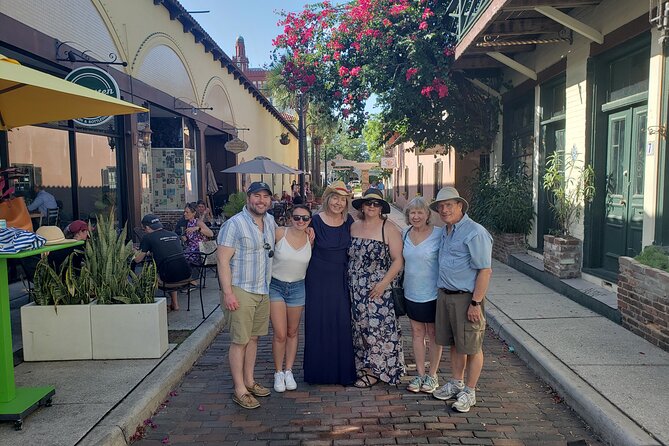
The best part of this experience is its combination of pleasures. You are not simply standing outside landmarks while someone recites dates, and you are not eating in a sealed restaurant with no sense of place. You move through central St. Augustine, stopping for food and drinks as the city unfolds around you.
That makes the tour especially useful early in your stay. You get a feel for St. George Street, the central plaza, the old fort area, and several places you might want to revisit. The afternoon also leaves you with ideas for dinner, drinks, live music, and wine shopping.
The pace should suit anyone who can comfortably walk for several hours with stops along the way. Historic St. Augustine has uneven pavement and busy pedestrian areas, so comfortable shoes matter. The tour does not require athletic ability, but it is not a seated tasting either.
More sit-down food experiences around the USA:
- Boston: North End Food Experience with Pizza, Meats & Cheese
★ 4.9 · 111 reviews - Napa Valley Wine Train: Gourmet Express Lunch or Dinner
★ 4.7 · 48 reviews - New York City: Bustronome Gourmet Dinner Tour
★ 4.4 · 34 reviews
Starting at 57 Treasury Street
The meeting point is 57 Treasury Street, in the compact center of historic St. Augustine. From there, your guide leads you through the old city, combining restaurant visits with short walks and commentary.
A small group makes a real difference here. Narrow streets, busy sidewalks, and restaurant seating can make a large group awkward. With no more than eight people, you can hear the guide, ask questions, and settle into the food stops without the feeling of being herded from one place to another.
Your guide may be Garry, Russ, or Alex. Garry’s style leans toward humor, personal stories, and lively narration. Russ is often praised for explaining the town while keeping the food and drink moving. Alex brings a friendly, well-informed approach, with suggestions for places to return to later.
Guide style can vary, which is worth keeping in mind. Most of the available feedback is strongly positive, with a 5.0 rating from 1,251 ratings and 99 percent of customers recommending the experience. One poor account raises concerns about one guide’s behavior, including pressure around tipping and personal storytelling. That appears to be an exception in a large body of praise, but it is fair to know that the personality of your guide will shape the afternoon.
Castillo de San Marcos and the edge of the old city
The route takes in the Castillo de San Marcos, the large Spanish stone fort that guarded Spain’s claim in Florida. Built in the 17th century, it is the oldest masonry fort in the continental United States and the oldest structure in St. Augustine.
The tour does not present itself as a full fort visit. Instead, the Castillo provides an important visual anchor for the city. Its thick walls and broad stone construction explain why St. Augustine feels different from newer Florida towns. If you want to explore the fort interior, you should plan separate time for that.
This is one of the useful features of a walking food tour. You see a major landmark without giving up the whole afternoon to a formal museum visit. Your guide can place the fort within the larger story of Spanish settlement, defense, and the city’s changing rulers.
The route also brings you close to the city’s unusual mix of Spanish, British, American, Catholic, Protestant, and Greek influences. That mix is easier to understand when you are walking through the actual streets rather than hearing about it from a distant coach.
Huguenot Cemetery and the old city gates
A short stop at Huguenot Cemetery adds a quieter note to the route. The cemetery sits across from the historic City Gate and served as a Protestant burial ground from 1821 to 1884.
Before American control, St. Augustine was mainly Catholic, and the Tolomato Cemetery was reserved for Catholics. When the American administration took over, a separate Protestant burial ground was needed. The first burials began in 1821, just before a yellow fever outbreak claimed many lives in the city.
You may spend only about five minutes here, but the stop gives useful context. St. Augustine’s story is not only forts, grand churches, and attractive streets. It also includes disease, religious divisions, military change, and the practical problems of a growing town.
From here, you enter through the Old City Gates, built in 1808. They mark the beginning of the historic core and lead directly toward St. George Street.
More food tours around the USA:
- New Orleans Food Walking Tour of the French Quarter with Small-Group Option
★ 5.0 · 6,118 reviews - Chef Guided Food Tour of Pike Place Market
★ 5.0 · 3,733 reviews - Savannah First Squares Culinary & Cultural Walking Food Tour
★ 5.0 · 3,229 reviews - NYC: Chinatown & Little Italy Food Tour with 7 Flavorful Tastings
★ 5.0 · 2,733 reviews
St. George Street, the city’s main historic spine
The walk along St. George Street lasts about 20 minutes and shows you the commercial heart of old St. Augustine. This is the street most closely tied to the city’s tourist life, with shops, restaurants, historic buildings, and plenty of foot traffic.
Your guide’s commentary helps keep the street from becoming just a row of storefronts. You’ll hear about the layout of the old town and the buildings around it, while also getting a practical sense of where you might want to return.
St. George Street can be busy, especially at popular times. That is both its appeal and its drawback. You get the energy of the historic district, but you should not expect a quiet stroll. Stay alert on the pavement and keep the group together when the sidewalk tightens.
One benefit of visiting with a food guide is that you can be directed toward places beyond the most obvious tourist corridor. The experience includes stops at distinctive eateries, and several people have found restaurants they would not have chosen on their own. The exact businesses and menu can change, so treat the tour as an introduction rather than a fixed restaurant list.
St. Photios and the city’s Greek connection
Near the old city gates, the route passes the St. Photios Greek Orthodox National Shrine. The shrine honors the first Greek colony to arrive in America in 1768 and is connected with the Greek Orthodox Archdiocese of America.
This stop adds another layer to the city’s population story. Spanish Catholic roots often dominate a first visit to St. Augustine, but the town’s past includes many communities and traditions. The shrine is a reminder that the city’s history continued to grow and change long after its original Spanish settlement.
The stop is also well placed geographically. It sits close to St. George Street, so you can see an important historic institution without a long detour from the food route.
Plaza de la Constitución and the center of civic life

The tour spends about 10 minutes at Plaza de la Constitución, the central public square. The city’s original plan grew outward from this plaza, following Spain’s 1573 Laws of the Indies.
Those rules called for a central space serving government, church, and public life. In coastal towns, the plaza was meant to face the waterfront, allowing people to see and be seen. That idea remains easy to read here, with the square bordered by Government House, the Cathedral Basilica, and routes toward the Bridge of Lions and Matanzas Bay.
This is one of the best places for your guide to explain why St. Augustine’s streets feel so different from those in a typical American city. The plaza is not just an attractive patch of grass. It is the organizing point of the old town.
You will probably spend more time looking around than taking in a formal attraction. That suits the tour’s style. The historical details come in short sections between food and drink, so the afternoon does not become a lecture.
The Cathedral Basilica and Government House

The Cathedral Basilica of St. Augustine is the seat of the Catholic Bishop of St. Augustine and was built from 1793 to 1797. Its congregation traces back to 1565, making it the oldest Christian congregation in the contiguous United States.
The tour focuses on the outside setting and historical context rather than promising a full interior visit. If the basilica interests you, you can return later when you have more time to look closely.
Across the plaza, Government House occupies a site that has held a government building since 1598. Spanish and British governors used the location, and after Florida became part of the United States in 1821, the building served as a courthouse and briefly as the territorial Capitol.
Together, these sites show how much power was concentrated around the plaza. Church, government, trade, and public gatherings all met within a small area. Your guide’s building notes can make the architecture more readable, especially if you are interested in how old structures were adapted over time.
What you are likely to eat and drink
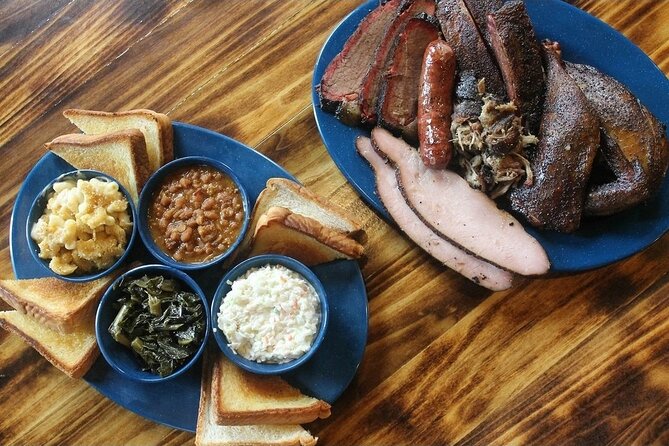
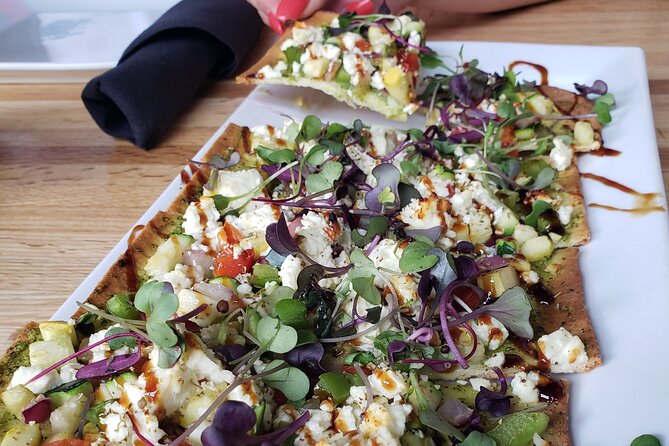
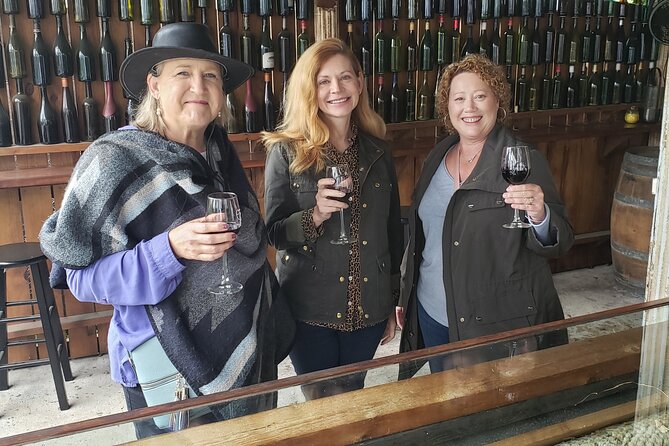
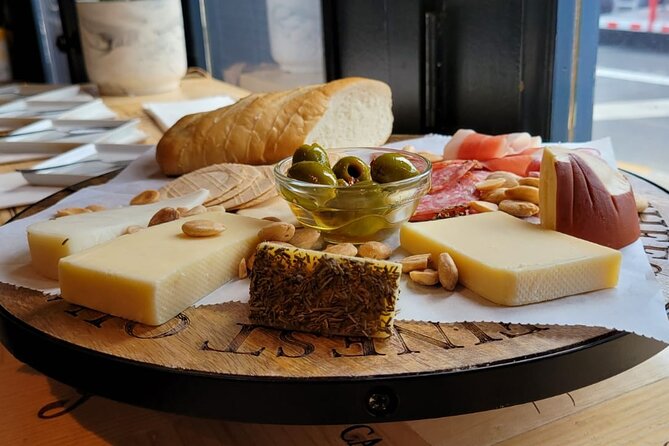
The food is the heart of the experience, and the available accounts point to generous portions rather than tiny decorative bites. One person described the tour as a three-course meal, while others singled out BBQ, brie, dessert, wine, and cocktails.
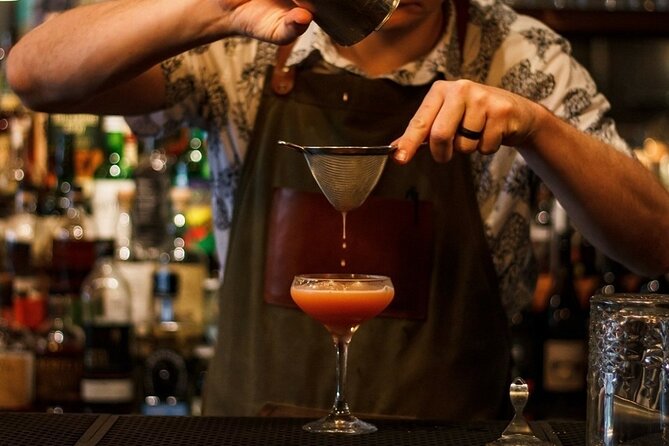
The exact menu is not guaranteed in the supplied details, so you should expect the restaurants and selections to vary. Still, the format is clear: you visit several local spots, eat enough to count as lunch, and receive alcoholic drinks without paying extra at each stop.
That included pricing makes the tour easier to enjoy. You do not need to decide in advance which tastings are worth an added charge, and you can focus on comparing flavors and places. Some people have enjoyed the wine enough to return to the wine bar on later days, which is useful if you like turning a food tour into a short list of future stops.
Nonalcoholic drinks are available. If you do not drink, you can still take part, but the tour’s name tells you where its emphasis lies. You will want to confirm that the included alternatives suit you if alcohol is not part of your plans.
Is $159 a fair price?
At $159 per person, this is not a cheap walking snack tour. The value rests on what you use: about three and a half hours of guiding, a substantial lunch, several food stops, alcoholic beverages, water, and a small group.
For someone planning to buy lunch, drinks, and perhaps a cocktail or wine tasting separately, the price can make sense. You also pay for local orientation and the time saved searching for restaurants. The tour can be especially useful at the start of a visit because it helps you choose where to return.
The value drops if you eat very little, avoid alcohol, or have strict food restrictions. Vegetarian, vegan, kosher, dairy-free, sugar-free, and gluten-free choices are described as much more limited. The tour may still work, but you should not book expecting a broad substitute menu.
Who will enjoy it most?
I would recommend this experience to couples, friends, and families who want food and history in equal measure. It works well for first-time visitors who want a quick understanding of the old city before exploring on their own.
It is also a good fit for people who enjoy trying several restaurants without arranging every reservation themselves. The small group, short walking segments, and included drinks make the afternoon social without requiring a full-day commitment.
You should think twice if you want a serious historical tour with long, detailed talks at each site. The history is woven into the walk and tends to come in short stories, building notes, and local observations. That balance is a strength for many people, but it is not the same as a dedicated fort or architecture tour.
The walking also matters. You need a moderate level of fitness, and historic pavement can be tiring. Service animals are allowed, and the route is near public transportation, but the supplied details do not promise a fully step-free experience.
Ending near Plaza de la Constitución
The tour finishes at Plaza de la Constitución, within two blocks of the plaza. That is a convenient end point because you remain in the center of the historic district, close to more restaurants, shops, churches, and public sights.
Use the final location to your advantage. You can continue exploring, return to a restaurant you liked, or walk toward the waterfront. Since the tour is in the afternoon, you still have time to shape your evening around the places and dishes that caught your attention.
Free cancellation is available up to 24 hours before the start time. Inside that window, changes and refunds are not accepted. That policy is worth noting because the experience costs enough that a late change would be expensive.
Should you book St. Augustine’s Wine, Cocktail and Food Experience?
Book it if you want a substantial afternoon of food, drinks, and city orientation rather than a single-focus history walk. The small group, included tastings, generous portions, and guides such as Garry, Russ, and Alex give the experience a strong practical edge.
I would choose it early in a St. Augustine visit, especially if you like to find places worth returning to. I would skip it if you have severe dietary restrictions, dislike walking, or want a quiet, highly academic tour. For most food-minded visitors who can manage the price and pavement, it is a useful and enjoyable way to get acquainted with the old city.
FAQ
How long does St. Augustine’s Wine, Cocktail and Food Experience last?
The experience lasts approximately 3 hours and 30 minutes.
What is included in the $159 price?
Alcoholic beverages, bottled water, and lunch are included. The food and drink samples do not require added tasting fees.
Where does the tour start and finish?
The tour starts at 57 Treasury Street in St. Augustine. It ends at Plaza de la Constitución, within two blocks of the plaza.
How many people can join the tour?
The maximum group size is eight people.
Are nonalcoholic drinks available?
Yes. Nonalcoholic drinks are available during the experience.
Can the tour accommodate dietary restrictions?
Vegetarian, vegan, kosher, dairy-free, sugar-free, and gluten-free restrictions can be accommodated only with a much more limited selection. You should keep that limitation in mind before booking.
Fresh off the menu around the USA
- Miami: South Beach Food Tour★ 4.7 · 141 reviews
- South Beach Tour des Forks: Eat Like a Local★ 4.7 · 68 reviews
- Sonoma Valley: Wine Trolley Tasting Tour with Lunch★ 4.3 · 22 reviews
- Shadows, Scandals & Secrets of Sacramento Ghost Tours★ 4.1 · 82 reviews
- Las Vegas Strip: Foodie Walking Tour★ 4.8 · 69 reviews
- Chicago: Secret Food Tour★ 4.8 · 68 reviews
- Seattle: Pike Place Market Seafood Tasting Tour★ 4.7 · 26 reviews
- Seattle: Plant-Based in Pike Place Food Tour★ 4.7 · 56 reviews
USA Food Tours, compared.

New Orleans Food Walking Tour of the French Quarter with Small-Group Option
Read our review →

San Francisco Super Saver: Muir Woods & Wine Country w/ optional Gourmet Lunch
Read our review →
Savannah First Squares Culinary & Cultural Walking Food Tour
Read our review →
NYC: Chinatown & Little Italy Food Tour with 7 Flavorful Tastings
Read our review →
Nashville: Food Tour with 5+ Tastings of Local Delicacies
Read our review →
Original NYC Guided Food Tour of Chinatown and Little Italy
Read our review →Browse the lists this tour appears in