
Review · MEXICO CITY
Mexico City: Hidden Markets, Street Food & Salsa-Making Tour
Mexico City’s best food stories often begin far from the polished restaurant scene. This five-hour market tour takes you to two working markets, introduces you to murals linked with Diego Rivera’s circle, and ends with salsa made by your own hands in a family business. It is a useful way to see how food, art, public transport, and daily life fit together.
I like the small groups of up to 12, which give guides such as Andrea, Axel, Viri, Alfonso, and Poncho room to answer questions and adjust the pace. I also like the Metro lesson. You do not just ride across town in a van; you learn a practical skill that can save money and help you get around CDMX later.
The catch is the walking. The route covers about 6 kilometers through markets and city streets, with public transport between stops. Food and drinks are not fully covered, despite the included tastings, so bring small cash and allow extra room in your budget.
Key points at a glance
- Murals in an unusual market: See the Mercado Abelardo L. Rodríguez murals, associated with students of Diego Rivera, along with the market’s early 20th-century social setting.
- Three markets in one stop: Mercado Jamaica combines flowers, produce, and prepared food under one sprawling roof and around its busy stalls.
- A real Metro lesson: Ride Mexico City’s subway with a guide who can show you how the system works.
- Food with a local rhythm: Sample tamales, atole, tacos, huaraches, fruit, and pineapple tepache rather than sitting down for one standard meal.
- Hands-on salsa making: Wash, chop, grill, and crush ingredients in a molcajete with help from a family-run business.
- Plan for a long morning: Wear good shoes, dress simply, carry water, and leave passports and expensive gear at your hotel.
Why this market tour feels different
Many Mexico City food tours stay in famous neighborhoods and move from one restaurant to another. This one uses markets as the main stage. That matters because a market shows you more than what ends up on your plate. You see flowers being sold, produce being handled, breakfast being served, and families running small businesses in the same places they use every day.
The route begins at 8:30 a.m. near Hostel Mundo Joven on República de Guatemala in Centro Histórico. From there, you visit a lesser-known market before using public transport to reach Mercado Jamaica. The tour ends near the Palacio de Bellas Artes, so you finish in a useful central location rather than returning to the starting point.
You will be with an English-speaking guide, and the quality of the guide is important here. The food itself is only part of the experience. Guides such as Viri and Alfonso have been praised for explaining buildings, murals, local customs, and the Metro along the way. Andrea has been singled out for making the tour easy for first-time Metro users, while Axel and Poncho are known for their friendly connection with the people they introduce.
Because guide assignments can change, you should not book solely for one named guide. Still, the repeated pattern is clear: the guide can make this experience feel like a walk through someone’s home city rather than a checklist of market stops.
More Street Food Tours in Mexico
- Cancun Street Food Tour with Food Stalls, Local Market and Murals
★ 5.0 · 723 reviews - Merida Street Food Walking Tour
★ 5.0 · 417 reviews - Street Food Tour with Friends
★ 5.0 · 326 reviews
The first market: murals, tamales, and a social story
The first stop is identified in the tour details as Mercado Melchor Múzquiz and also described as the Mercado Presidente Abelardo L. Rodríguez. That difference in naming is worth noting when you check your confirmation. The market is known for its murals and for unusual public features, including a daycare and an auditorium.
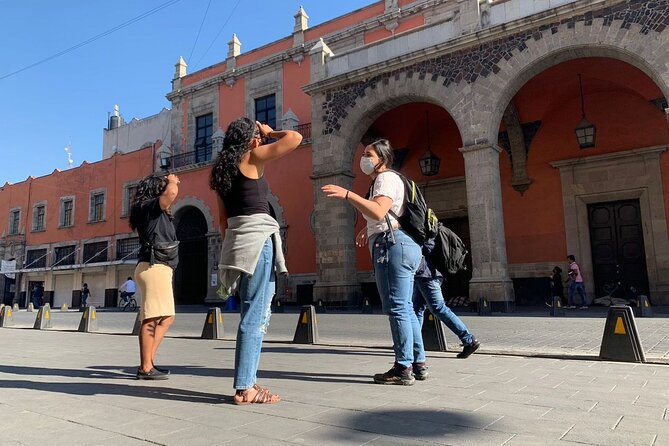
The artwork covers about 1,450 square meters. Murals associated with students of Diego Rivera give the market a surprise art component. You are not entering a dedicated museum where every wall has a label. You are seeing art in a place built for ordinary commerce, which makes the setting part of the lesson.
Your guide also explains the market’s link with Mexico City’s social and political life in the early 20th century, as well as connections involving Diego Rivera and Frida Kahlo. The value here is context. You get a better sense of how public art, education, workers, and community services were brought together in one civic space.
The first tastings include tamales and atole. A tamal gives you an early taste of corn-based Mexican cooking, while atole is a warm traditional drink with a thick texture. Depending on the day and the vendor, the exact serving may vary, but you should expect these items to function as an introduction rather than a formal breakfast course.
This stop is especially good for people who like art and urban history alongside food. If you only want a rapid succession of tastings, the explanations may feel like a pause. I would not rush it. The market’s murals are one of the tour’s more unusual features, and they are easy to miss without someone pointing them out.
Riding the Metro to Mercado Jamaica
The move to Mercado Jamaica is part of the experience, not dead time. You ride Mexico City’s Metro with your guide, learning the basics of a transport system that can seem intimidating at first. Several guides have helped people feel comfortable enough to use the Metro on their own later in the trip.
That practical lesson adds real value to the tour price. A private car would be easier, but it would hide a useful part of city life. You see how locals cross the city, and you get a low-cost transport skill that can help with later sightseeing.
The Metro ride also means you should keep your belongings close. The tour’s own advice is sensible: leave passports, credit cards, and other valuables at your hotel. Carry a small amount of spending cash, your phone if needed, and only a small camera. Large professional camera equipment is not suitable for this activity.
The route includes walking through city streets and crowded market areas. Dress conservatively, with jeans or long trousers and a T-shirt. A raincoat or umbrella is a good idea from May through September, when wet weather can make an already long walk less pleasant.
Mercado Jamaica: flowers, produce, and prepared food
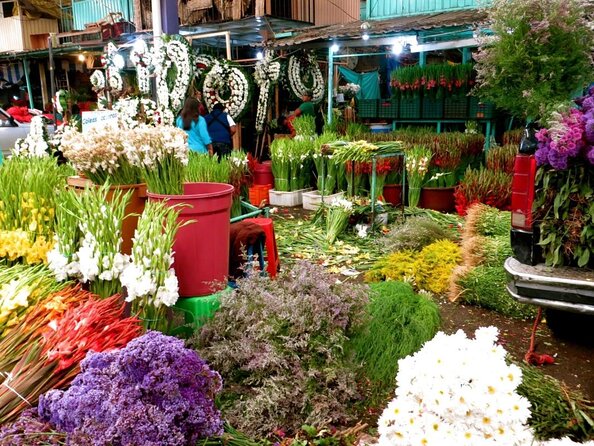
Mercado Jamaica is the tour’s largest food and flower stop. It is described as a three-part market with flowers, fresh produce, and prepared food. That mixture gives you more variety than a market focused on one product.
The flower section is a visual highlight. You can ask a vendor to choose flowers that match your eye color, a small and playful interaction that gives the visit a personal touch. You also see why Jamaica is important to Mexico City’s flower trade, without needing a staged demonstration.
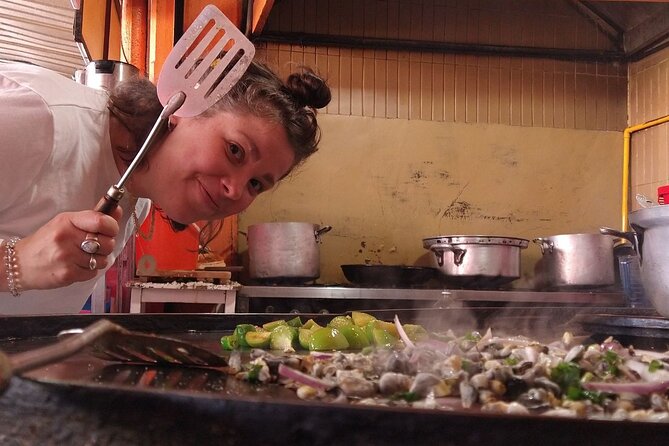
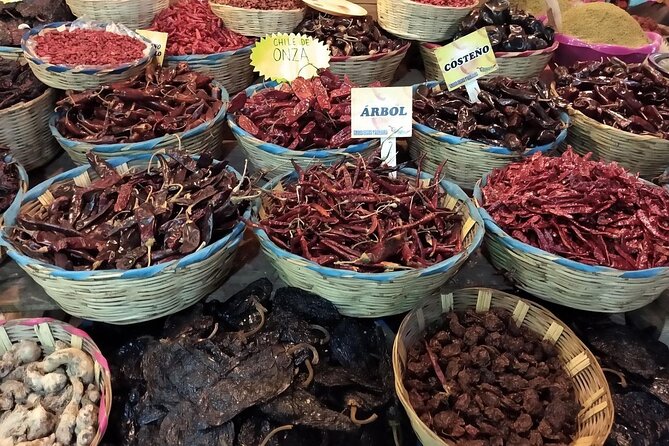
From there, the tour moves through produce stalls and food counters. You may taste tacos, local fruit, pineapple tepache, and other market bites. Green chorizo has been a favorite tasting for some people, while tamales, café de olla, atole, and huaraches also appear in the food portion of the experience.
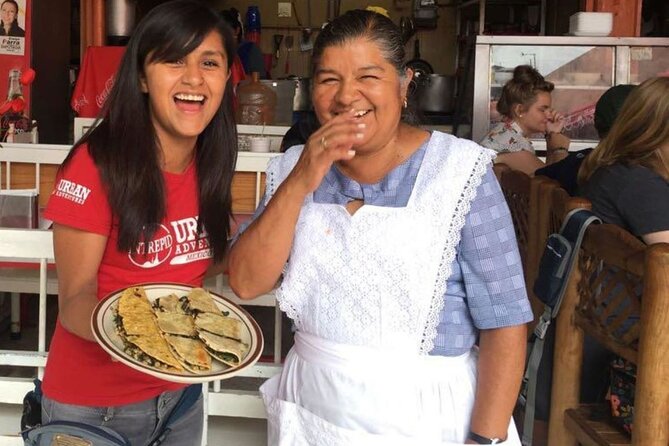
A huarache is a thick oval masa base topped with ingredients, often beans, meat, cheese, salsa, or vegetables. It is filling, so do not eat a large breakfast before meeting the group. The tour can include enough food to cover breakfast and lunch-sized portions, although the official details say food and drinks are not included unless specified. Treat the tastings as variable and bring money for anything you want to buy.
The produce section adds a useful farming angle. You may buy fresh vegetables for the salsa lesson while learning about local farming practices. This makes the later cooking activity feel connected to the market rather than tacked on at the end.
Same city, a different plate:
- Winner 2025 Downtown Vallarta Food Tour with Vallarta Food Tours
★ 5.0 · 3,738 reviews - Chichen Itza Gastronomic, Valladolid and Cenote Extremo
★ 5.0 · 2,558 reviews - Playa del Carmen Walking Food Tour
★ 5.0 · 1,274 reviews - Historic Center Food Tour in Mexico City
★ 5.0 · 1,263 reviews
Making salsa with a family business
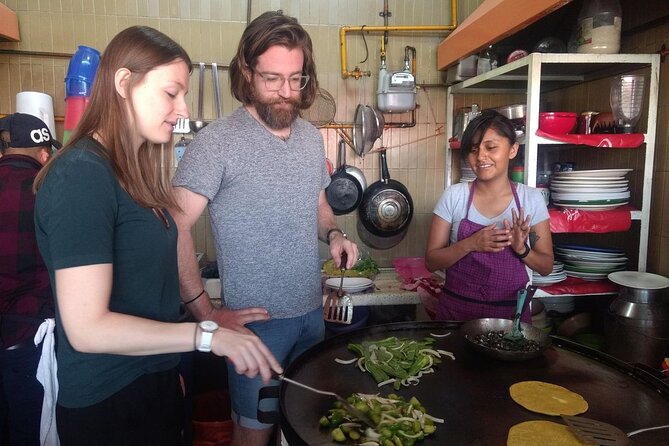
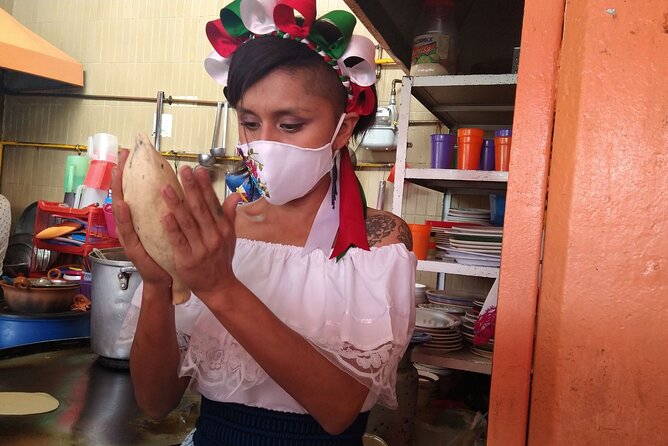
The salsa lesson is the most hands-on part of the morning. With guidance from a local family business, you wash, cut, and grill the ingredients, then crush them in a molcajete. That tool, a traditional mortar and pestle, gives the salsa a texture and flavor different from a completely smooth blender version.
You do not simply watch someone prepare food. You take part in the basic steps and then taste the result with a classic huarache. The family’s patience has been a repeated strength of the experience, especially for people who have never cooked this way.
The setting is also important. The lesson takes place in connection with the market and a family-run food business, rather than in a polished cooking school. You should expect a straightforward, practical session. It may be informal, and that is part of its appeal.
This activity suits people who want to take home a skill, not just photographs. You may not leave with a written recipe, since that is not specified, but you will understand the main process: choose ingredients, prepare them, grill where appropriate, and use the molcajete for the final texture.
Vegetarian, gluten-free, and lactose-free needs can be accommodated if you provide notice at least 24 hours ahead. You should still state your needs clearly when booking, since market food can contain ingredients that are not obvious.
What the $69.45 price really covers
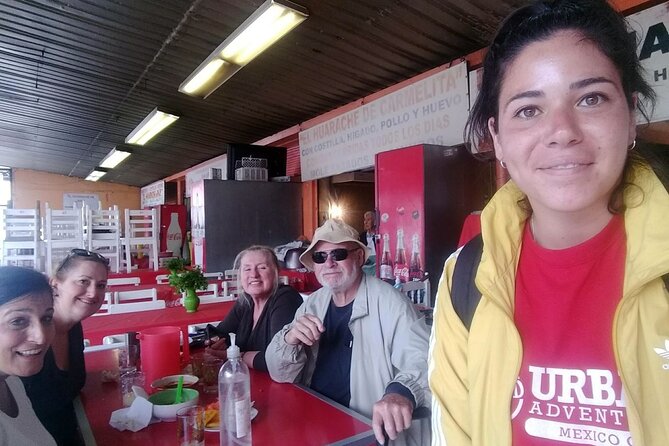
At $69.45 per person, the tour is not simply a food crawl. You are paying for an English-speaking guide, a small-group format, market interpretation, Metro guidance, several tastings, and a salsa lesson with a local family. The group limit of 12 is useful because market stalls are tight, and a smaller group makes it easier to hear explanations and ask questions.
The price is stronger if you value access and context. Without a guide, you could visit Mercado Jamaica, but you might not know where to begin, how to navigate the Metro, which foods to try, or how to approach the salsa-making stop. The first market, especially, is the sort of place many visitors would pass without understanding its importance.
The price is less attractive if your main goal is a large, guaranteed meal. Food and drinks are listed as not included unless specified, so keep extra pesos handy. You may want to buy additional fruit, flowers, drinks, or market food as you go.
I see the tour as good value for a first or second day in Mexico City. The Metro orientation can help with the rest of your visit, and the guide can point out buildings, markets, and food ideas worth exploring later.
Walking, weather, and the pace of the morning
Six kilometers is not an extreme distance for a fit walker, but markets make walking feel harder. You stop often, weave around stalls, stand while eating, and move through busy streets. Some people find the pace manageable, while others may find it strenuous if they are not used to long city walks.
Wear supportive shoes. Do not dress for a fancy restaurant. Jeans or long trousers and a T-shirt fit the non-tourist settings better, and conservative clothing is recommended.
Start with water, even though you can buy more during the route. In the rainy season, carry a compact umbrella or wear a raincoat. The tour runs in the morning, but weather can still affect the comfort of outdoor stretches.
A small group helps, but you should not expect a private experience unless the booking happens to be very light. One booking described a private outing with a guide, but that is a possibility rather than something to count on.
Who should book this experience
I would choose this tour if you want local food with a strong cultural frame. It works well for solo visitors, couples, families, and friends who want more than the standard historic-center walk. Families can enjoy the salsa lesson, while solo visitors may appreciate the structure and company.
It is also a good choice if you are curious about using public transport but have not yet tried the Metro. The guide gives you a practical introduction instead of leaving you to decode the system alone.
Food-focused visitors should come hungry but flexible. The exact tastings can depend on the market vendors, and the tour description does not promise a fixed menu. Vegetarian, gluten-free, and lactose-free requests are possible with at least 24 hours’ notice.
I would hesitate if you dislike crowded markets, long walks, public transport, or informal food settings. This is not a polished tasting room, and you may spend time standing, navigating tight aisles, and eating from market stalls.
Booking details worth knowing
Meet at 8:30 a.m. at República de Guatemala 4, near the Hostel Mundo Joven facade in Centro Histórico. The tour ends at the Palacio de Bellas Artes on Avenida Juárez, which can be convenient for continuing your day in the historic center.
Confirmation is provided when you book. Free cancellation is available up to 24 hours before the start time. Changes or cancellations inside that window are not accepted for a refund.
The activity is offered in English and is intended for people with a moderate level of fitness. Leave expensive valuables at your hotel and bring only a small camera. If you want to support independent vendors and family businesses, this tour directs spending toward exactly those places.
Should you book the Mexico City market and salsa tour?
Book it if you want a morning that combines murals, Metro travel, market food, flowers, and hands-on cooking. The strongest parts are the unusual first market, the practical transport lesson, and the salsa session. Guides such as Viri, Andrea, Axel, Alfonso, and Poncho have added much of the personality that makes the route work.
Think twice if you want a guaranteed restaurant meal, minimal walking, or a carefully controlled food presentation. Also confirm the meeting details and market name before departure, since the first stop is described with both Mercado Melchor Múzquiz and Abelardo L. Rodríguez names.
For most active visitors, I would book this early in a Mexico City stay. You get a better feel for local food, learn how to use the Metro, and finish with several useful ideas for the rest of your visit.
FAQ
How long does the Mexico City market and salsa tour last?
The experience lasts approximately five hours. It begins at 8:30 a.m. and ends near the Palacio de Bellas Artes.
Where does the tour begin?
Meet at República de Guatemala 4 in Centro Histórico, near the facade of Hostel Mundo Joven.
Where does the tour end?
The tour ends at the Palacio de Bellas Artes facade or entrance on Avenida Juárez in Centro Histórico.
Which markets does the tour visit?
It visits Mercado Melchor Múzquiz, also described in the tour details as the Mercado Presidente Abelardo L. Rodríguez, and Mercado Jamaica.
Is food included in the tour price?
Some tastings are part of the experience, including items such as tamales and atole. Food and drinks are otherwise listed as not included unless specified, so bring extra cash for purchases.
What foods and drinks might I try?
Tastings can include tamales, atole, tacos, huaraches, fruit, pineapple tepache, and café de olla. Green chorizo has also been included among the market tastings.
How much walking is involved?
The route covers about 6 kilometers, or 3.7 miles, through markets and city streets. A moderate level of physical fitness is recommended.
Can dietary requirements be accommodated?
Vegetarian, gluten-free, and lactose-free requests can be accommodated if you provide notice at least 24 hours before the tour.
More Market Food Tours in Mexico
- Cancun Taco Tour, Local Beer and Night Market with Transportation
★ 5.0 · 816 reviews - Mexico City: Mystic Markets La Merced & Sonora Culinary Tour
★ 4.9 · 301 reviews - Cancún: Street Food, Local Market and Urban Art Tour
★ 4.7 · 88 reviews - Market tour and all gastronomy included⭐️⭐️⭐️⭐️⭐️
★ 4.6 · 35 reviews
Fresh off the menu around Mexico
- Street Food Walking Tour in Merida★ 4.8 · 48 reviews
- San Miguel: Evening Food Tour★ 4.7 · 51 reviews
- San Miguel: Downtown Food Tour★ 4.9 · 43 reviews
- Puerto Vallarta 3-Hour Food Tour of Authentic Local Cuisine★ 4.9 · 73 reviews
- Puerta Vallarta: Seafood Lover’s Food Tour★ 5.0 · 36 reviews
- Playa del Carmen: 3-Hour Local Food Walking Tour★ 4.8 · 267 reviews
- Mexico City: Zocalo Tacos Tour by Michelin-Star Chef Torres★ 4.8 · 22 reviews
- Mexico City: Vegan and Vegetarian Street Food Adventure★ 4.8 · 65 reviews
Mexico City Food Tours, compared.
Polanco Food Tour: The Bestselling Food Adventure in Mexico City
Read our review →
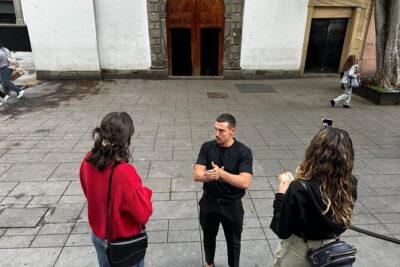
Mexico City Historical Centre Food Tour with 7 Authentic Tastings
Read our review →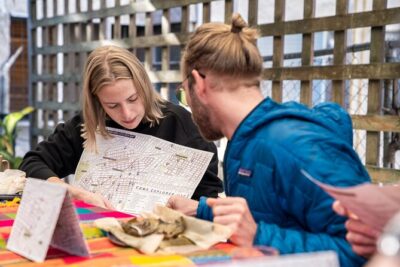
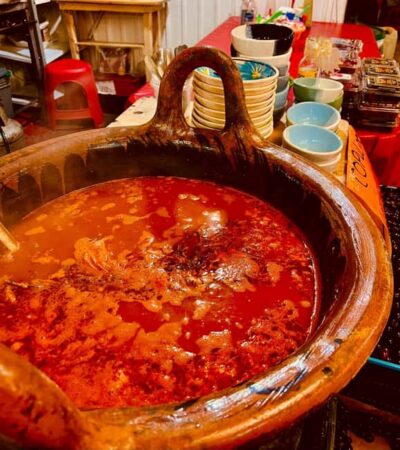
Mexico City: Mystic Markets La Merced & Sonora Culinary Tour
Read our review →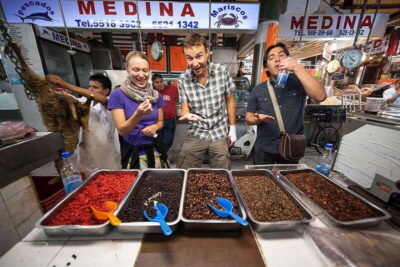
Browse the lists this tour appears in