
Review · SAN SEBASTIAN
San Sebastian: Market, Pintxos and Wine Tasting Tour
San Sebastian’s pintxos scene can feel like a delicious puzzle: crowded bars, unfamiliar dishes, and no obvious way to know which counter deserves your appetite. This three-hour tour solves much of that problem by taking you from a food market to several Old Town bars, with local drinks matched to the food along the way.
I like the market opening, which gives the tour a sense of place before the bar-hopping begins. I also like the human side of it: guides such as Jon, Daria, Arantxa, and Telmo bring you into contact with vendors and bartenders they know. The main drawback is the fixed pace. You visit several stops in three hours, so this is a tasting tour, not a slow meal at each bar.
Key points at a glance
- Start with the market: Taste ham, regional produce, olives, oil, and Gilda before entering the Old Town.
- Learn the story of La Gilda: This classic pintxo of olive, anchovy, and pickled pepper connects food with local tradition.
- Taste six pintxos: Stops range from old-style bites to more modern, chef-driven plates.
- Pair food with five drinks: Expect local wine, Rioja, cider, and liqueur.
- Hear Basque stories: Guides explain the language, cooking clubs, customs, and food culture.
- Book early in your stay: The guide’s bar and dish suggestions can shape the rest of your time in San Sebastian.
Why this tour is a smart first taste of San Sebastian
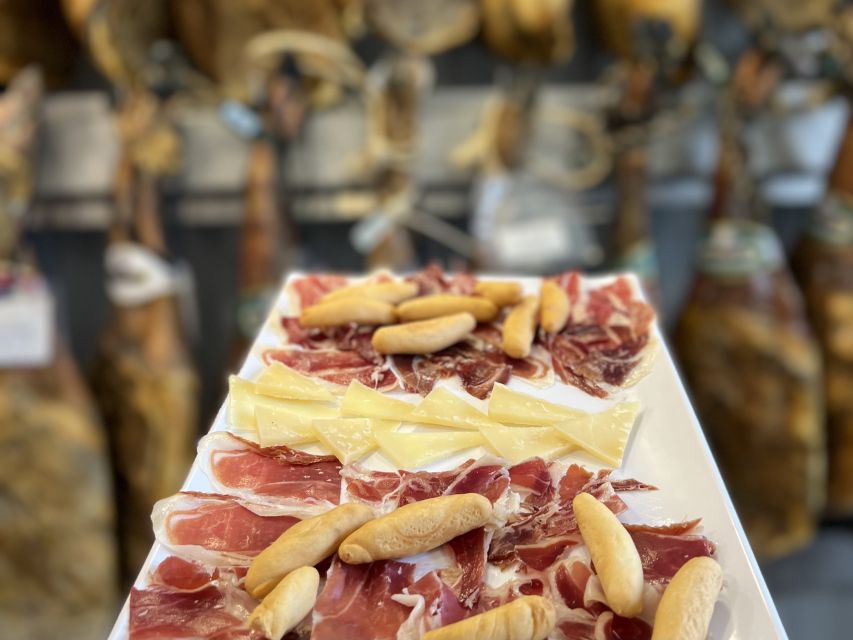
San Sebastian is famous for small plates, but the best way to eat them is not always obvious. A bar may display dozens of pintxos, some cold and ready on the counter, others made to order. You may recognize only a few ingredients. The tour gives you a local guide who explains what you are eating and why a particular bar matters.
The schedule is built around several short food and drink stops. You begin near the meeting point between McDonald’s and Forum Sport, then walk to a food market before continuing into the Old Town. At the end, you return to the same starting area.
The experience costs $162 per person. That is not cheap for three hours, but the package includes six pintxos, five local drinks, a market tasting, and a guide. You also pay for access to places and combinations you might not find on your own. Several people who took similar food walks said they returned to the recommended bars later, which is where the value becomes clearer.
You should think of the price as part meal, part orientation, and part local introduction. If you only want a few cheap snacks, it may feel steep. If you want a generous first meal and a clear plan for eating during your stay, it is easier to justify.
More Market Food Tours in Spain
- San Sebastian Pintxo Food, Wine & Market Foodie Tour(Small Group)
★ 5.0 · 621 reviews - Ultimate Barcelona Food Tour with visit to a Local Market
★ 5.0 · 507 reviews - De Mercados: A Neighborhood Market and Food Tour
★ 5.0 · 237 reviews
The market sets the tone with ham, olives, and oil
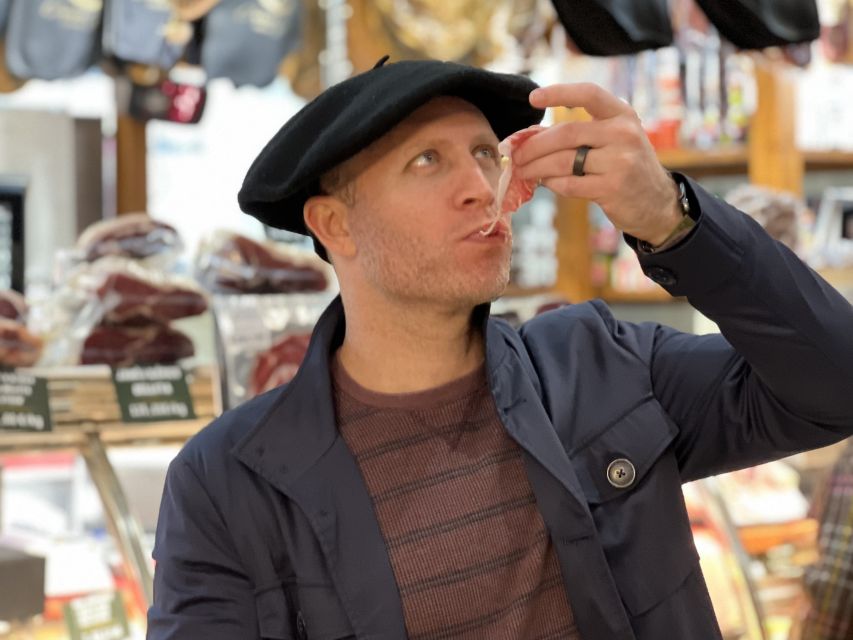
The first food stop is a regional market, planned for about 20 minutes. This is a useful beginning because you meet the ingredients before you meet the finished dishes.
Expect a ham tasting and an introduction to local produce. The tour also includes a stop at an olive shop, where you taste olives, Gilda, and olive oil. This is more than a quick sample. The guide explains the history of La Gilda, one of the oldest known pintxos, and introduces you to a local vendor associated with one of the world’s top four olive oil shops.
That detail gives the market visit a personal quality. Instead of simply pointing out products, the guide connects you with people who sell and handle them. It also shows how Basque food culture works at a basic level: good ingredients are not hidden behind elaborate presentation.
The market portion is short, so do not expect a full market tour or a long shopping break. Its purpose is to prepare your palate and give you context before the Old Town stops begin.
Market hours matter here. The market is closed on weekends and Monday afternoons, so the tour changes on those occasions. You receive an additional pintxo instead of the market visit. That is a practical adjustment, though anyone especially interested in food shopping should choose a weekday morning or another time when the market is operating.
La Gilda explains how Basque pintxos began
La Gilda is one of the most memorable lessons on the tour because it is small, sharp, and tied to local tradition. The usual combination includes an olive, anchovy, and pickled pepper. The ingredients are simple, but the bite is salty, sour, and lively.
The guide uses La Gilda to explain how pintxos developed from modest bar snacks into a major part of San Sebastian’s food culture. You also learn the difference between pintxos and tapas, a distinction several guides make a point of explaining.
This is the sort of detail that helps later in the trip. Once you know what makes a pintxo different from a tapas plate, you can order with more confidence. You also begin to notice how bars present food in different ways.
The tour moves from these older traditions toward more modern pintxos. That change over the course of the afternoon or evening is one of its best features. You are not simply eating six unrelated snacks. You are tasting a small history of the city, from La Gilda to more inventive plates.
Old Town bar-hopping with a local guide
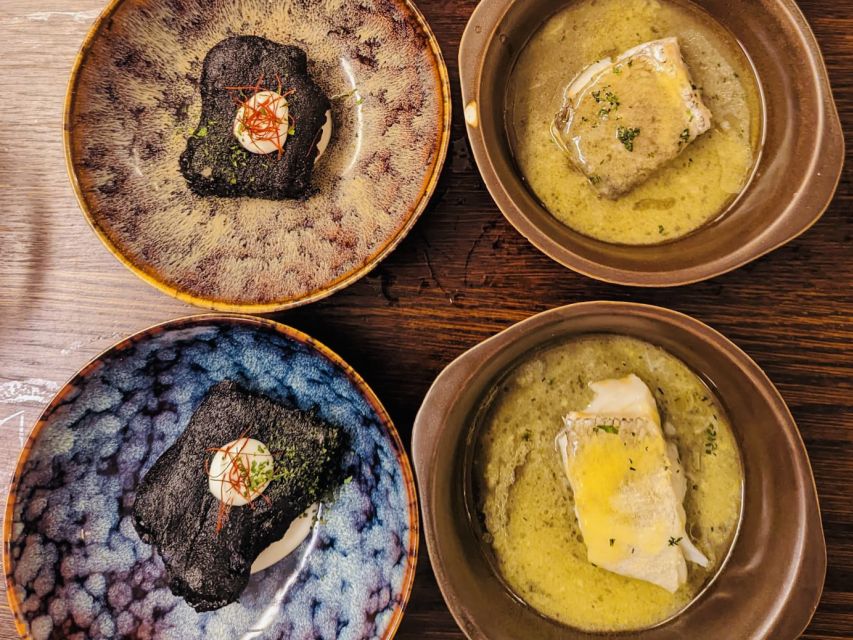
After the market, the tour heads into San Sebastian’s Old Town. The itinerary includes four food and wine stops in the quarter, lasting roughly 20 to 30 minutes each. In practice, the experience is a guided bar crawl with food at every stage.
You taste six top local pintxos, with the exact selection shaped by the bars, season, and guide. The food can include traditional combinations as well as more modern plates that feel closer to a small restaurant course than a simple snack.
That range matters. If every stop served the same kind of ham-and-cheese bite, the tour would become repetitive. Instead, the progression lets you compare styles. One bar may represent an older San Sebastian custom, while another shows how local chefs now use more polished techniques.
The guide also explains how to order and how the bars function. This is valuable for first-time visitors because pintxos etiquette can be confusing. You learn by watching the room, following the guide, and seeing how the food is served at each stop.
The tour includes five local drinks. Depending on the route, you may taste Rioja, txakoli, natural apple cider, and a local liqueur. One of the pleasures is the contrast between the drinks. Rioja gives you a familiar red wine style, while txakoli offers a different Basque wine experience. Cider brings another tradition altogether.
Some people do not drink alcohol, and the tour can accommodate them with alternatives. You should mention this when booking or at the start.
More Tapas Tours in Spain:
- Montserrat Half-Day Tour with Tapas and Gourmet Wines
★ 5.0 · 7,359 reviews - Montserrat & Cogwheel Train, Gourmet Wine Tasting & Tapas/Lunch
★ 5.0 · 6,290 reviews - Barcelona: Tapas Walking Tour with Food, Wine, and History
★ 4.8 · 4,261 reviews - Madrid Tapas & Wine Tasting Walking Tour – Small Group Local Bars
★ 5.0 · 3,644 reviews
Wine, cider, and the art of the pour
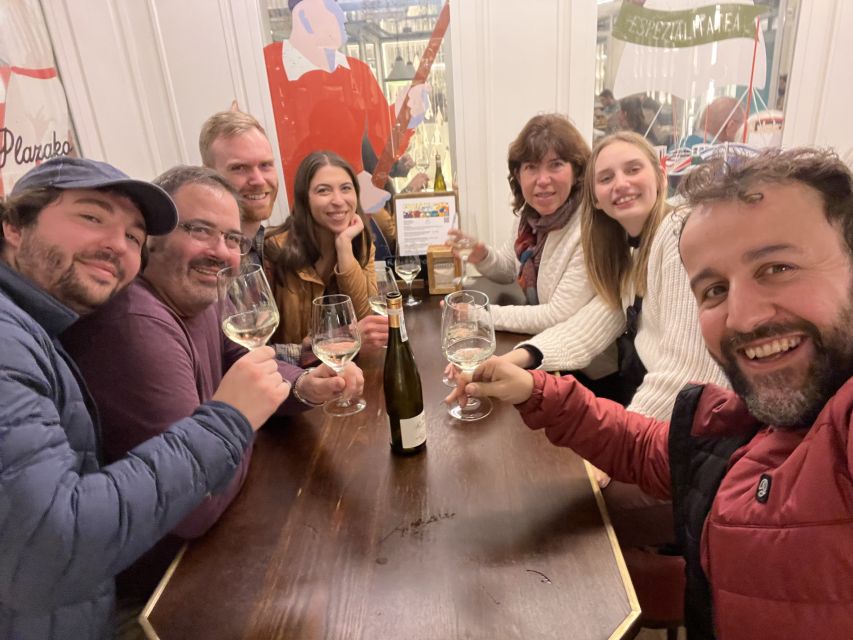
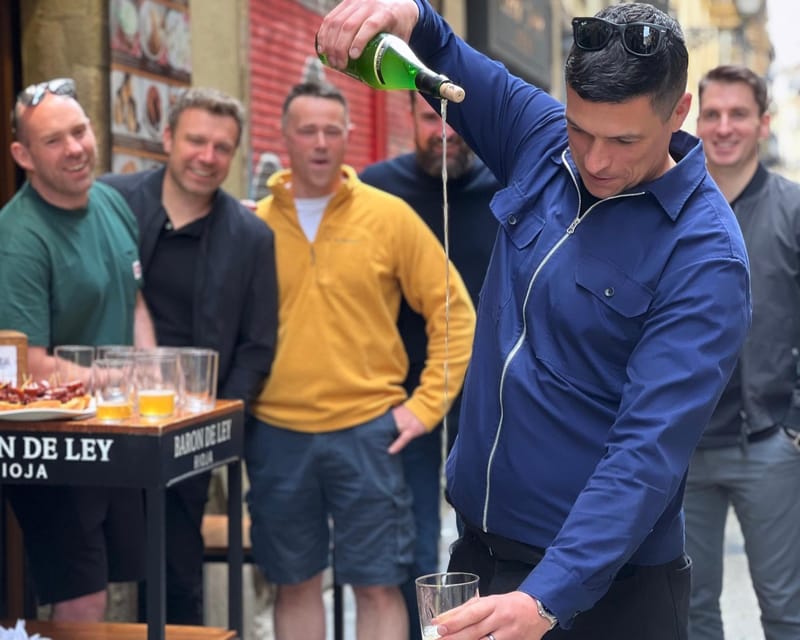
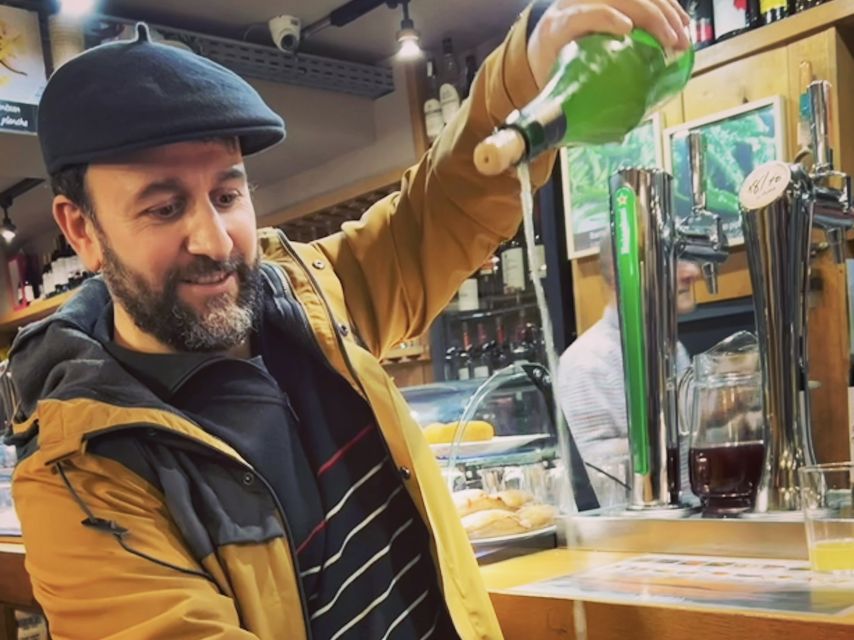
The cider stop adds a bit of theater. Basque cider is traditionally poured from a height into the glass, and the guide may show you how to do it. It is a simple skill, but it gives you something to remember and try again during the rest of your stay.
The drink pairings are not just there to fill the glass. They help you understand how local food is eaten. A sharp cider can cut through rich or salty food. White wine brings a different balance. The guide explains these choices while you eat, rather than saving all the information for a formal lecture.
The experience can include sherry with dessert and a Basque cheesecake, though the exact route can vary. A past route ended with cheesecake and sherry, which makes sense as a final contrast after savory pintxos and cider.
You should pace yourself. Five drinks over three hours, along with six pintxos and the market tasting, can add up quickly. Drink water when you can, and avoid arriving after a large meal. Several people found the portions filling, and one useful tip is to keep lunch light if you take an evening tour.
Basque language, cooking clubs, and city stories
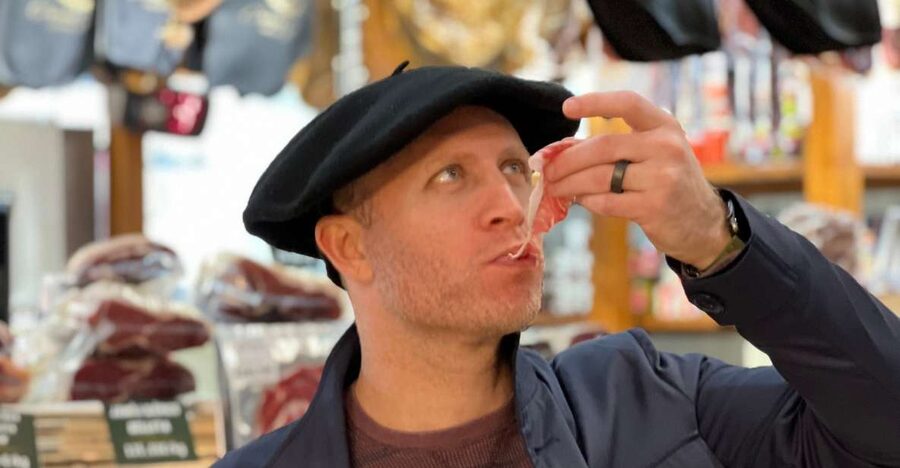
The tour is not only about eating. As you walk, the guide introduces Basque words, local customs, and the history of San Sebastian. Basque is an ancient language with no close relationship to Spanish or French, and hearing a few words adds another layer to the city.
You may also hear about private cooking clubs. These clubs are an important part of local food life, where members prepare and share meals away from the public restaurant scene. The subject helps explain why cooking is not simply a business in the Basque Country. It is also a social habit and a source of local pride.
The guides bring different personalities to the route. Jon is known for his energy and his connections with bar owners and vendors. Daria and Arantxa have led many routes with a lively, personal approach. Telmo has also guided the experience, combining food with Basque language and practical suggestions for the rest of a visit. Other guides, including Martin and Gabby, may lead the tour depending on the date.
That variety means the experience is not entirely standardized in tone. The stops and inclusions follow the same general plan, but the guide can shape the conversation. A private or small-group option gives you more room to ask about dishes, wine, history, and places to eat later.
How much walking and socializing to expect
This is a walking tour through the market and Old Town, but the walking is not the main physical challenge. The route includes several food stops, and seating may be available at some of them. The schedule is active, though not designed as a long city hike.
You should expect to stand at bars and move through busy areas. San Sebastian can be crowded during celebrations and popular dining hours. A good guide helps the group move between stops, but you will not have a private dining room at every stage.
The social side is central. You may eat with people from several countries, and the guide creates a shared rhythm by introducing each dish and drink. This works well for solo visitors, couples, and small groups that enjoy conversation.
A private booking gives you more control. A shared small group can be more sociable and often feels more relaxed than a large coach-style excursion. The experience is not suitable for children under 13, and it is not suitable for wheelchair users, according to the activity information.
The tour runs in rain or sunshine. Because much of the experience takes place inside bars and market spaces, rain does not cancel the food portion, but you should bring a waterproof layer and shoes that work on wet streets.
When to schedule it and what to eat afterward
I would book this on your first or second day in San Sebastian. You learn which bars appeal to you, which dishes deserve another order, and how to approach the Old Town on your own.
The tour can also help you avoid wasting your appetite. Instead of choosing a bar because its counter looks impressive, you leave with practical suggestions. A guide may point you toward a favorite dish, a particular shop, or a place worth returning to at a quieter time.
Do not plan a major dinner afterward. The combination of market samples, six pintxos, and five drinks is substantial. The tour is best treated as a full meal with a walking component, especially if you choose an evening departure.
If you already know San Sebastian well, the value depends on your aim. You may still find new dishes and bars, especially if you have only eaten in the most obvious Old Town spots. But someone who prefers to wander alone and make spontaneous choices may find the scheduled route less appealing.
The real value of $162
At $162, the tour is a splurge. You are paying more than the direct cost of a few pintxos and drinks. The question is what else you gain.
First, you get a substantial amount of food and drink. The official inclusions are six pintxos, five local wine, cider, and liqueur servings, plus the market tasting. Second, you get a guide who explains the food rather than leaving you to guess. Third, you get introductions to local businesses and a suggested map for the rest of your stay, even if that map is informal.
The strongest value comes if you are new to San Sebastian, interested in food, or nervous about ordering in busy bars. It is also useful if you are traveling alone and want an easy social evening.
The value is weaker if you do not drink, eat very little, or dislike group pacing. Nonalcoholic options are available, but a large part of the package is built around beverage pairings. You should also remember that the market visit is replaced by another pintxo on weekends and Monday afternoon.
Free cancellation is available up to 24 hours before the tour, and you can reserve now and pay later. Those terms make it easier to fit the experience into a changing trip plan.
Should you book this San Sebastian pintxos tour?
Book it if you want a friendly introduction to Basque food, a full tasting meal, and clear guidance on where to eat next. The market, La Gilda lesson, cider pouring, local language, cooking-club stories, and Old Town bar stops give the experience more substance than a simple series of tastings.
I would especially recommend it for a first visit, solo visitors, and anyone who wants local food explained without a formal classroom feel. Choose a weekday when the market is open if that part matters to you.
Skip it if you prefer to eat slowly at one restaurant, avoid alcohol, or explore without a fixed route. At $162, the price asks you to value the guide and the access as much as the food itself. For the right eater, it is a practical and filling start to San Sebastian.
FAQ
How long is the San Sebastian Market, Pintxos and Wine Tasting Tour?
The tour lasts three hours, including the market visit, Old Town walking, food tastings, and drinks.
What food is included?
The tour includes a market tasting, samples of ham, cheese, olives, olive oil, and Gilda, plus six local pintxos.
What drinks are included?
Five local drinks are included. These can include wine, Rioja, natural apple cider, and liqueur.
Is the market open on every tour?
No. The market is closed on weekends and Monday afternoons. On those departures, the market visit is replaced with an additional pintxo.
Where does the tour meet?
Meet the guide between McDonald’s and the Forum Sport store. Hotel pickup and drop-off are not included, but bus and taxi stops are nearby.
What languages are available?
The tour is offered in English, Spanish, and Basque.
Can children or wheelchair users join?
Children under 13 are not permitted, and the activity is not suitable for wheelchair users.
Fresh off the menu around Spain
- Jerez: Traditional Tapas Tour★ 4.6 · 138 reviews
- Seville Food Tour with Tapas & Drinks with a Local★ 4.8 · 98 reviews
- Seville: Tapas Walking Tour with Traditional Flamenco Show★ 4.9 · 100 reviews
- Seville: 3-Hour Tapas Tour by Bike★ 3.9 · 72 reviews
- Seville: Flavors of Andalucía Guided Food Tour with Tastings★ 4.9 · 332 reviews
- Seville: Food Tour with 10 Tastings of Tapas, Ham, Churros★ 4.7 · 22 reviews
- Santiago: Guided Foodie Tour with Drinks, Tapas & Live Music★ 4.7 · 153 reviews
- San Sebastian Food Tour with Pintxos & Drinks with a Local★ 5.0 · 26 reviews
San Sebastian Food Tours, compared.
San Sebastian Pintxo Food, Wine & Market Foodie Tour(Small Group)
Read our review →
Discover San Sebastián’s Best Pintxos on a Unique Culinary Tour
Read our review →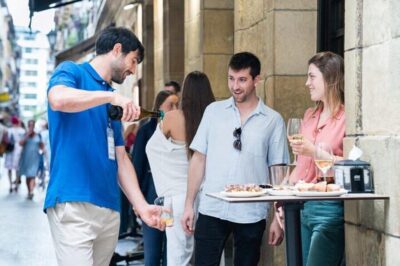
San Sebastian Food Tour: Pintxo Tasting Paired with Wines
Read our review →
San Sebastian Pintxos Tour for Gourmets in the Old Town
Read our review →Browse the lists this tour appears in