
Review · NAPLES
Naples: Premium Pizza Class From Dough to Dessert & Wine
Neapolitan pizza is not hard because it uses many ingredients. It is hard because simple dough leaves nowhere to hide. In this two to three hour class, you work with water, flour, salt, and yeast, then shape your own Margherita in a 2017 World Pizza Championship pizzeria.
I like the individual workstations, which keep this from becoming a cooking demonstration where you only watch. I also like the complete meal: savory pizza, sweet fried dough, a drink, and limoncello. The main consideration is that some classes use a translator because the pizzaiolo may speak only Italian, and the dough may not have enough time to rise fully during the session.
Key points to know
- Four basic ingredients: Learn how water, flour, salt, and yeast become Neapolitan dough.
- A real working pizzeria: Practice in a pizzeria linked with the 2017 World Pizza Championship.
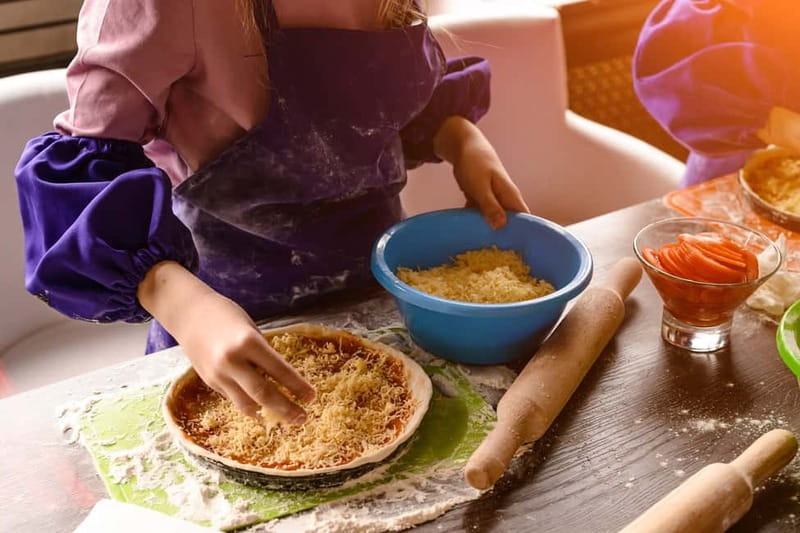
- Your own pizza: Knead, shape, stretch, top, and bake your personal Margherita.
- The staglio technique: Form dough balls, called panetti, using an old Neapolitan method.
- Dessert from the same dough: Try crispy fried dough filled with chocolate spread, often described as little angels.
- Small-group format: Private and small-group options are available, with Italian and English instruction.
Why this class works in Naples
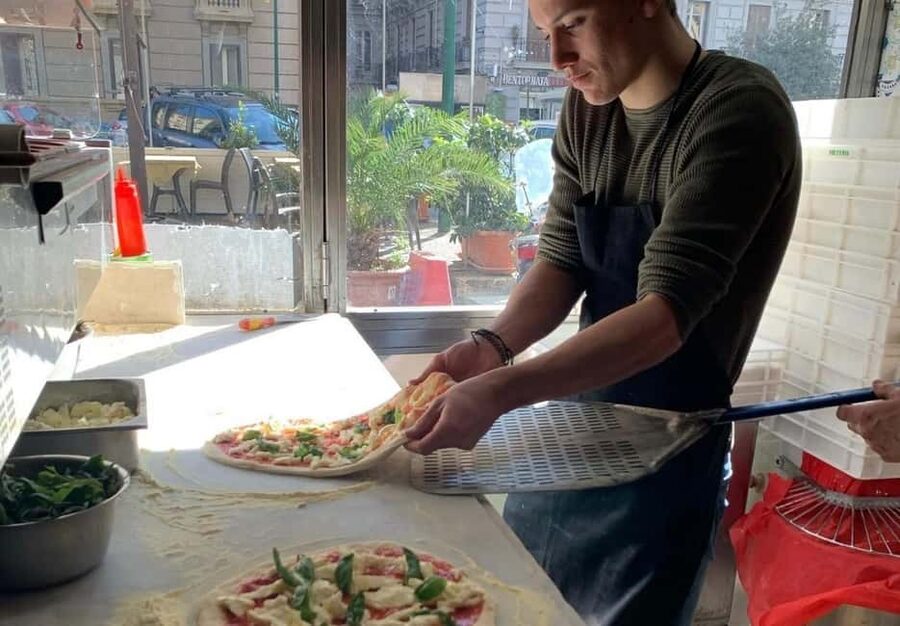
Pizza in Naples is not just a meal you order between sights. It is a local craft built around restraint. The dough, tomatoes, cheese, basil, olive oil, heat, and timing all matter. This class gives you a useful look at that process instead of treating pizza as a quick tourist prop.
The setting helps. You are in a genuine Neapolitan pizzeria, not a hotel kitchen designed only for visitors. The pizzeria won the World Pizza Championship in 2017, and the class puts that professional setting to practical use.
I especially like the way the lesson begins with the dough. You do not start by spreading sauce over a ready-made base. You handle the mixture yourself, learn how it feels, and see why the pizzaiolo pays attention to texture and pressure.
You also get a meal at the end, so the class has two jobs. It teaches you something, and it feeds you well. At $70 per person, that matters. You are not paying only for a demonstration. The price covers instruction, ingredients, your pizza, dessert, a drink, water, limoncello, and a digital recipe.
More Dessert Tours in Naples:
- Award-Winning Geneva Chocolate &Old Town Tour with Boat Ride (3h)
★ 5.0 · 3,721 reviews - Boston North End Food Tour of 6+ Tastings, Cannoli, Lobster Roll
★ 5.0 · 1,404 reviews - Paris French Sweets Tasting Tour with Pastries and Chocolates
★ 4.5 · 947 reviews
Making dough from water, flour, salt, and yeast
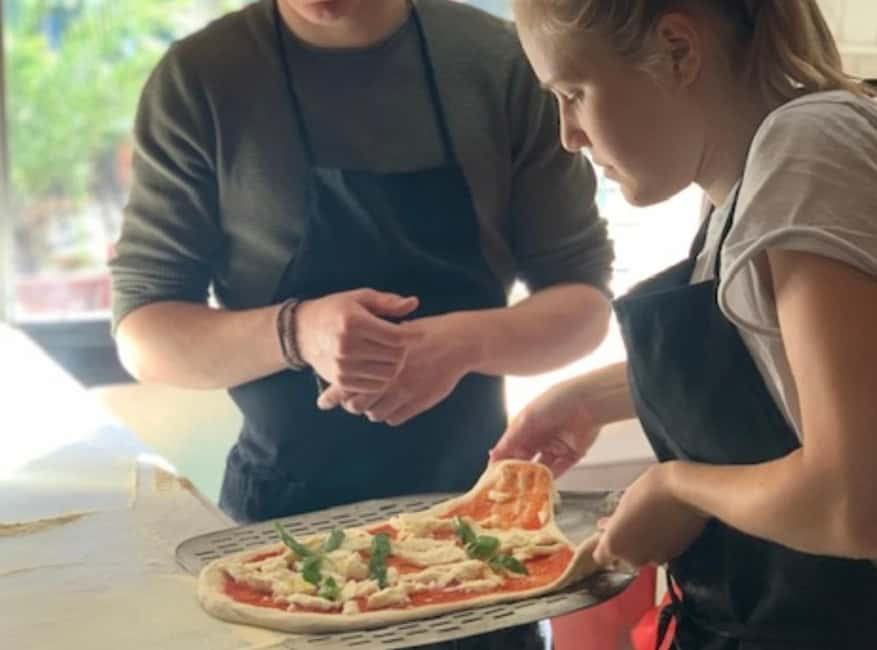
The opening lesson focuses on the foundation of the pizza: dough. You work with four basic ingredients and learn how they come together before the dough reaches the oven.
This is where the class has the most value for home cooks. A pizza recipe can look simple on paper, yet the texture depends on how you knead, how you handle the dough, and how gently you treat it later. The instructors show those movements instead of leaving you to guess.
You will knead the dough by hand, then work on shaping it. The goal is not merely to produce something edible during class. You are learning a process you can repeat at home, even if your home oven cannot match a traditional wood-fired oven.
The lesson includes the ancient technique called staglio. This means dividing and forming pieces of dough into individual balls, known as panetti. It is one of the most useful parts of the class because it gives you a practical way to think about portioning and shaping dough.
Do not expect a long fermentation workshop. The class lasts two to three hours, so the dough cannot follow every professional pizzeria timetable. One useful adjustment is that dough made during the session may also be used as bread if it has not had enough time to prove for pizza. That is a sensible solution rather than pretending the clock does not matter.
Shaping your Margherita by hand
Once the dough is ready to handle, you shape your own pizza. The pizzaiolo demonstrates how to flatten and stretch the dough while preserving the characteristic rim.
This part rewards patience. Press too hard and you risk losing the edge. Stretch too aggressively and the center can become too thin. You will get help with the subtle points, which is important because dough can look easy when an expert handles it and much less easy when you do.
Your toppings are simple and local. Expect San Marzano tomatoes, buffalo mozzarella, basil, and DOP extra virgin olive oil. These ingredients are not buried under a pile of toppings, so you can taste how each one affects the final pizza.
The class makes a traditional Margherita. That is a good choice for teaching because it keeps the focus on dough, sauce, cheese, and heat. If you want a menu of creative toppings, this is not that kind of class. If you want to understand the base of Neapolitan pizza, the limited recipe is a strength.
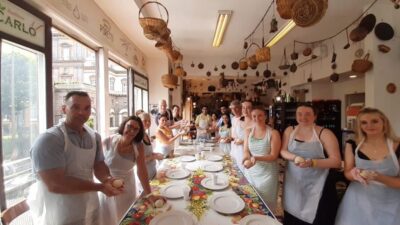
Small groups make a real difference here. Each person has an individual workstation, and private options are available. You can ask questions, get help with shaping, and avoid standing behind someone else while trying to see the demonstration.
The wood-fired oven and the final bake
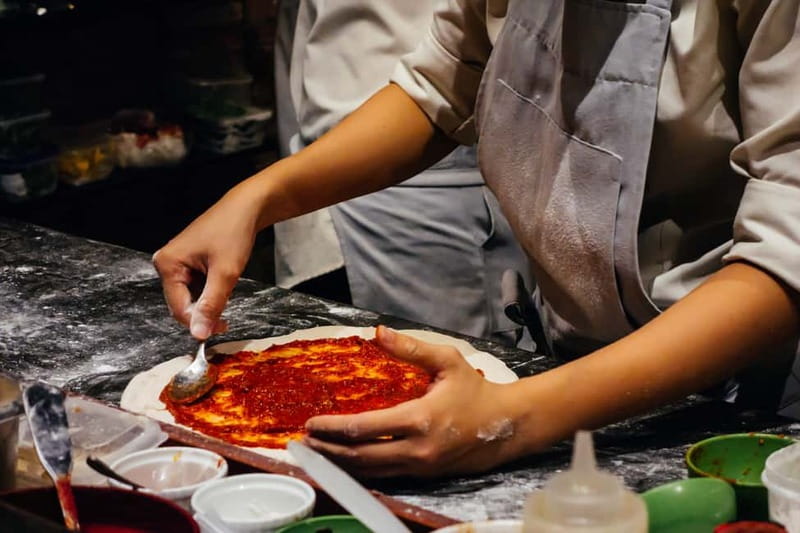
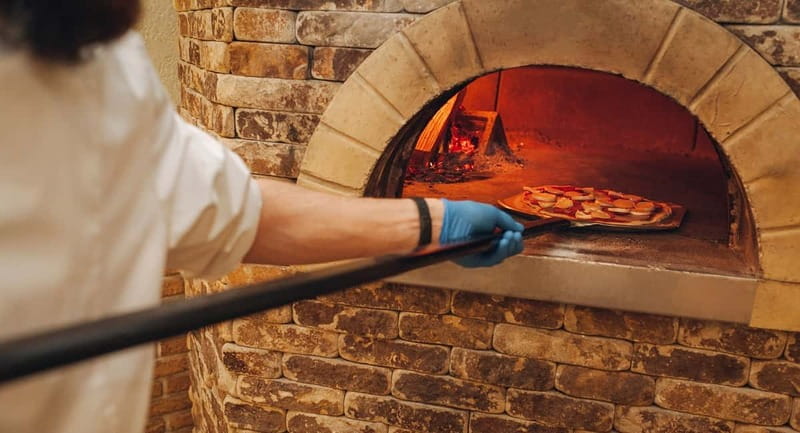
The oven is where your work becomes dinner. After shaping and topping, your pizza goes into a traditional wood-fired oven.
You should expect the pizzaiolo to handle the oven work or guide you closely around it. The heat is serious, and the activity specifically excludes children under six from the work area and oven zone. Children aged six and over can take part, which makes this a useful family activity for older children, provided they can follow instructions around hot equipment.
The bake also gives you a chance to see why a Neapolitan pizza has its particular look and texture. The rim should have character, while the center remains tender enough to fold. Your result may not look like the chef’s, and that is part of the point. You are learning a hand skill, not assembling a guaranteed factory product.
One particularly useful detail is the chance to learn tricks for working with pizza in the oven. That kind of advice can help you understand how the professional corrects small problems during baking.
After the pizza comes out, you sit down and eat what you made. A handmade pizza tastes better when you know every stage that brought it to the table, but the real value is that you can identify what worked and what you would change next time.
More food workshops around Naples:
- Authentic Pizza Making Class in Naples with Appetizers and Drink
★ 5.0 · 3,178 reviews - Naples: Neapolitan Pizza and Tiramisù Making Class
★ 4.8 · 839 reviews - Naples: Pizza Making Class with Local Pizzaiolo
★ 4.8 · 124 reviews - Naples: Authentic Neapolitan Pizza Making Class
★ 4.7 · 97 reviews
Fried dough turns the lesson into a full meal
The class does not stop with the Margherita. The same basic dough gets a sweet treatment as crispy fried bites filled with a famous chocolate spread. These are sometimes called little angels.
This is a playful finish and shows another side of Neapolitan food. The dough is no longer only a base for tomato and cheese. It becomes a street-food style dessert, crisp outside and sweet inside.
I would plan for a filling meal. You receive your pizza, the fried dough dessert, and a drink, so this is more than a light tasting. One glass of wine, beer, or water is included, along with limoncello at the end.
The dessert may feel rich after a full pizza. If you prefer a small, delicate sweet, this part may be more than you want. Still, it fits the spirit of the class: use a simple dough well, waste little, and show how the same base can move from savory to sweet.
The guides shape the experience
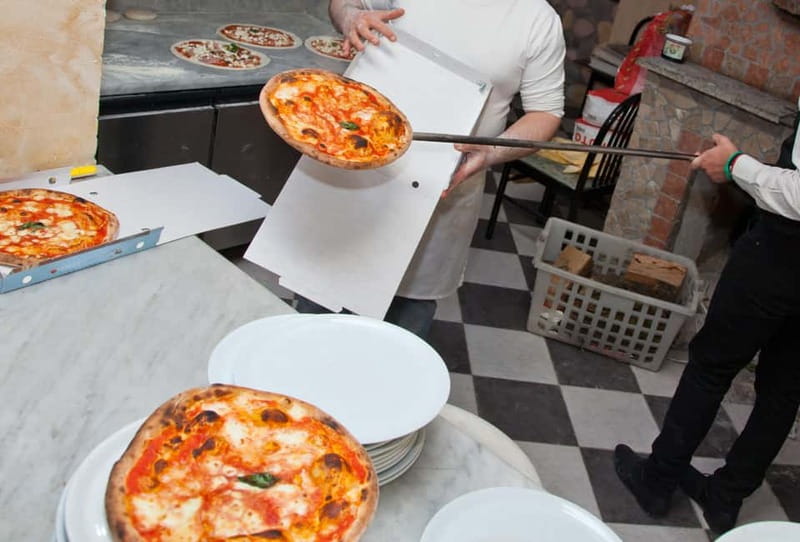
The quality of this class depends heavily on the people leading it. Instructors named in the experience include Lucia, Francesca, Sabrina, Dora, and others, while pizzaioli such as Alessandro and Maurizio provide the technical instruction.
The guides are not only there to translate measurements. They explain the background of Neapolitan pizza, answer questions, and keep the group moving. Francesca is noted for adding local and historical context, while Lucia is known for step-by-step explanations and a welcoming approach. Sabrina has also served as the English-speaking bridge between the class and an Italian-speaking chef.
That language setup is worth understanding before you book. Instruction is available in Italian and English, but the chef may speak Italian while a guide translates. This can slow the rhythm a little, especially in a mixed-language group. It does not remove the hands-on element, but you may not have a direct conversation with the pizzaiolo in English.
The upside is that translation can add useful context. You hear the chef’s practical instructions and the guide’s explanations of ingredients, history, and local customs. The class works best when you are willing to watch closely as well as listen.
Small groups, private classes, and family fit
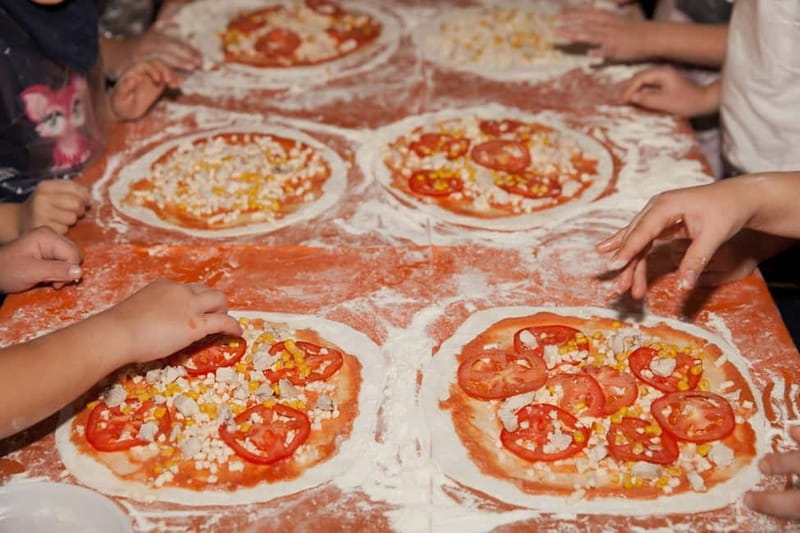
The small-group format is one of the strongest reasons to choose this activity. Your own workstation means you are not waiting for a turn to touch the dough. You can make mistakes in real time and get help before the pizza reaches the oven.
A private option is available if you want a more personal session. That can suit a family, a couple, or a group with different ages and cooking confidence. One family had a late arrival caused by transport problems and poor weather and still received a considerate response, though you should not assume every delay can be accommodated.
Children under six cannot take part. This rule includes the work area and the oven zone, not only the cooking steps. For families with older children, the activity has a clear advantage: it is active, social, and produces dinner. Teenagers who already love pizza may get more from this than from another standard restaurant meal.
No cooking experience is required. The instructors demonstrate each stage, and you are not expected to arrive with professional dough skills. Wear something you can get flour on, though aprons are not always provided. One participant specifically wished for an apron and ended up with flour across the front of their clothing.
What the $70 price includes
At $70 per person, this is not the cheapest pizza meal in Naples. It is also not comparable to simply ordering a Margherita at a pizzeria.
The value comes from the combination of instruction and food. You receive:
- A hands-on class in a 2017 World Champion pizzeria
- Your own pizza-making station
- Ingredients for a traditional Margherita
- A sweet fried-dough dessert
- One glass of wine, beer, or water
- Additional water
- Limoncello
- A digital recipe for home use
You also get a structured activity lasting two to three hours. That makes the cost reasonable if you want an evening or morning built around food rather than a quick meal.
The digital recipe is useful, although you should make sure you receive it. One participant had to follow up after the class, while another received recipes and instructions the next day. Keep the booking contact details handy if the recipe does not arrive promptly.
The biggest limit on value is the short working time for the dough. You are learning the method, but you are not reproducing the full professional fermentation schedule. Think of this as an introduction to the craft, not a complete pizzaiolo apprenticeship.
Practical details before you reserve
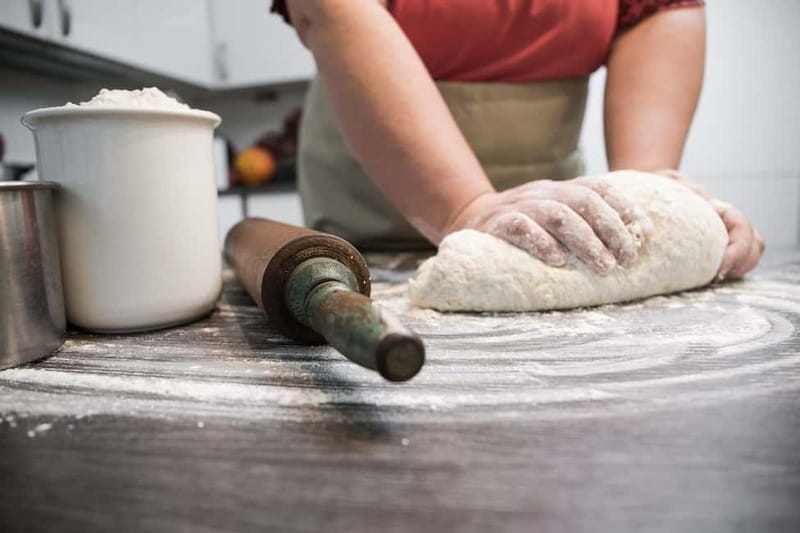
The activity lasts two to three hours, but starting times depend on availability. The meeting point can vary with the option you book, so check the exact meeting instructions rather than assuming every class begins at the same pizzeria entrance.
The class is offered in Italian and English. Private and small-group formats are available. You can cancel up to 24 hours before the activity for a full refund, and reserve now while paying later, which helps if your Naples schedule is still changing.
Wear comfortable clothing and expect flour on your hands and possibly your shirt. Closed shoes are a sensible choice around a working kitchen, though the provided information does not specify a formal dress code.
If you have a food intolerance, mention it before or during the class. One participant received accommodation for an intolerance and was still included in the preparation. Do not assume every request can be handled without notice, but it is worth asking.
Allow enough time to reach the meeting point. The class can be forgiving when someone is only a few minutes late, but arriving on time is the polite and practical choice, especially when dough preparation begins at the start.
Who should book this Naples pizza class?
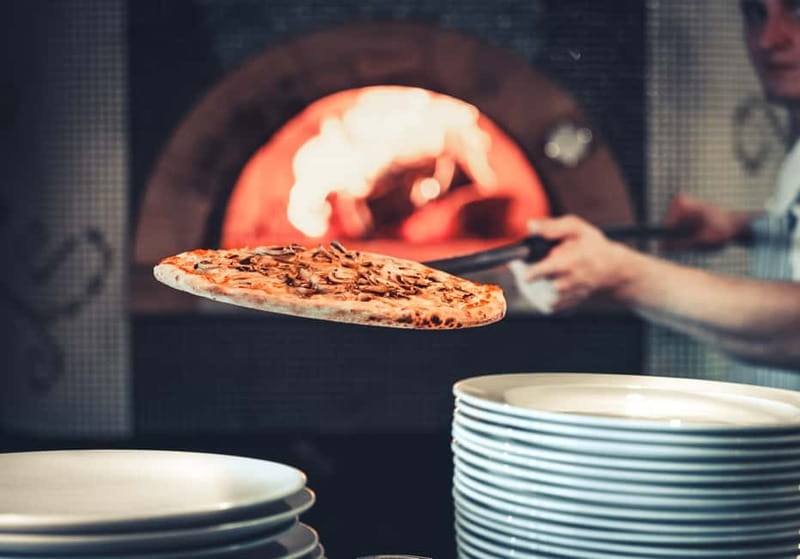
I would choose this for you if you want more than a food photo and like learning by doing. It suits couples, families with children aged six and over, solo visitors comfortable joining a small group, and anyone who wants a useful pizza method to take home.
It is especially good for people who enjoy local food with a little background. The guides explain why ingredients matter, discuss the origins of Pizza Margherita, and connect the recipe to Naples.
You may want another activity if you dislike group instruction, want a long fermentation course, or prefer a quiet restaurant meal. The class includes flour, demonstrations, translation in some sessions, and conversation with other participants. It is friendly and social rather than formal.
You should also consider the physical setup. You will knead, shape, and stretch dough, then work near a hot oven under instruction. Anyone hoping to sit back while a chef does everything will miss the main benefit.
Should you book it?
I would book this class if your Naples plans include room for one food-focused activity and you want to understand why Neapolitan pizza tastes different from the version you make at home. The individual workstation, skilled pizzaioli, and complete meal make the $70 price fair.
Book it with realistic expectations. You will not master professional fermentation in one short session, and translation may slow the class in a multilingual group. But you will handle real dough, make a Margherita, taste fried pizza dough with chocolate, enjoy a drink and limoncello, and leave with a recipe and practical ideas you can test at home.
FAQ
How long does the pizza class last?
The activity lasts between two and three hours. Available starting times can vary, so check the schedule when booking.
How much does the class cost?
The listed price is $70 per person.
What is included in the experience?
The class includes hands-on pizza making, a savory pizza, a sweet fried-dough dessert, one glass of wine, beer, or water, additional water, limoncello, and a digital recipe.
Is the class available in English?
Yes. Instruction is available in Italian and English. In some sessions, an English-speaking guide translates for an Italian-speaking pizzaiolo.
Can children join the activity?
Children aged six and over can participate. Children under six are not allowed in the activity, including the work area and oven zone.
Are private classes available?
Yes. You can choose a private class or a small-group option, depending on availability.
Can I cancel the booking?
You can cancel up to 24 hours in advance for a full refund. A reserve-now, pay-later option is also available.
Fresh off the menu around Naples
- Naples: Street Food Experience With 6 Stops★ 4.7 · 392 reviews
- From Naples: Wine Tasting Tour on Vesuvius Slopes with Lunch★ 4.5 · 330 reviews
- Naples: Street Art, Wine and Food Tasting Walking Tour★ 5.0 · 163 reviews
- Naples Street Food Scene Tour: Small-Group Tasting Adventure★ 4.7 · 112 reviews
- Naples: Small Group Pizza Making with Drink Included★ 5.0 · 39 reviews
- Naples: Street Food and Guided Sightseeing Walking Tour★ 4.9 · 23 reviews
- From Naples: Pompeii and Wine Tasting Tour with Lunch★ 4.5 · 119 reviews
- Naples: Private Food Tour – 10 Tastings with Locals★ 4.7 · 135 reviews
Naples Food Tours, compared.
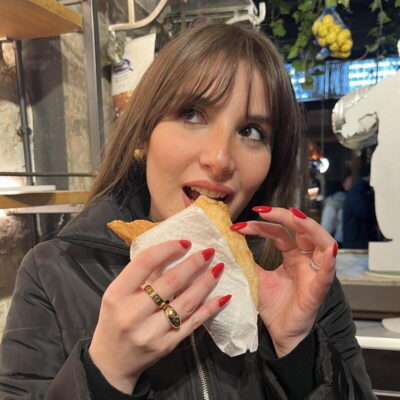
Naples: Street Food Walking Tour with Local Guide
Read our review →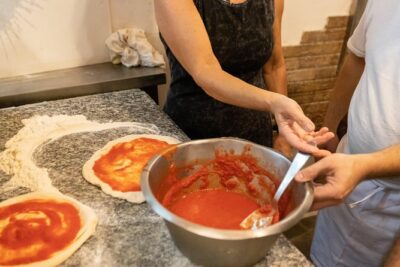
Authentic Pizza Making Class in Naples with Appetizers and Drink
Read our review →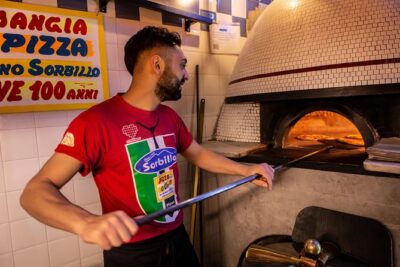
Authentic Naples Street Food Tour With Local Expert Guide
Read our review →
Naples: Neapolitan Pizza and Tiramisù Making Class
Read our review →
Authentic Naples Food Tour with 8+ Tastings of Pizza, Wine & More
Read our review →
Exclusive Naples Private Food Tour: 6 or 10 Tastings
Read our review →
Not Just Another Naples Street Food Tour with Eating Europe
Read our review →Browse the lists this tour appears in