
Review · COLOMBIA
Medellín: E-bike and Foodie Tour
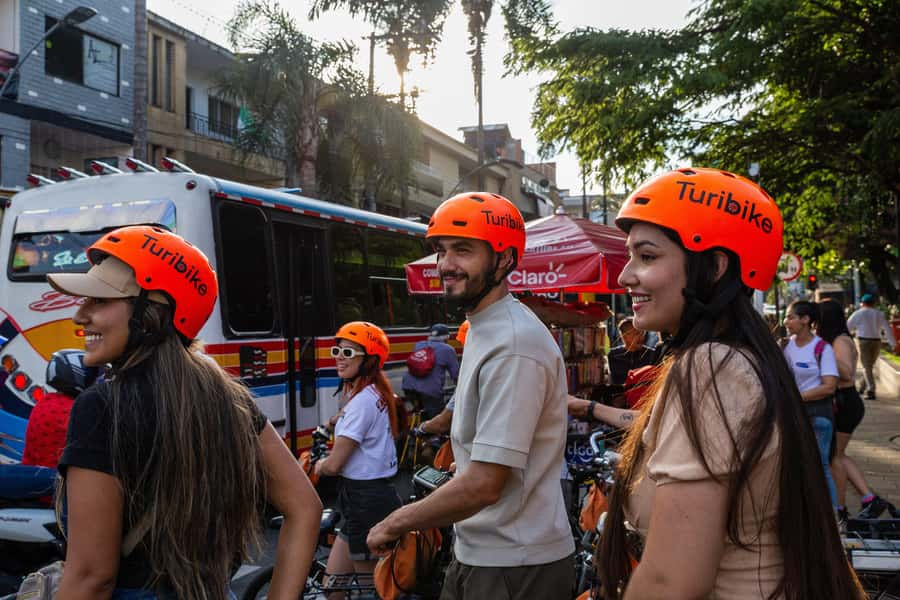
Medellín’s best introduction may come on two wheels, with a warm arepa or crisp empanada waiting at the next stop. This tour gets you beyond the usual visitor circuit and into Belén, Laureles, Conquistadores, and quieter neighborhood streets where daily life takes center stage. I like the small groups of no more than eight and the way guides such as David, Daniela, Dany, Diana, and Toto mix food with stories about the city.
I also like the practical side: well-kept e-bikes, bike paths, and medical insurance make it easy to cover plenty of ground without exhausting yourself. The main drawback is that the food can be plentiful, while some drinks and the final food stop cost extra, so arrive hungry but keep a little cash or room in your appetite.
Why this Medellín food ride works
- Local food with a story: Try arepas, buñuelos, pandebono, empanadas, fruit salad, coffee, and guarapo while learning where these foods fit into Colombian life.
- Neighborhood Medellín: Ride through Belén, Laureles, Conquistadores, and other areas that feel far removed from the city’s main tourist streets.
- A useful first-day activity: You cover a lot of ground quickly and get a practical feel for the city, its food, and its neighborhoods.
- Friendly, attentive guides: David, Daniela, Dany, Diana, Toto, Esteban, Juan, and others are praised for making the ride personal and easy to follow.
- Easy electric cycling: The motor handles much of the effort, making the route suitable for people who want to ride without treating the tour as a workout.
- A small-group format: With space for up to eight people, the guide can answer questions and help with road safety.
A first look at everyday Medellín
The appeal here is not simply that you get from one snack to another. The ride gives you a moving introduction to how Medellín works.
You begin at Turibike, the operator’s office in a coworking space on an industrial street. The setting is not polished or obvious, so allow a few extra minutes to find the brick building with the large black metal door. If it is shut, knock and the guard should let you in.
Once the bikes are adjusted, the city opens up quickly. The route leaves the most tourist-oriented areas and follows streets where residents shop, talk, work, and spend time in local plazas. You might see older men playing cards, quiet parks, neighborhood businesses, and the ordinary scenes that are easy to miss from a taxi window.
That is the real value of the tour. Medellín is not presented as a postcard. You get a closer look at the city’s changes, its public spaces, and the way older local habits sit beside newer transport and recreation projects.
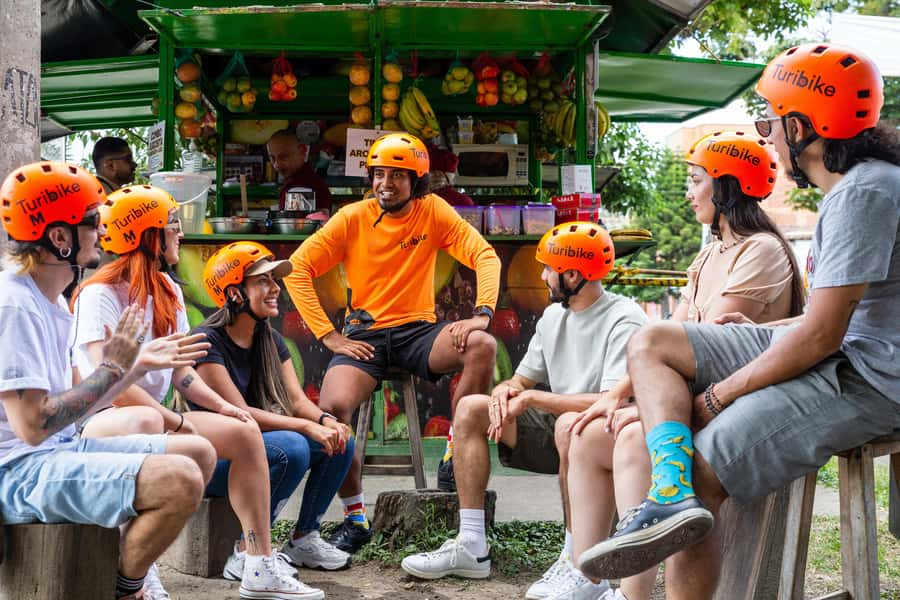
The guides bring much of this together. David is praised for explaining the city’s development and everyday life. Daniela is described as warm, lively, and passionate about Medellín and its people. Dany is especially good for visitors who like to ask questions about Colombian history, food, and society. Toto brings plenty of energy and humor, while guides such as Diana and Esteban have been noted for making the ride feel personal.
Guide quality can vary from one departure to another, but the pattern is clear: this is not a silent ride behind a leader. Expect conversation.
More Food Tours by Bike in the world:
- Rome by Night: E-bike Small Group Tour -Food & Wine (Option)
★ 4.9 · 1,233 reviews - Palermo: Guided Bike Tour with Street Food Tasting
★ 4.8 · 479 reviews - Copenhagen: 3-Hour Culinary Bike Tour
★ 4.7 · 301 reviews
Belén begins with food and local texture
One of the early areas is Unidad Deportiva de Belén, where you make a food stop. The sports complex gives the tour a useful sense of local routine. This is not only a place for formal sightseeing. It is part of the city’s public life, where people gather for exercise, recreation, and conversation.
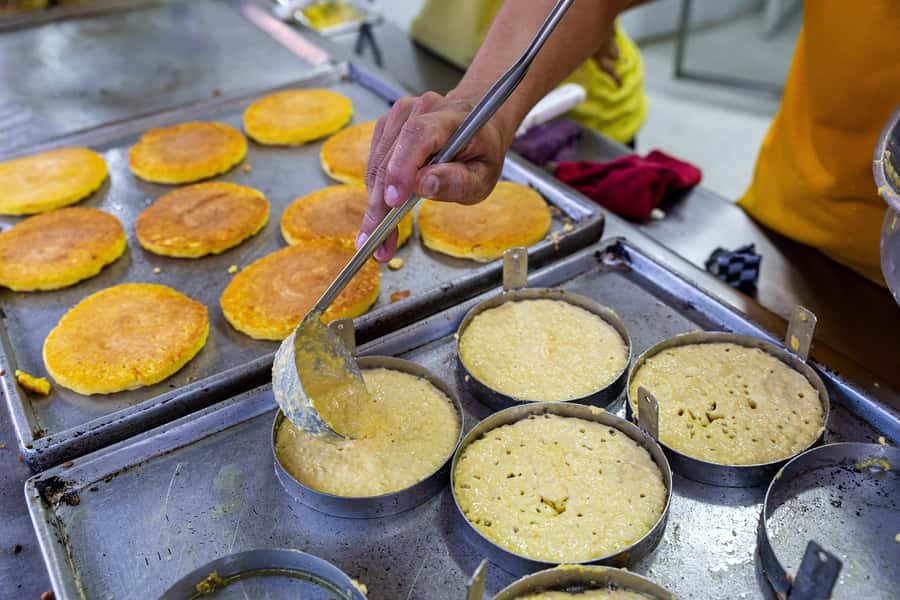
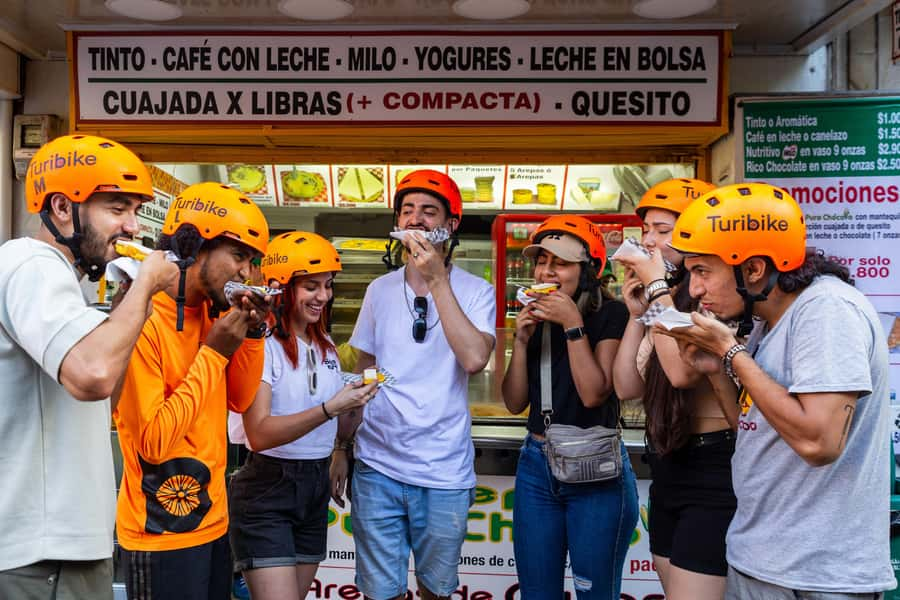
Food stops can include different Colombian favorites depending on the day. Coffee, salpicón de frutas, pandebono, buñuelos, and guarapo have all featured, along with arepas and other small bites. Salpicón is a fruit mixture that feels refreshing in Medellín’s warm climate. Pandebono is a soft, cheesy baked snack, while buñuelos are round fried cheese breads with a crisp outside and tender center.
The guides explain the food rather than handing it over without context. That matters because Colombian snacks often carry regional and family traditions in their recipes. You are not just checking off unfamiliar dishes. You are learning what people eat during an ordinary day and why a simple baked or fried item has such a firm place in local culture.
The first three food stops do not include beverages, so read the inclusions carefully. Food and some drinks are included overall, but beverages at those first stops are not covered.
Parque Belén turns the ride into a city lesson
At Parque Belén, the tour combines cycling and more tasting. Parks and plazas are useful places to pause because the guide can explain the neighborhood without asking you to stare at a landmark and then move on.
This is also where the tour’s pace becomes clear. You ride for a while, stop to eat, talk, and look around, then get back on the bike. The rhythm keeps three hours from feeling like one long lecture or one long meal.
I would pay attention to the neighborhood stories here. Several guides have described the city’s development, local customs, and the changes that have shaped Medellín. The point is not to reduce the city to its past problems. Instead, you see how public spaces, bike routes, and ordinary neighborhoods fit into a city that has changed greatly.
You may also notice that the food itself helps explain the city. An arepa can be a daily staple, not a special restaurant dish. A small bakery stop can tell you more about local habits than a formal explanation of Colombian cuisine.
Laureles brings regional food to leafy streets
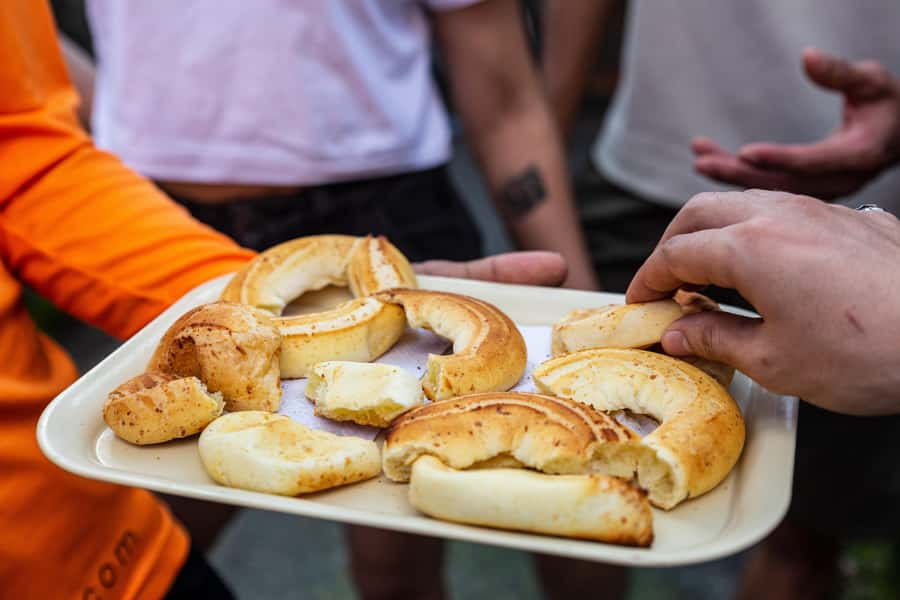
The ride continues toward Laureles, one of the more pleasant areas for cycling. The route uses tree-lined streets and gives you a chance to see the neighborhood at a human pace.
Laureles is a good setting for the tour’s regional food focus. You can stop for a traditional bite and hear how Colombian food varies by place and family. The exact menu is not fixed, which is worth knowing. One day you might have an arepa de huevo, another day a different local snack, depending on the food partners and the route.
An arepa de huevo, mentioned by one rider as a favorite, is an arepa filled with egg and fried. It is heavier than a plain arepa, so the advice to arrive hungry but not overfed is sound. You may eat more than expected during the three hours.
The bike is especially useful in Laureles because you see more than you would on foot, but you are still close enough to notice storefronts, plazas, and street activity. The electric assist keeps the ride manageable. You still pedal, but the motor takes care of much of the hard work.
More food tours around the world:
- Reykjavik Food Walk – Local Foodie Adventure in Iceland
★ 5.0 · 18,952 reviews - Dubai: Old Town, Creek, Museums, Souks, & Street Food Tour
★ 4.8 · 10,816 reviews - Madrid: Live Flamenco Show with Food and Drinks Options
★ 4.5 · 9,901 reviews - Ho Chi Minh City Street Food Tour & Sightseeing By Motorbike
★ 5.0 · 9,413 reviews
Conquistadores adds snacks and a wider view
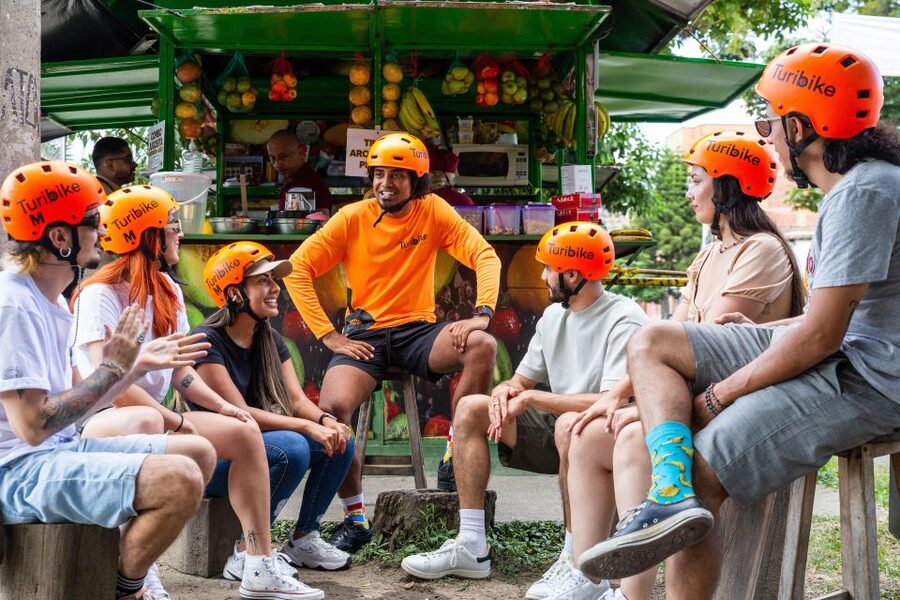
Conquistadores brings another food stop and more riding through the city. This part of the route helps connect residential streets with Medellín’s larger public projects.
The food can include crisp empanadas, pandebono, fruit, or other local treats. Several visitors have singled out the empanadas and pandebono, but do not expect a fixed tasting menu. The tour is built around local stops rather than a restaurant-style sequence.
That approach has an advantage: you get food where people actually buy it. The tradeoff is that the stop may feel less polished than a sit-down culinary tour. I see that as part of the point, but anyone expecting a formal tasting menu should choose a different experience.
The route also includes a stop listed simply as food tasting, followed by Medellín River Parks. The exact order may shift, but the larger idea is clear: you move from neighborhood streets toward the river and public spaces, seeing how the city links different districts.
One useful detail comes from the cycling itself. A guide has fixed a flat tire during a ride, getting the group moving again quickly. That does not mean a mechanical problem is likely, but it shows why a guide and support from an established operator matter on a city ride.
Medellín River Parks show the city in motion
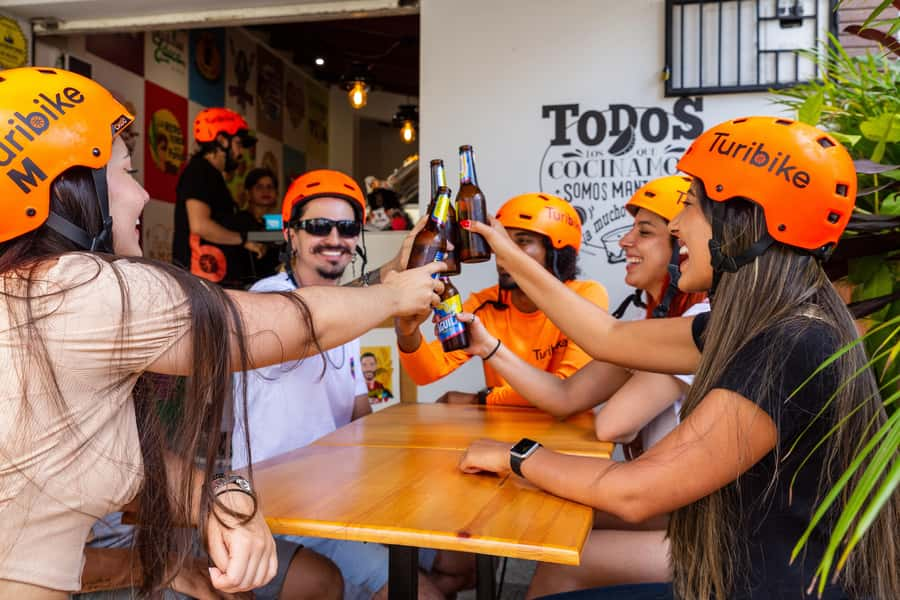
The Medellín River Parks are the final major sightseeing area before you return to Turibike. The river corridor gives the tour a different scale after the close-up neighborhood streets.
You can see how cycling, public space, and the river connect parts of the city. One ride also included views of churches and workers stringing wires across the river, a reminder that the route is not limited to prepared tourist sights. Small moments like these are often what make a city ride memorable.
The river stop also gives you a chance to think about Medellín’s changes. The tour does not treat transformation as a slogan. You see older neighborhoods, newer public works, local food businesses, and bike infrastructure in the same three-hour outing.
Afterward, you ride back to Turibike. The return is useful because you finish where you started, without needing hotel transport. Hotel pickup and drop-off are not included, so plan your own way to the office and back.
What the e-bike changes
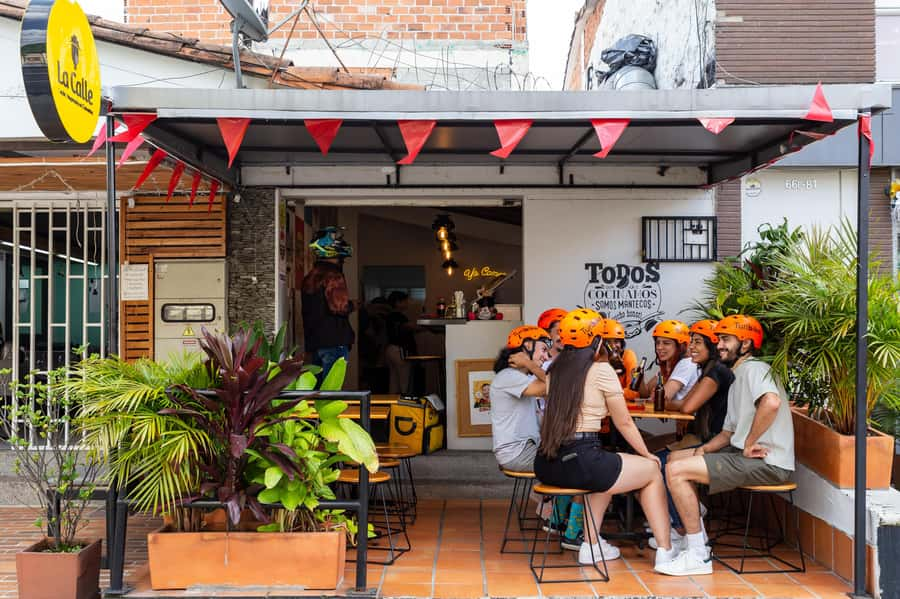
You do not need to be a serious cyclist for this tour, but you must know how to ride a bike. The e-bike makes a major difference because you can cover several parts of Medellín without arriving at every food stop sweaty and worn out.
The bikes have received good marks for maintenance, and the guides pay attention to safety. The route uses bike paths where available, though city riding still requires awareness. Follow the guide’s signals, keep a steady pace, and do not treat the electric motor like a license to rush.
Wear comfortable shoes. Sandals and flip-flops are not allowed, and the tour is not suitable for people who cannot ride, people with mobility impairments, pregnant women, or anyone shorter than 140 centimeters. The minimum height matters because you need to handle the bike safely.
The small group limit is another plus. A group of eight is large enough to have company but small enough for the guide to monitor the riders. If you are the only person booked, the experience may feel close to a private tour, as happened on some departures.
Is $48 a fair price?
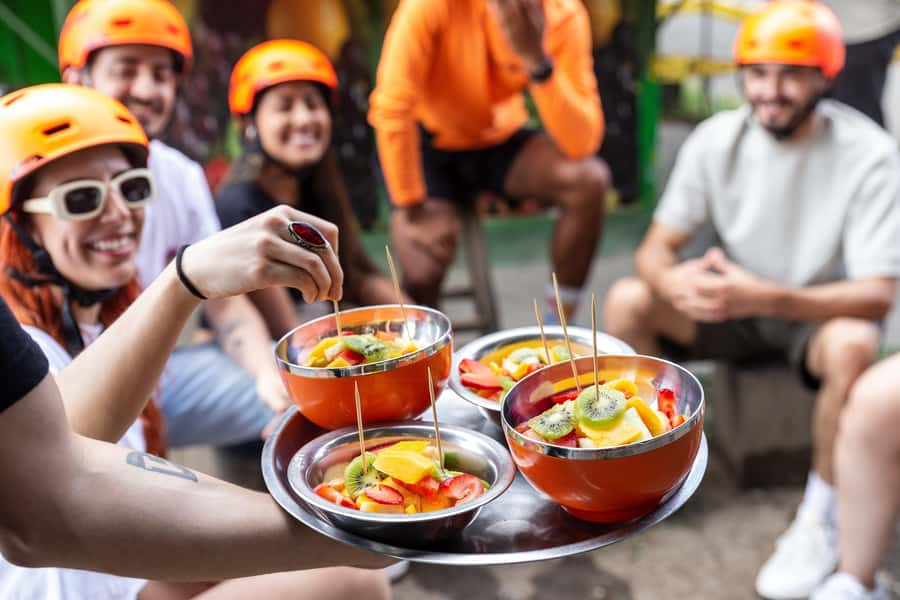
At $48 per person for three hours, this is a solid value if you want a broad first look at Medellín rather than a single neighborhood walk.
The price covers the electric bike, guide, medical insurance, and food and drinks included along the route. You are paying for transport between several districts as well as the guiding and tastings. Renting a bike independently would not give you the same local food access or explanation of the neighborhoods.
Keep two limits in mind. Beverages at the first three stops are extra, and food at the final stop is not included. The tour also does not include hotel transfers. Those costs are small compared with the main price, but they are worth knowing before you arrive.
I think the strongest value comes when you take it early in your stay. You learn which foods you like, see areas you may want to return to, and gain a basic sense of how Medellín’s districts connect. One person even paired it with another city tour to build a full day of cycling, though you should decide for yourself how much riding and eating suits your energy.
Who should book this ride?
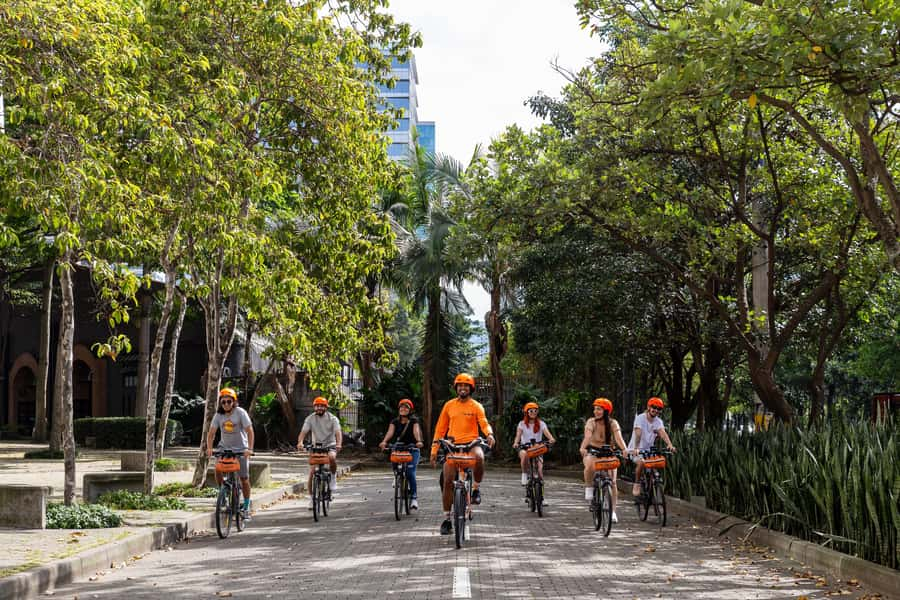
I would choose this tour if you want food, local context, and movement in the same experience. It suits first-time visitors who want to get their bearings quickly, curious eaters who prefer small local stops, and active people who do not want to spend the whole day in a van.
It is also a good match if you are interested in Medellín’s changes but do not want a tour focused only on major sights or difficult history. The guides connect the city’s past and present through streets, parks, food, and public works.
I would skip it if you cannot ride a bicycle, dislike eating several small portions in a short period, or want a fixed gourmet menu. It may also be less comfortable if you prefer a slow walking tour with long stops. The pace is active, even with electric assistance.
Book this tour if you want a practical, tasty introduction to the city and are willing to trade polished sightseeing for ordinary neighborhoods and local stops. Arrive in comfortable shoes, come hungry, and keep your eyes open between tastings. That is where much of Medellín’s character appears.
FAQ
How long is the Medellín e-bike and food tour?
The tour lasts three hours, with starting times available depending on the date.
How much does the tour cost?
The listed price is $48 per person.
What food might be included?
Possible tastings include arepas, arepas de huevo, empanadas, buñuelos, pandebono, salpicón de frutas, coffee, and guarapo. The exact selection can vary.
Are drinks included?
Food and drinks are included as part of the experience, but beverages at the first three stops are not included. Drinks may also vary by stop.
Where does the tour start and finish?
It starts and ends at Turibike. The office is in a coworking space on an industrial street, in a brick building with a large black metal door. If the door is closed, knock for entry.
Is the tour suitable for beginners on an e-bike?
You need to know how to ride a bicycle, but the electric motor handles much of the physical effort. Comfortable shoes are required, and sandals or flip-flops are not allowed.
How many people can join the tour?
It is a small-group activity limited to eight participants. Guides speak English and Spanish.
Fresh off the menu around the world
- Taste of Chiang Mai: Michelin Guide & Street Food Tour★ 4.9 · 159 reviews
- Eat Porto Like a Local: The Ultimate Full-Meal Food Tour★ 5.0 · 97 reviews
- Vienna: The Ultimate Full Meal Austrian Food Tour★ 4.8 · 112 reviews
- Jerez: Traditional Tapas Tour★ 4.6 · 138 reviews
- Taste my Fribourg Self-Guided Food Tour★ 4.5 · 29 reviews
- Taste of Albania: Tirana Food Tour★ 5.0 · 26 reviews
- Taormina Pizza making class★ 4.8 · 140 reviews
- Taormina: Pizza Making Class with Lunch and Wine Tasting★ 4.8 · 145 reviews
Colombia Food Tours, compared.

Medellin: Comuna 13 Graffiti Tour, Cable Car & Street Food
Read our review →
Medellín: Comuna 13 True Story and Street Food Tour
Read our review →
Cartagena: Guided Street Food Tour with Tastings
Read our review →
Medellin: Street Food and Poblado Rooftop Tour with a Local
Read our review →
Medellin: Party Bus with DJ & Street Food Tastings
Read our review →
Medellin: tasting Street Food with Rooftops of El Poblado
Read our review →
Santa Marta A Historical & Street food Experience
Read our review →Browse the lists this tour appears in