
Review · INDONESIA
Bali: Delicious Indonesian Food Tour
Denpasar’s best food stories are found in market stalls, shared plates, and sweets that rarely appear on a resort menu. This three-hour walk takes you through Kreneng Market, where you can try babi guling, jaje Bali, soto ayam, bakso, and other Indonesian favorites before walking through old Denpasar.
I like the generous amount of food and the chance to ask a local guide what each dish means, how it is eaten, and when it appears in Balinese life. I also like the mix of food and city sights, including Pura Agung Jagatnatha, a colonial clock monument, and the four-faced Catur Muka statue. The main thing to consider is that this is a real local food tour, not a menu built around allergies or children, and it cannot cater to vegans or gluten allergies.
- Kreneng Market flavors: Taste local dishes in one of Denpasar’s main food markets.
- More than snack samples: Plan to arrive hungry, since portions can add up quickly.
- Balinese and Indonesian dishes: Try babi guling, soto ayam or bakso, jaje Bali, jasuke, or martabak telur.
- A useful city walk: Connect food stops with temples, a church, monuments, and heritage streets.
- Personal guide attention: Groups are capped at 12, and private bookings are available.
- Coffee to finish: Drink Indonesian Arabica coffee hot or cold at an antique coffee shop.
What this Denpasar food walk is really like
This experience combines two things that work well together: eating and getting your bearings in Denpasar. You begin near the Indonesia Post Office on Jalan Kamboja, then spend about an hour in Denpasar and roughly 90 minutes at Kreneng Market before finishing with a walk and coffee.
The guide does more than point out dishes. You can ask about ingredients, local customs, Balinese religion, language, and daily life as you move between stops. Guides named in the feedback include Putra, Sri, Song, Lena, and Wira. The most praised part of the experience is the personal attention they give to the group, especially when explaining unfamiliar food.
This matters in Bali, where a dish can carry social and religious meaning as well as flavor. Babi guling, for example, is traditionally linked with special ceremonies, yet it is also a familiar local food. With a guide beside you, you get context instead of simply being handed a plate and left to guess.
Starting at the Indonesia Post Office on Jalan Kamboja
The meeting point is Kantor Pos Indonesia, at Jl. Kamboja No. 6 in Sumerta Kauh, Denpasar. You need to make your own way there, since transport to and from the meeting point is not included.
Allow enough time to find the post office and meet your guide. This is a walking and eating tour, so comfortable shoes and a reasonably light schedule will help. The walk includes market lanes and heritage streets rather than a vehicle-based circuit.
The activity is offered in English and normally runs for three hours. Starting times vary, so check the available departure when booking. The group limit is 12 people, which is small enough for questions without requiring the cost of a private guide.
More food tours around the world:
- Reykjavik Food Walk – Local Foodie Adventure in Iceland
★ 5.0 · 18,952 reviews - Dubai: Old Town, Creek, Museums, Souks, & Street Food Tour
★ 4.8 · 10,816 reviews - Madrid: Live Flamenco Show with Food and Drinks Options
★ 4.5 · 9,901 reviews
Kreneng Market, where the food begins
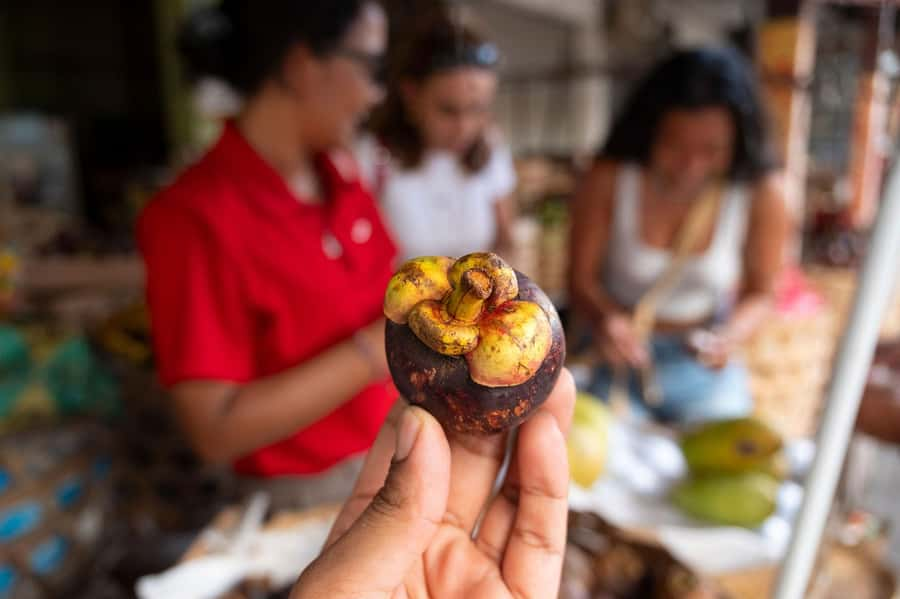
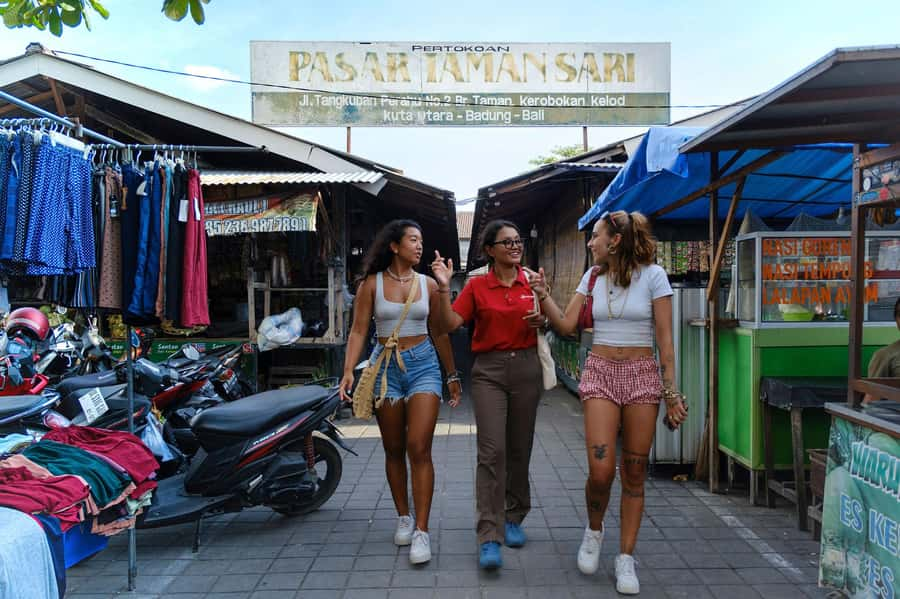
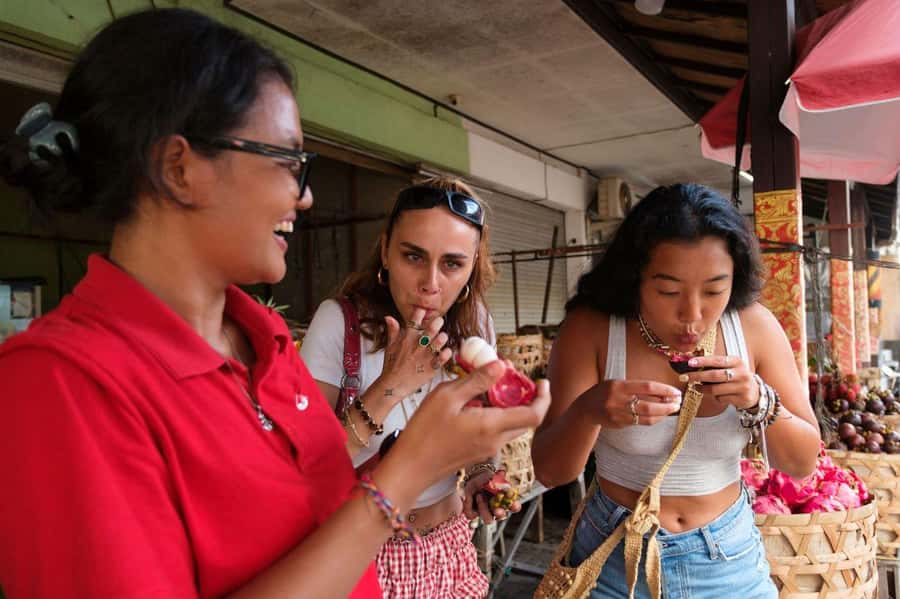
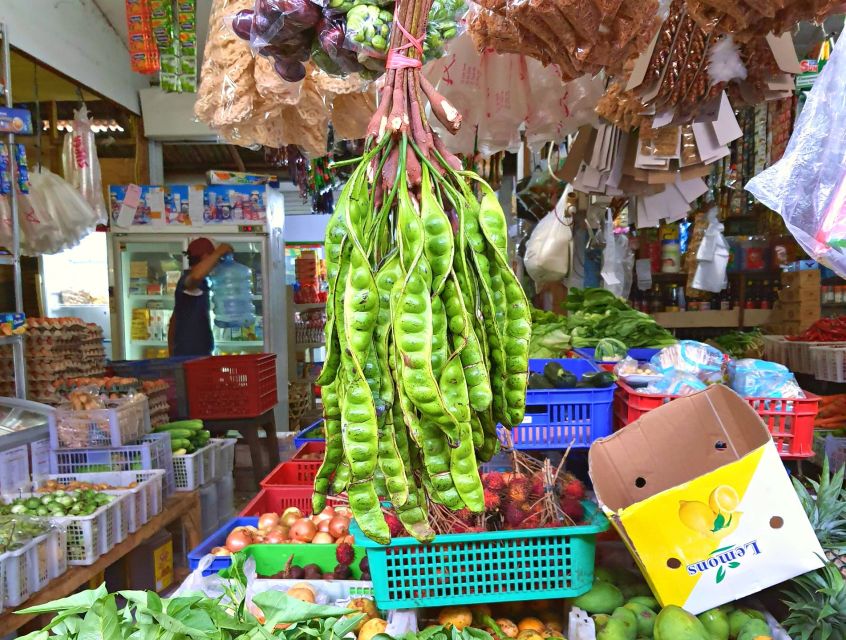
Kreneng Market is the heart of the food portion. Your guide leads you through narrow market lanes and helps you identify ingredients, fruits, prepared dishes, and sweets that may be hard to order on your own.
The market stop lasts around 90 minutes, but the food is not limited to tiny tastes. You may be served enough to make lunch unnecessary, so I would avoid eating a full meal beforehand. One useful feature is that food you cannot finish may be taken with you, according to the experience details and feedback.
The exact selection can change. That is normal in a working market, where availability depends on the day. The planned foods include:
- Jaje Bali: A traditional Balinese dessert and a good introduction to local sweets.
- Babi guling: Rotisserie-cooked suckling pig, with the guide explaining the different parts and making sure you do not miss the crisp pork crackling.
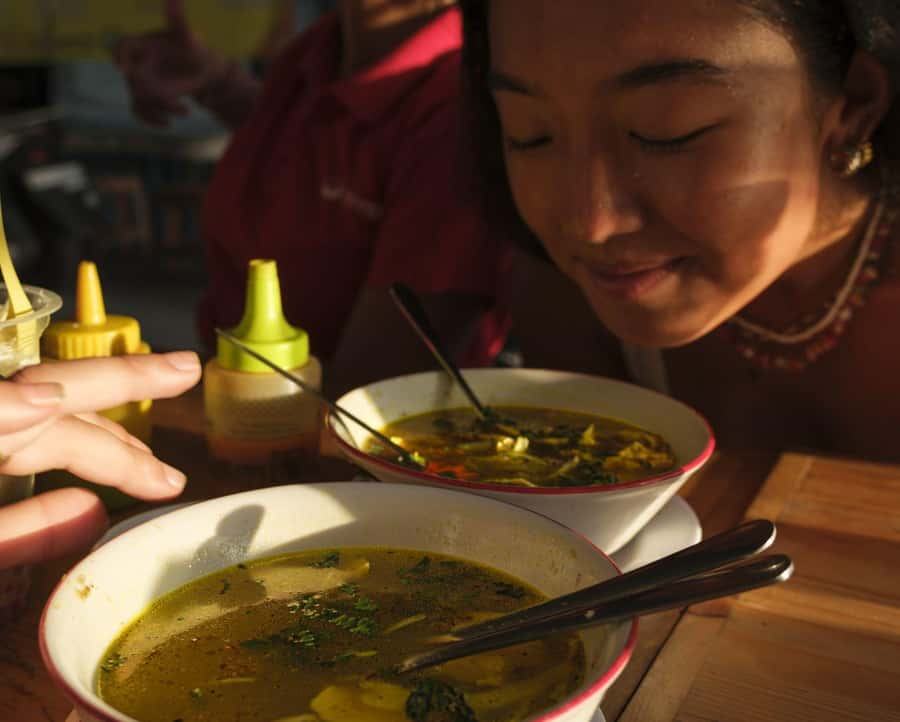
- Soto ayam or bakso: Comforting Indonesian soups, one with chicken and the other commonly associated with meatballs.
- Jasuke: Steamed sweet corn with condensed milk and shredded cheese.
- Martabak telur: A savory fried pancake with a filling.
You may not receive every item in exactly the same form, since the route is based on local food stops. That flexibility is part of the appeal, but it also means you should not book this expecting a fixed tasting menu.
Babi guling and the meaning behind shared food
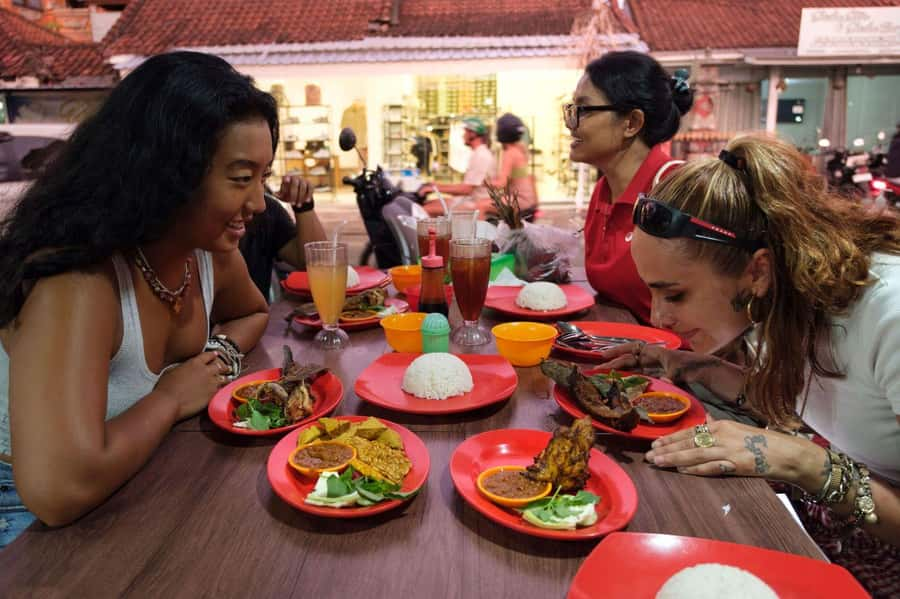
Babi guling is likely to be the most memorable dish for many people. The suckling pig is cooked on a rotisserie and is traditionally reserved for special ceremonies, making it more than a casual plate of meat.
Your guide explains the parts of the dish and points out the pork crackling. That small detail matters because shared Balinese dishes can include several textures and elements, and the best bite may not be the piece you first notice.
This is also where dietary limits become important. The tour cannot cater to vegans or gluten allergies. Specific dietary requests need to be provided at least 24 hours before the start, though the food stops are not always able to meet every requirement. Children under six are not permitted, and there are no children’s meals.
Sweets, soups, and the value of arriving hungry
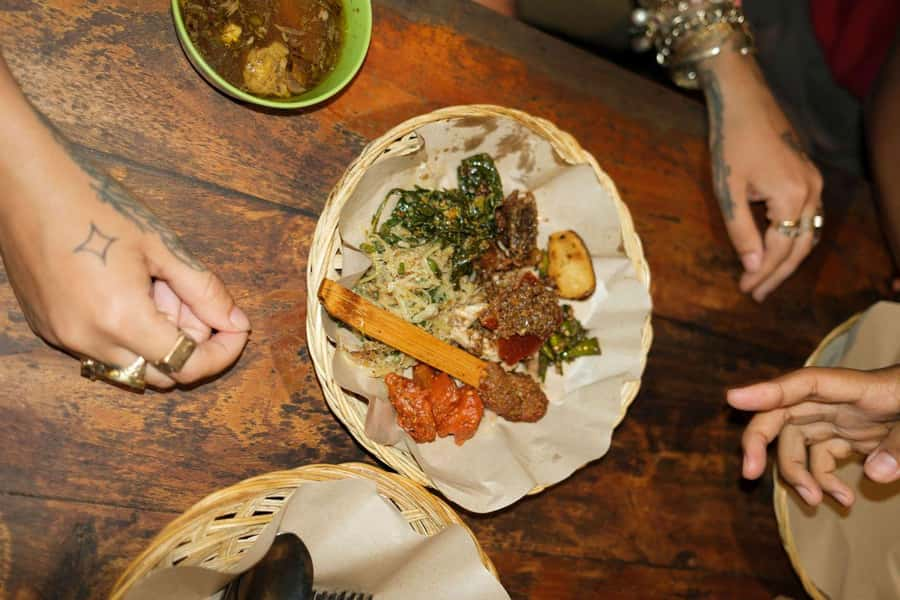
The food selection gives you a useful spread of Indonesian flavors. Soto ayam or bakso offers something warm and savory, while jaje Bali and jasuke bring sweetness in very different ways. Martabak telur adds a fried, filling contrast.
I like this range because it lets you compare everyday comfort food with foods that feel more specific to Balinese tradition. You are not simply tasting five versions of the same thing. You are moving from soup to pork, from dessert to corn, and from a sweet snack to a savory pancake.
The catch is quantity. Several people described the food as far more substantial than expected. If you want to sample everything, arrive hungry and pace yourself. This is not the right outing for someone who prefers one small bite at each stop.
Same city, a different plate:
- Ho Chi Minh City Street Food Tour & Sightseeing By Motorbike
★ 5.0 · 9,413 reviews - From Split: Krka Waterfalls, Food & Wine Tasting Tour
★ 5.0 · 9,326 reviews - Medellin: Comuna 13 Graffiti Tour, Cable Car & Street Food
★ 4.8 · 9,046 reviews - Montserrat Half-Day Tour with Tapas and Gourmet Wines
★ 5.0 · 7,359 reviews
Jalan Surapati and Jalan Gajah Mada on foot
After the food, the tour shifts from market life to Denpasar’s built heritage. You walk along Jalan Surapati and Jalan Gajah Mada, streets that help connect the city’s religious, civic, and colonial-era landmarks.
The route includes a church decorated with traditional Balinese architectural features and Pura Agung Jagatnatha, an important Hindu temple in Denpasar. Seeing these sites on foot gives the guide room to explain how different religious and cultural influences appear side by side in the city.
You then continue west toward the Nederlandsch-Indië Sokkelklok, a colonial-era clock monument, and Catur Muka, the four-faced god monument at a major intersection. These stops are not long museum visits. Their value comes from seeing them in relation to the streets, traffic, shops, and daily movement around them.
The walking portion also helps balance the meal. After a generous market tasting, a steady stroll gives you time to talk with the guide and settle your stomach.
Finishing with Indonesian Arabica coffee
The final stop is an antique coffee shop, where you can have Indonesian Arabica coffee either hot or cold. It is a sensible finish after the market food and the city walk.
Coffee is another way to connect with local habits without turning the final stop into a formal tasting lesson. You can simply choose hot or cold and ask your guide about the coffee as you rest.
The tour information gives a finish at Jl. Gajah Mada No. 122 in Pemecutan, while the meeting details say the activity ends back at the meeting point. Since those details do not match perfectly, confirm the exact end point and plan your onward transport accordingly.
How much food do you get for $45?
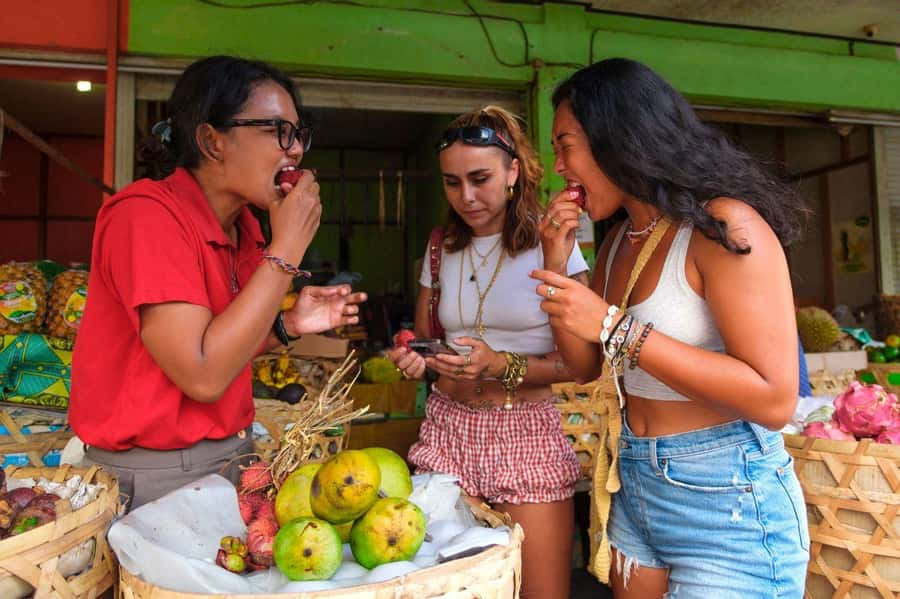
At $45 per person, the value depends on how you would use the experience. You are paying for a local English-speaking guide, several food tastings, a bottle of water on arrival, coffee, and a guided city walk. You also get help ordering and understanding dishes that could be difficult to identify on your own.
If you visited Kreneng Market independently, you could spend less on individual food purchases. But you would not necessarily know what to try, how dishes are traditionally served, or how the market connects with Denpasar’s religious and colonial landmarks.
The price makes the most sense for a first visit to Denpasar, a solo visitor who wants company, or anyone who prefers a planned food introduction over trial and error. It is less compelling if you already know the market well, have strict dietary needs, or only want a short coffee-and-snack outing.
Private groups are available if you want a more personal schedule. The standard maximum of 12 people should still feel manageable, and the guide can spend time answering individual questions. Feedback repeatedly singles out the guides’ warmth, food explanations, and ability to learn about each person in the group.
The guides make the difference
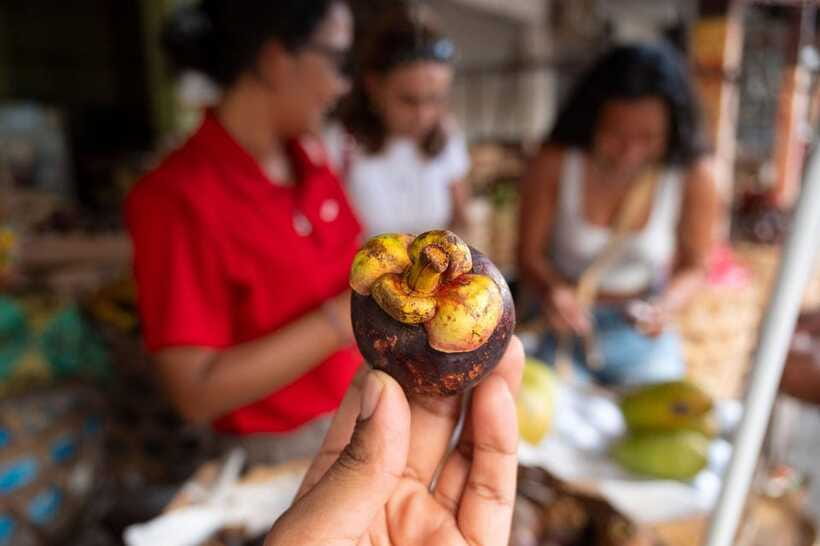
Food tours rise or fall on the guide, and this one depends heavily on that human element. Putra is praised for making the meal enjoyable, while Sri is noted for helping a visitor try foods they might not have ordered alone. Song is described as a fun host who made clear that the portions were substantial.
Lena receives especially strong praise for explaining the timing between stops, Balinese culture, and the food itself. Wira is a good fit for solo visitors or small groups who want to ask questions about local life and food.
You should not assume you will receive a particular guide, but the pattern is useful. The guide is not just a food server. You get interpretation, encouragement, and help deciding how adventurous to be. That is particularly useful at a market, where unfamiliar names and ingredients can make independent ordering awkward.
Who should book this food tour?
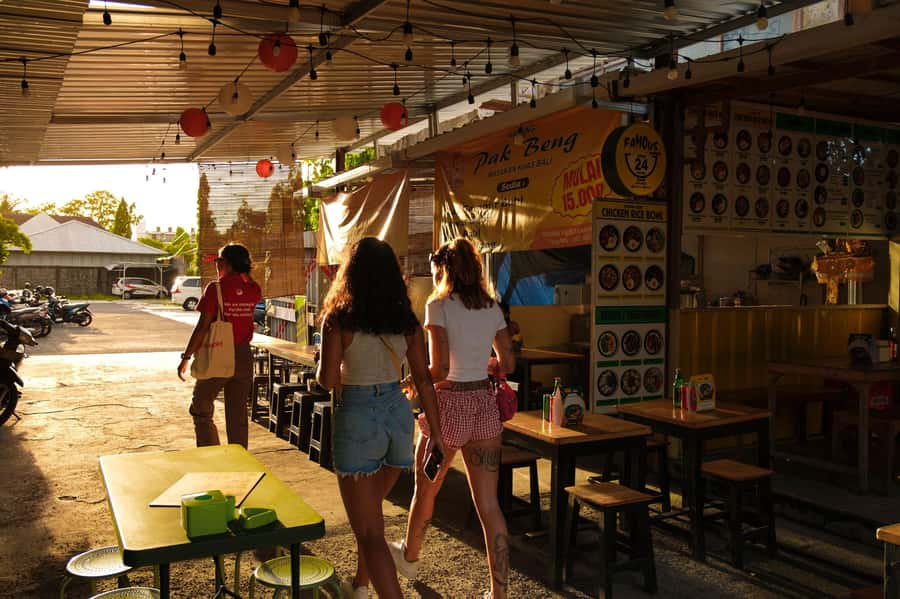
I would recommend it to:
- First-time visitors who want an introduction to Denpasar beyond resort restaurants.
- Food-focused visitors who enjoy trying several dishes in one outing.
- Solo visitors who want a social activity with a small group.
- Couples and friends who like walking tours with food built in.
- People who want cultural and religious context alongside a meal.
- Visitors who are comfortable with changing market selections.
I would think twice if you are vegan, have a gluten allergy, need a children’s menu, or prefer highly controlled food preparation. Children under six cannot join, and even older children may find the food unfamiliar since there are no special kids’ meals.
The walk also requires some appetite and a willingness to eat local food in market settings. If that sounds exciting rather than difficult, the format works well.
Practical tips for a smoother outing
Keep lunch light or skip it, since the tastings can be generous. Bring comfortable walking shoes and arrive at the Indonesia Post Office with time to spare.
Tell the operator about dietary requests at least 24 hours ahead, but understand that vegan and gluten-free needs cannot be accommodated. A bottle of water is provided on arrival, and extra food and drinks are your responsibility.
Cancellation is free up to 24 hours before the tour for a full refund. You can also reserve now and pay later, which helps if your Denpasar plans are still shifting.
The experience is described as carbon neutral and is operated by a B Corp certified company. That will not change the food on your plate, but it may matter if you prefer tour companies that measure social and environmental practices.
Should you book the Bali Delicious Indonesian Food Tour?
Book it if you want a generous, guide-led taste of Denpasar rather than a polished restaurant meal. The strongest reasons are the variety of food, the market setting, the explanations around dishes such as babi guling and jaje Bali, and the chance to connect the meal with temples and old city monuments.
Skip it if your diet makes the menu difficult or if you dislike large portions and uncertain food selections. For everyone else, $45 is a fair price for three hours of eating, walking, coffee, and local conversation, especially on a first visit to Bali.
FAQ
How long does the Bali food tour last?
The tour lasts three hours. Starting times vary, so check availability for the date you want.
Where does the tour start?
It starts at Kantor Pos Indonesia, the Indonesia Post Office, at Jl. Kamboja No. 6, Sumerta Kauh, Denpasar.
Where does the tour finish?
The meeting information says the activity ends back at the meeting point. The route details also give Jl. Gajah Mada No. 122 in Pemecutan as a finish location, so confirm the exact end point before arranging onward transport.
What food is included?
Planned tastings include jaje Bali, babi guling, soto ayam or bakso, jasuke or martabak telur, and Indonesian Arabica coffee served hot or cold. The exact food selection may vary.
Is coffee included?
Yes. Indonesian Arabica coffee, served hot or cold, is included.
Is transport included?
No. Transport to and from the meeting point is not included.
Can vegans or people with gluten allergies join?
The tour cannot cater to vegans or gluten allergies. Specific dietary requests must be provided at least 24 hours before the tour, though not every requirement can be met.
Is the tour suitable for children?
Children under six are not permitted. There are no children’s meals, and the food is presented as a local experience.
How many people are in a group?
The standard small group has a maximum of 12 people. A private group option is also available.
Fresh off the menu around the world
- Taste of Chiang Mai: Michelin Guide & Street Food Tour★ 4.9 · 159 reviews
- Eat Porto Like a Local: The Ultimate Full-Meal Food Tour★ 5.0 · 97 reviews
- Vienna: The Ultimate Full Meal Austrian Food Tour★ 4.8 · 112 reviews
- Jerez: Traditional Tapas Tour★ 4.6 · 138 reviews
- Taste my Fribourg Self-Guided Food Tour★ 4.5 · 29 reviews
- Taste of Albania: Tirana Food Tour★ 5.0 · 26 reviews
- Taormina Pizza making class★ 4.8 · 140 reviews
- Taormina: Pizza Making Class with Lunch and Wine Tasting★ 4.8 · 145 reviews
Indonesia Food Tours, compared.
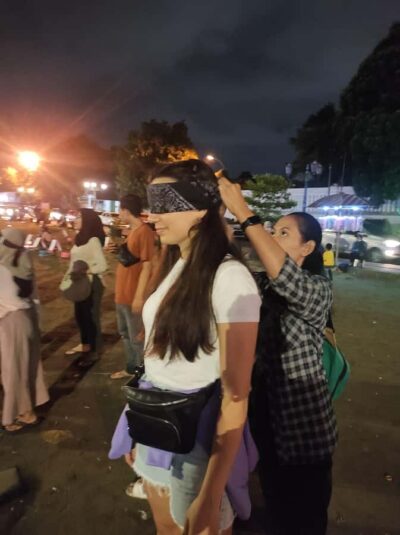
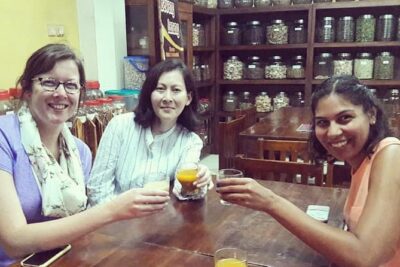
Small-Group Walking and Food Tour by Night in Yogyakarta
Read our review →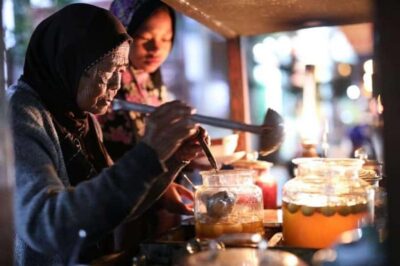
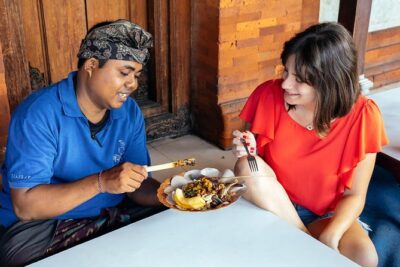
Bali Private Food Walking Tour With Locals: The 10 Tastings
Read our review →
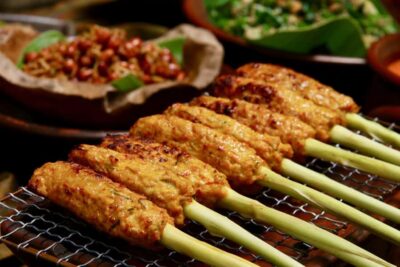
Bali: Authentic Culinary Street Food Experience Tour
Read our review →
Jakarta: Private Guided Sightseeing & Street Food Night Tour
Read our review →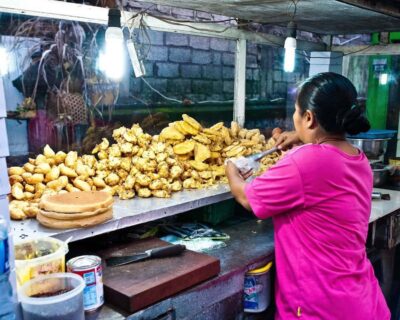
Browse the lists this tour appears in