
Review · INDONESIA
Bali: Bites Food Tour with over 15 Tastings
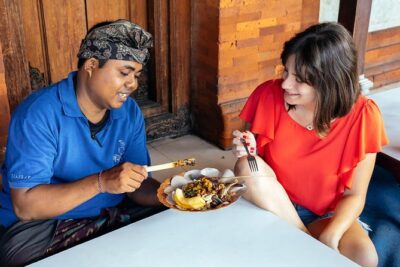
Old Denpasar is where this food tour earns its keep. Instead of spending the evening on Bali’s beach strips, you walk through back streets, family-run warungs, street stalls, and produce markets, sampling food most visitors would never find alone. The meal unfolds one small plate at a time, with 15-plus tastings across seven or eight stops.
I like the intimate format, with no more than eight people, and I like the way guides such as Ras and Raysid connect each dish with Balinese and Indonesian culture. The generous food count is another plus. The main catch is clear: the tour is not suitable for vegans, vegetarians, pregnant women, or people with food allergies, and one recent booking ended after only two hours.
Key points to know before booking
- A progressive dinner through old Denpasar: Expect seven or eight stops rather than one formal meal.
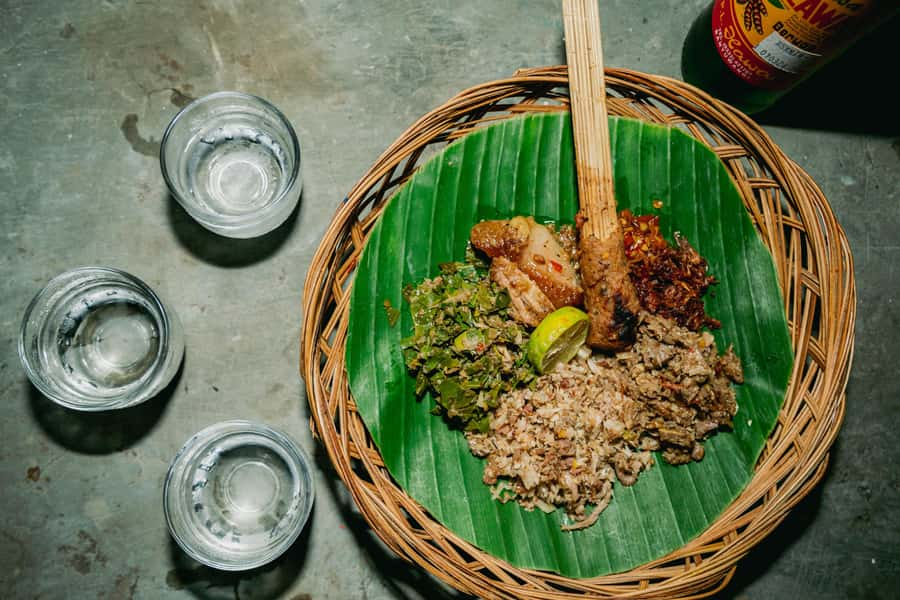
- More than 15 tastings: Sate, pisang goreng, noodles, ayam betutu, soto babat, tipat tahu, pancakes, sweets, and other local bites may appear.
- Small groups matter: The usual limit is eight people, making it easier to hear the guide and reach tiny food stalls.
- The market finish is a highlight: The route ends at Badung Market, with time for local produce, sweets, and the evening food scene.
- Come very hungry: The amount of food can cover both lunch and dinner for some people.
- Dietary limits are serious: Vegetarian options are reduced, and the tour cannot safely handle severe allergies or celiac disease.
Why old Denpasar makes a better food classroom
Bali is easy to eat around without ever eating much Balinese food. In Kuta, Seminyak, and Canggu, you can find burgers, pizza, tacos, and Thai noodles with little effort. Those meals may be fine, but they tell you less about the island.
This tour takes you into Denpasar, Bali’s city center, where food is part of daily life rather than a polished resort experience. You walk between ordinary streets and modest eateries, stopping where local cooks have built a following over many years. Some places are small enough that you might pass them without noticing.
That is the tour’s strongest idea. You are not just handed a plate and told its name. You see the setting, meet the people serving it, and hear why a particular stall or warung matters. The route also includes a little Balinese blessing in the back streets and explanations of ingredients used in local cooking.
You meet at the terrace bar and restaurant of the Inna Bali Heritage Hotel. The meeting point is across the road from the hotel sign with white lettering, not necessarily inside the main hotel entrance. Look for a guide usually wearing an A Chef’s Tour shirt.
From beachside hotels, a taxi can reach the starting point from Kuta, Seminyak, Canggu, Sanur, and nearby areas. Allow extra time for traffic. One participant arrived nearly 20 minutes late because of congestion, so this is not an outing where I would cut the journey close.
More food tours around the world:
- Reykjavik Food Walk – Local Foodie Adventure in Iceland
★ 5.0 · 18,952 reviews - Dubai: Old Town, Creek, Museums, Souks, & Street Food Tour
★ 4.8 · 10,816 reviews - Madrid: Live Flamenco Show with Food and Drinks Options
★ 4.5 · 9,901 reviews
Seven or eight stops, with dinner spread across the city
The tour lasts about three to four hours, depending on walking speed and the pace of the group. It is best understood as a movable feast. You do not sit down for a full serving at every stop. Instead, the guide builds a meal through repeated tastes, with the next dish often waiting a short walk away.
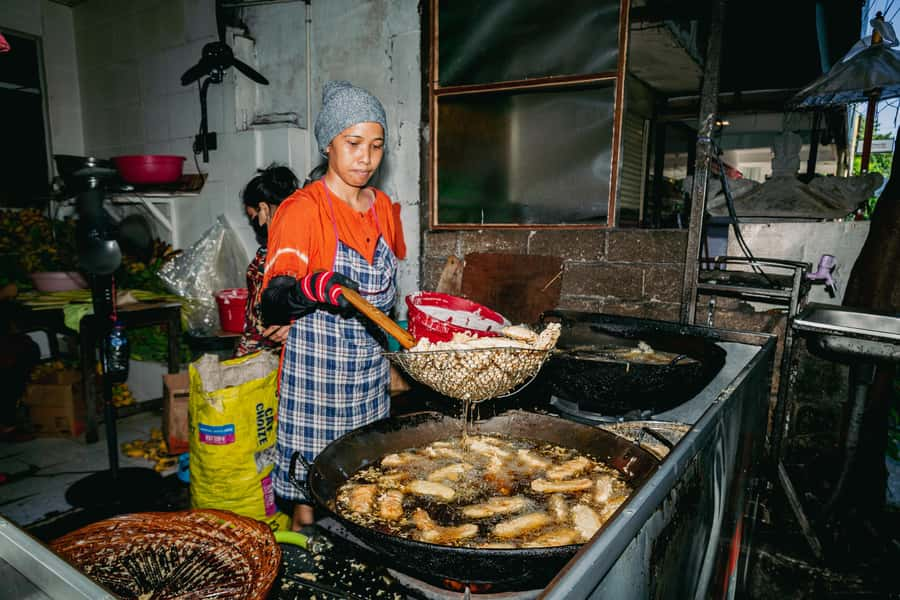
Crispy pisang goreng and the first sweet bite
A likely early taste is pisang goreng, or Indonesian-style fried banana. It is a simple start, but a useful one. The crisp coating, soft fruit, and sweet profile give you an easy introduction before the stronger spices and heavier dishes arrive.
Pancakes may also appear, sometimes with unusual combinations such as chocolate and cheese. Do not expect every item to match your usual idea of dessert. Part of the fun is seeing how familiar ingredients are used in a different way.
Sate with sambal
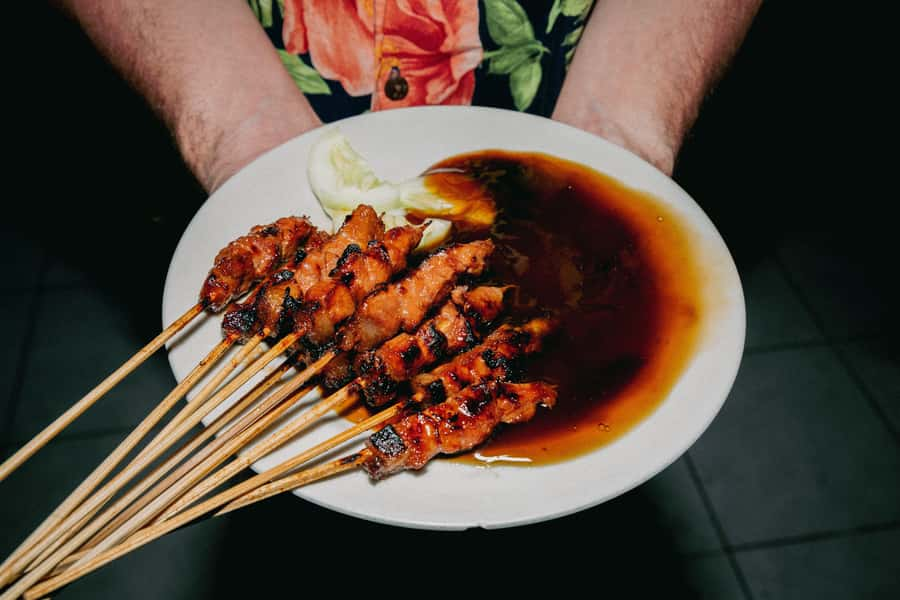
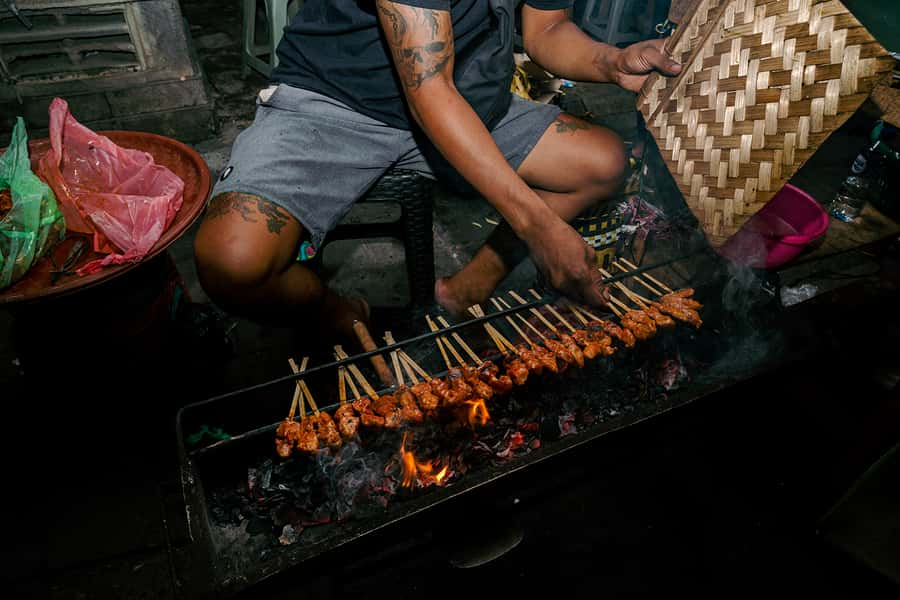
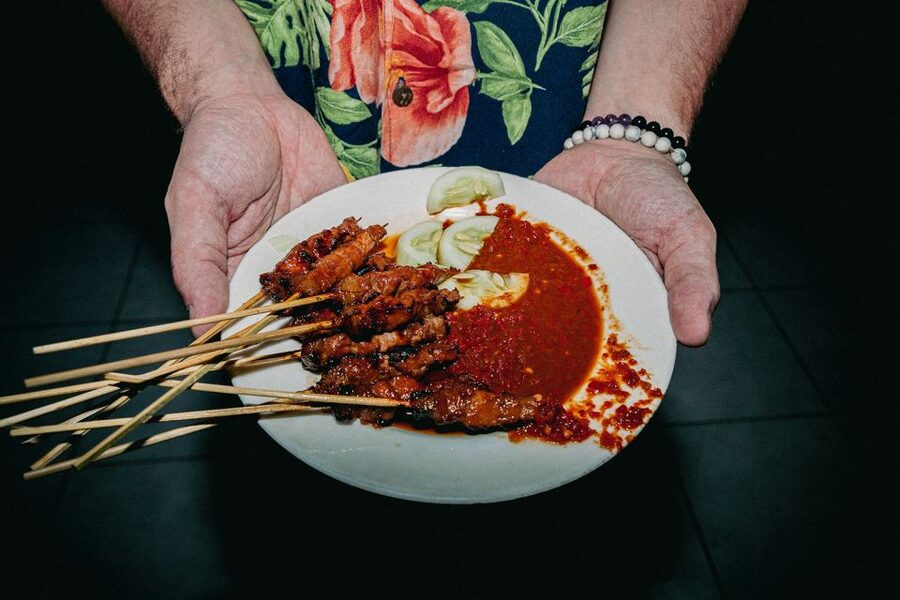
Sate is one of the most approachable stops. Skewered meat is cooked and served with sambal, bringing smoke, salt, heat, and sweetness into a small portion. The guide can explain how the dish is prepared and how it fits into Indonesian food culture.
Some participants especially enjoy the more unusual satay selection, including a playful item referred to as Godzilla Satay. The exact tasting list can change, so treat the published menu as a guide rather than a guarantee.
Same city, a different plate:
- Ho Chi Minh City Street Food Tour & Sightseeing By Motorbike
★ 5.0 · 9,413 reviews - From Split: Krka Waterfalls, Food & Wine Tasting Tour
★ 5.0 · 9,326 reviews - Medellin: Comuna 13 Graffiti Tour, Cable Car & Street Food
★ 4.8 · 9,046 reviews - Montserrat Half-Day Tour with Tapas and Gourmet Wines
★ 5.0 · 7,359 reviews
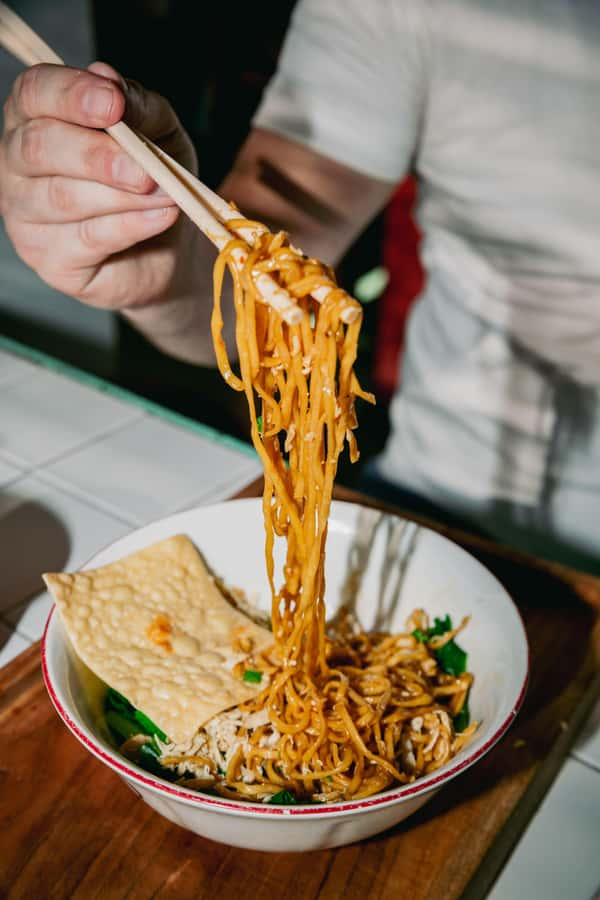
Wok-fried yamien noodles
Yamien noodles provide a savory, filling middle course. These wok-fried noodles help show the range of Indonesian food, which is shaped by local traditions as well as influences from across the region.
This is also where the number of tastings starts to matter. A noodle serving may not look huge, but after several snacks, soup, meat dishes, tofu, and sweets, you will feel the total. Save room rather than eating a large meal beforehand.
Ayam betutu and a long-running family kitchen
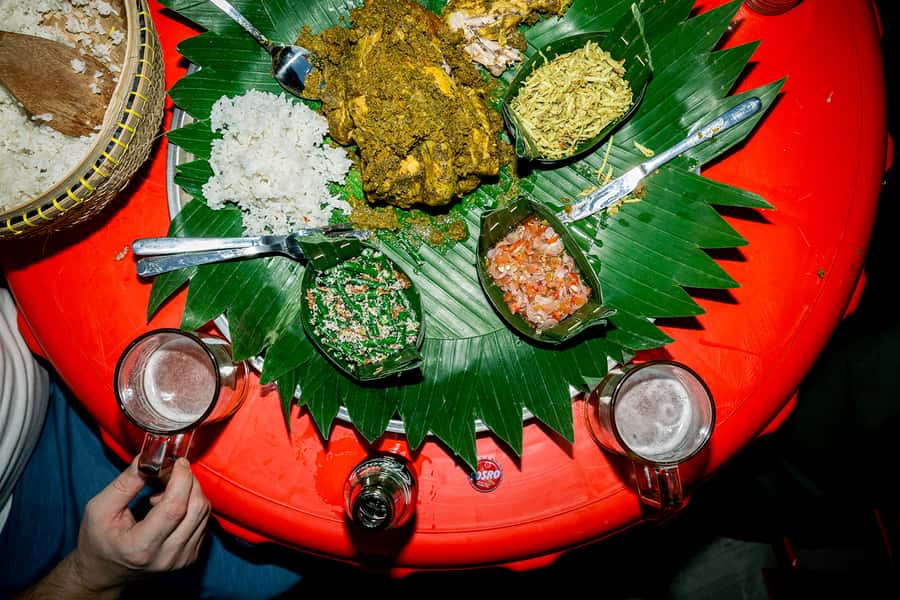
Ayam betutu is one of the most important stops on the route. This Balinese chicken dish is slow cooked with a complex spice mixture, producing tender meat and a fuller flavor than the quick grilled or fried foods served earlier.
The cooking is tied to a long-running family business, and that gives the stop more weight than a standard restaurant tasting. You are not only trying a dish. You are hearing how a family food tradition has been carried forward.
Several people particularly enjoy the chicken, and it is easy to see why it makes a strong centerpiece. The flavor may be more intense than what you find at a beach restaurant, so this stop suits diners who want to move beyond mild, familiar food.
Soto babat at a business dating back to 1969
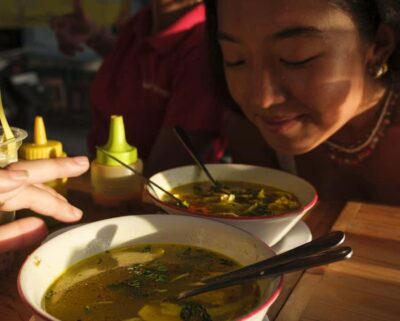
Soto babat is a beef soup made with tripe. It is one of the tour’s more adventurous tastings, and the texture may challenge you if you rarely eat offal.
The soup is served at a small business that has operated since 1969, according to the tour information. That kind of continuity gives the dish context. You can ask about the broth, the preparation, and the role of soup in local eating habits.
I would not book this tour expecting every taste to become a favorite. One of its strengths is the chance to sample foods outside your comfort zone without committing to a full bowl or plate. If tripe is a firm no for you, tell the guide early and ask what alternatives may be possible.
Tipat tahu and peanut sauce
Tipat tahu brings fried tofu and peanut sauce into the lineup. It is a good contrast to the soup and chicken, with a different texture and a sauce that can be sweet, nutty, savory, or spicy.
This stop also helps show how ordinary ingredients become satisfying street food. Tofu, rice cake, and sauce may sound modest, but the combination can be filling. By this point, the walking between stops becomes useful because it gives you time to settle before the next taste.
Market sweets and the final stop at Badung Market
The tour ends at Badung Market, one of Denpasar’s key market areas. The final part of the evening includes sweet food and time among produce sellers and local market activity.
A jackfruit ice cream sold by a street vendor has been a memorable taste for some people. Other desserts may include pancakes or additional local sweets, depending on the route and what is available that evening.
The market is more than a dessert stop. Your guide can point out ingredients used in Balinese cooking and explain what you are seeing in the produce displays. This is where the tour moves beyond eating and gives you a better sense of how food reaches the kitchen.
One practical note: the market can be busy, and the tour may not provide a long independent browsing period. If exploring markets at leisure is your main goal, you may want to return another time. The guided visit is better for orientation and food context than for unhurried shopping.
The guides make the difference
The guide is the bridge between a string of snacks and a meaningful evening. English-speaking guides including Ras, Rasyid, and Raysid have led this route. Some booking details use different spellings for the same or different guides, so you should expect an English-speaking local food guide rather than request a specific person unless the operator confirms it.
A good guide needs to do several jobs at once: explain ingredients, keep the group together, manage the food timing, translate when needed, and make a very local setting feel comfortable. Ras and Raysid are repeatedly praised for explaining Balinese traditions, the history of dishes, and the story behind each food business.
The small group limit helps. With eight people or fewer, you can hear the guide beside a street stall and ask questions without holding up a large crowd. Groups of seven already feel close to the practical limit in some places. Private tours are also available, and groups of nine or more need to contact the operator.
The tone is informal rather than academic. Expect stories, jokes, local customs, and practical explanations of how food is made. That suits this kind of outing. You are walking through a working city, not attending a cooking lecture.
Food safety and comfort: what you should know
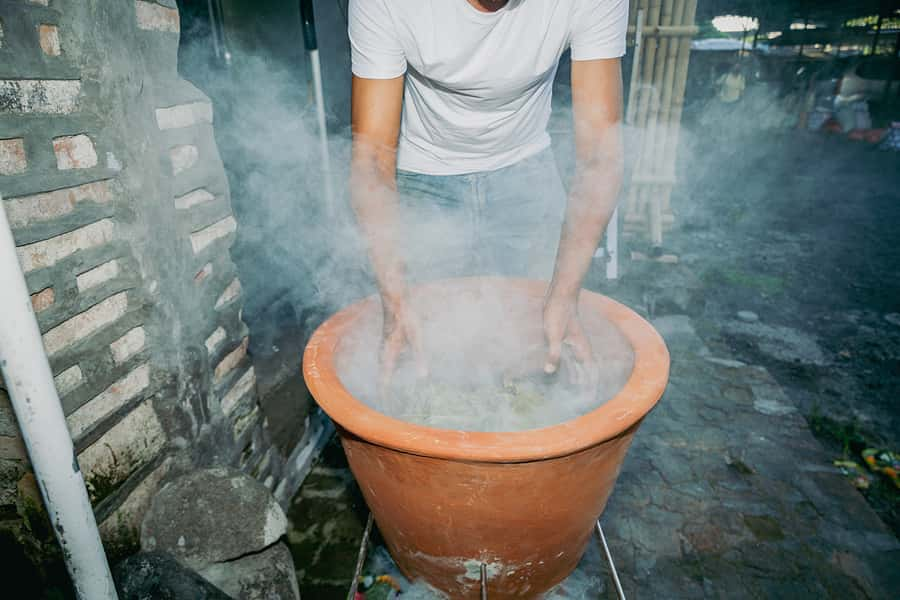
Street food always calls for sensible judgment, and this tour does not pretend it can handle every diet. The listed restrictions are important, not fine print.
The tour is marked as unsuitable for severe food allergies and celiac disease because of traces and cross-contamination. Soy sauce appears in three or four tastings, and even mild gluten intolerance should be discussed before booking. The experience is suitable only when you are comfortable with those limits.
Vegetarian options are reduced by three or four tastings because some vendors have few alternatives. The tour information also marks it as unsuitable for vegetarians and vegans. If you do not eat meat, this is not the right food tour to book simply because a few dishes may be adaptable.
Pregnant women are also listed among those who should not take part. No further medical detail is given, so follow the operator’s restriction rather than trying to negotiate it on the evening.
Several food stops use gloves and clean utensils, and the overall route is designed around established local vendors. Still, no street food experience can promise zero risk. Come with an open mind, but use your own judgment if a dish concerns you.
Wear comfortable shoes. This is an easy-paced walking tour, but there are multiple stops and street surfaces. Carry an umbrella because the tour runs in wet weather as well as dry weather. Bottled water and local nonalcoholic drinks are included.
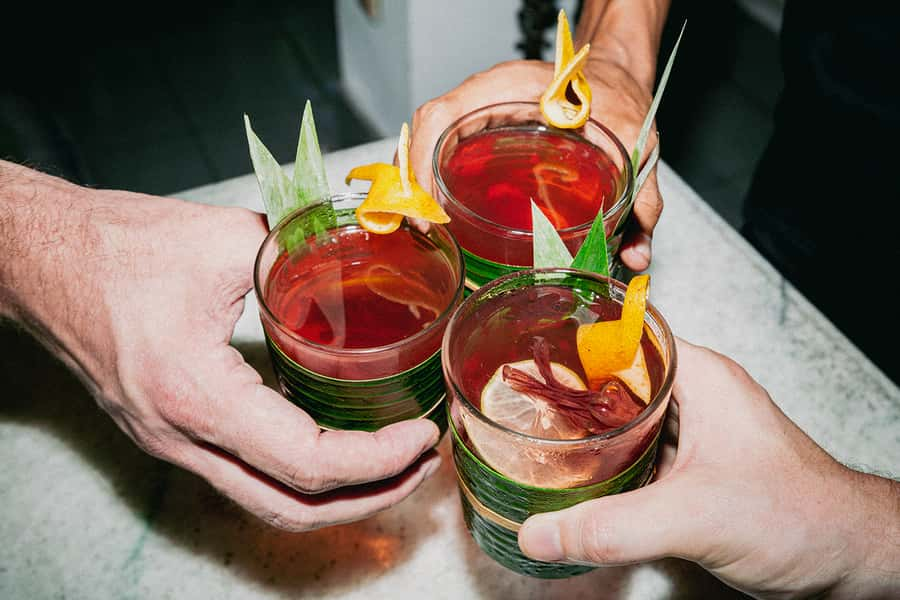
The tour description refers to a shot or two of arak, Bali’s local spirit, while the inclusions list says alcoholic drinks are not included. If arak matters to you, confirm the current arrangement before booking and do not assume alcohol is covered by the $45 price.
Is $45 good value for this Denpasar experience?

At $45 per person, the price is fair if you want a full evening of food and local orientation. You receive 15 or more tastings, drinks, a guide, and a route through seven or eight food stops. Buying that many small portions independently would take planning, language confidence, and several rides or long walks.
The better value comes from access. The most useful part is not the cost of a plate of fried banana or noodles. It is being taken to small eateries and vendors you might not notice, with someone who can explain what to order and how the dishes fit together.
The price is less appealing if you are mainly looking for a formal sit-down dinner, generous portions of one favorite dish, or a polished culinary class. It is also less attractive if dietary restrictions mean you will miss several tastings.
Duration matters here. Most outings run for three to four hours, but one booking lasted only two hours and felt rushed near the market. That appears to be an exception, yet it is worth asking the guide at the start how many stops are planned, especially if the group is very small.
Free cancellation up to 24 hours before the start and reserve-now, pay-later booking make it easier to fit into a changing Bali schedule. Those policies are useful, but the food, route, and restrictions should decide the booking.
Who will enjoy this tour most?
I would choose this tour for you if you:
- Want local Indonesian and Balinese food rather than resort menus
- Enjoy tasting many small portions instead of ordering one safe dish
- Like walking through ordinary city streets
- Are curious about offal, spice, sambal, and unfamiliar textures
- Want a guide to explain food customs and local traditions
- Prefer a small group over a large bus-style outing
I would skip it if you need strict control over ingredients, eat only plant-based food, dislike walking between food stops, or want a quiet, formal dinner. It is also a poor fit if you plan to arrive after a large lunch. The amount of food can be enough for a full lunch and dinner combined.
Families can consider it, though the route includes adventurous foods. An 11-year-old has enjoyed the experience, but children should be comfortable with new flavors and a walking evening.
Practical details for a smoother evening
Plan your route to the Inna Bali Heritage Hotel carefully, especially from the beach areas. Denpasar traffic can slow a short taxi journey, and arriving late may reduce your time at the final market stop.
Eat lightly earlier in the day. You do not need to arrive starving, but you should leave room for many samples. If you feel full halfway through, tell the guide. The portions can usually be adjusted better than forcing down every bite.
Bring phone data or arrange your onward transport before reaching Badung Market. One participant had trouble finding a Bluebird taxi there and needed help from the guide. Hotel drop-off is not included, so plan to arrange your own ride from the finish.
The route operates in rain or shine. An umbrella and weather-appropriate clothing are practical, not optional extras during Bali’s wet periods.
Should you book the Bali Bites Food Tour?
Book it if you want to understand Bali through its food rather than simply eat near the beach. The combination of old Denpasar, small warungs, long-running family vendors, a produce market, and a guide such as Ras or Raysid gives you a side of the island that is easy to miss.
The strongest reasons to go are the variety and the setting. You taste more than 15 items, but you also see where local people shop and eat. The main reasons to hesitate are dietary restrictions, the heavy quantity of food, and the possibility that a very small group may move faster than expected.
For adventurous omnivores who want a first look at Balinese and Indonesian cooking, $45 is a sensible spend. Arrive hungry, wear good shoes, and treat the menu as a food map rather than a fixed restaurant order.
FAQ
Where does the Bali Bites Food Tour start?
Meet at the terrace bar or restaurant of the Inna Bali Heritage Hotel in Denpasar. It is the outdoor bar across the road from the hotel sign with white letters.
Where does the tour finish?
The tour finishes at Badung Market in Denpasar. Hotel drop-off is not included, so arrange your own transport afterward.
How long does the food tour last?
The tour takes about three to four hours, depending on the group’s pace. Starting times vary, so check availability when booking.
How many food tastings are included?
More than 15 tastings are included, with food served across seven or eight stops around old Denpasar.
Is the tour suitable for vegetarians or vegans?
No. Vegetarian participants receive three or four fewer tastings because alternatives are limited, and the experience is listed as unsuitable for vegetarians and vegans.
Can I join if I have celiac disease or a severe food allergy?
No. The tour is unsuitable for severe allergies and celiac disease because of traces and cross-contamination. Mild gluten intolerance may be possible, but three or four tastings contain unavoidable soy sauce.
What should I bring?
Wear comfortable shoes, bring an umbrella if rain is possible, and dress for the weather. Most importantly, arrive hungry because the tour includes many tastings.
Fresh off the menu around the world
- Taste of Chiang Mai: Michelin Guide & Street Food Tour★ 4.9 · 159 reviews
- Eat Porto Like a Local: The Ultimate Full-Meal Food Tour★ 5.0 · 97 reviews
- Vienna: The Ultimate Full Meal Austrian Food Tour★ 4.8 · 112 reviews
- Jerez: Traditional Tapas Tour★ 4.6 · 138 reviews
- Taste my Fribourg Self-Guided Food Tour★ 4.5 · 29 reviews
- Taste of Albania: Tirana Food Tour★ 5.0 · 26 reviews
- Taormina Pizza making class★ 4.8 · 140 reviews
- Taormina: Pizza Making Class with Lunch and Wine Tasting★ 4.8 · 145 reviews
Indonesia Food Tours, compared.
Small-Group Walking and Food Tour by Night in Yogyakarta
Read our review →
Bali Private Food Walking Tour With Locals: The 10 Tastings
Read our review →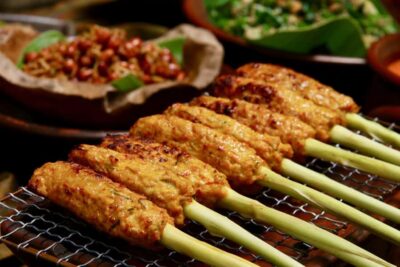
Bali: Authentic Culinary Street Food Experience Tour
Read our review →
Jakarta: Private Guided Sightseeing & Street Food Night Tour
Read our review →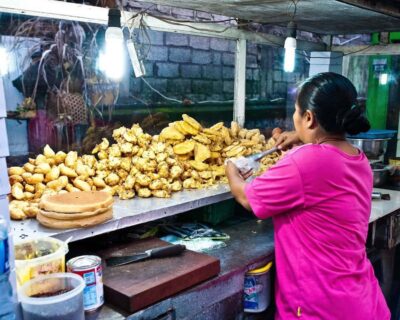
Browse the lists this tour appears in