Review · KIGALI
Kigali: Guided Art, History, and Food Tour with Moto Ride
Kigali reveals itself quickly on this history, art, and food tour, beginning at the Kigali Genocide Memorial and ending among the stalls of Kimironko Market. In between, you ride motorcycle taxis through the hills, stop for Rwandan art, eat in Biryogo, and get a useful first look at the city.
I like the way guide Aline connects serious history with ordinary city life. I also like the practical lesson in using motos, including how to meet a driver and get around Kigali more confidently afterward. The main catch is cost clarity: the $25 tour price does not include moto fares, food, or drinks, and the listed stop times add up to more than the advertised three hours.
Key points to know before booking
- Start with Kigali’s most important memorial: Allow about 90 minutes for the Kigali Genocide Memorial, and treat this stop with the respect it requires.
- Aline is the personal touch: She speaks English, French, Swahili, and Kinyarwanda, and can explain both city sights and practical local customs.
- Moto rides make the route feel local: Bring cash for motorcycle taxi fares, and expect this transport to be part of the experience rather than an included extra.
- Biryogo is your food stop: The car-free street offers local dishes and drinks, but meals are not included unless specifically stated at booking.
- Niyo Art Center adds color and context: You see work by Rwandan and African artists, with time to look around rather than simply pass by.
- The route ends at Kimironko Market: It is a good place for local shopping and photos, though the market can feel busy and requires attention to belongings.
Why this is a strong first look at Kigali
A three-hour city tour can easily become a drive-by list of sights. This one has a better shape. You begin with Rwanda’s past, move into its art and food, then finish with the daily trade of a local market. That order helps you understand Kigali as a living city, not just a collection of attractions.
The tour is led by Murekezi Aline, usually introduced simply as Aline. Her approach appears especially suited to solo visitors and first-time arrivals. She has helped people get comfortable with motorcycle taxis, answered questions well beyond the scheduled stops, and adjusted parts of the route around personal interests when time allowed.
I would book this early in a Kigali stay. You get a useful introduction to neighborhoods, food, local transport, and city-center landmarks in one outing. It also gives you a chance to ask the questions that are hard to answer from a guidebook, such as how to find a moto meeting point or how to approach a market without feeling lost.
The group may be small, and if you are the only person booked, the experience can feel more like a private orientation than a standard group excursion. That personal quality is one of the strongest reasons to choose it.
More food history walks around the world:
- Barcelona: Tapas Walking Tour with Food, Wine, and History
★ 4.8 · 4,261 reviews - Sevilla Food Tour: Tapas, Wine, History & Traditions
★ 5.0 · 3,468 reviews - Madrid Tapas & Taverns Small Group Food & History Tour
★ 5.0 · 2,664 reviews
Starting at the Kigali Genocide Memorial
The tour begins at the main entrance of the Kigali Genocide Memorial. Look for the designated check-in room and a guide wearing a uniform with the Tourwithaline logo. You should also provide a working phone contact when booking, since the guide may need to reach you at the meeting point.
This is not a light opening stop. The memorial presents the story of the 1994 Genocide against the Tutsi and offers a place for remembrance and reflection. The visit is scheduled for about 90 minutes, making it the longest part of the experience for good reason.
You may choose to pay for an audio guide, but it is optional. The live guide can provide context and answer questions, while the audio option may suit you if you prefer to move through the exhibits at your own pace. Ask about the balance between the two before entering.
Give yourself emotional space here. The memorial is not simply another attraction to tick off before lunch. Dress and behave respectfully, keep your voice low, and avoid treating the grounds as a casual photo stop. The tour’s strength is that it does not avoid difficult history, but the short schedule means you should not expect a full study of Rwanda’s past.
For some people, this will be the most important stop in Kigali. For others, it may feel heavy, especially early in a trip. That is not a flaw, but it is a real consideration. If you need more time at the memorial, ask Aline whether the rest of the route can be shortened or adjusted.
Niyo Art Center and the city’s creative side
After the memorial, the mood shifts at Niyo Art Center. The visit is listed as about 20 minutes, so expect a focused look rather than a long gallery session. You will see work by Rwandan and African artists, with color, local stories, and cultural themes taking the place of formal historical exhibits.
This stop matters because it shows Kigali through present-day creativity. The memorial explains a painful chapter of the country’s past. The art center gives you another view of Rwanda, one shaped by artists, design, memory, and daily life.
If you care about art, tell Aline at the start. One guest with a strong interest in galleries was taken to two art spaces instead of only one, showing that the route can sometimes bend around your priorities. That kind of flexibility depends on time and the day’s arrangements, so treat it as a possibility rather than a guarantee.
The art center also has a café, and a mango smoothie became a memorable part of one visitor’s stop. Food and drinks are generally extra, but this is a useful place to consider a refreshment if the day is warm.
The short timing is the main limitation. You may feel that 20 minutes is not enough to study much of the work or shop at leisure. Still, as an introduction to Kigali’s art scene, it is a welcome change from a sightseeing plan based only on monuments.
Riding a moto through Kigali
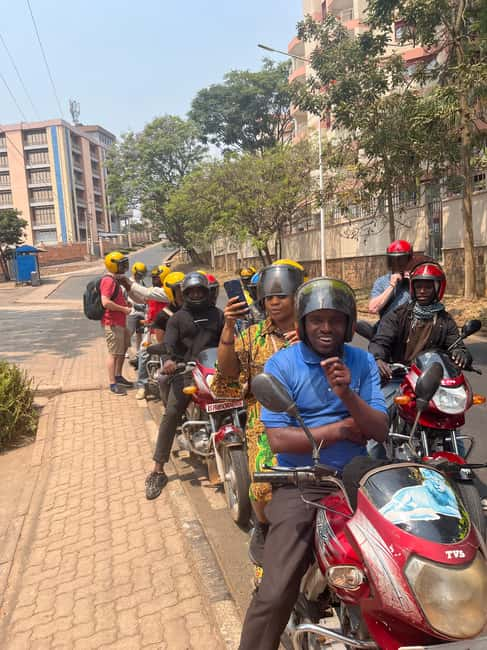
The motorcycle taxi section is one of the tour’s most distinctive features. Instead of spending the whole route in a car, you move between stops by moto, seeing the city at street level and handling short journeys the way many local residents do.
Bring cash. Moto transport is not included in the $25 price, and fares must be paid separately. The supplied information does not give a fixed transport charge, so you should ask Aline about the expected amount before setting off.
For a first day in Kigali, this can be genuinely useful. Aline can show you how to arrange a ride, where to meet the driver, and how the system works. One practical advantage is that you finish the tour with more confidence about getting around independently.
The ride is not suitable for everyone. Pregnant women, children under five, and wheelchair users should not book this experience. If you have an injury or are uncomfortable on a motorcycle, tell the guide in advance. A participant with a sports injury skipped the motos and still completed the main sightseeing route, so an alternative may be possible, but it needs to be discussed rather than assumed.
Wear secure clothing and comfortable shoes. Carry only what you need, keep your phone and camera secure while moving, and remember that the ride is transportation first, not a dedicated motorcycle excursion. Its value is the local feel and the time saved between neighborhoods.
More guided tastings around the world:
- Dubai: Old Town, Souks, Street Food, Guided Tour & Abra Ride
★ 4.9 · 7,170 reviews - Hanoi: Guided Food Tour with Train Street Visit
★ 4.9 · 6,239 reviews - Naples: Street Food Walking Tour with Local Guide
★ 4.9 · 4,976 reviews - Amsterdam: Guided Zaanse Schans, Windmills & Cheese Tour
★ 4.4 · 4,826 reviews
Eating on Biryogo Car Free Food Street
Biryogo Car Free Food Street is where the tour turns toward everyday food. After the moto ride, you walk through the area and stop for local dishes and drinks. The exact tasting choices are not specified, so ask what is available on the day and how much you should budget.
This is a good setting for trying food with guidance. You can ask what a dish contains, how it is usually eaten, and which drink pairs well with it. The stop is less formal than a restaurant meal, which makes it useful for people who want to understand how Kigali eats outside hotel dining rooms.
Food and drinks are not included in the base price unless your booking specifically says otherwise. That matters because $25 sounds very low for a tour combining several parts of the city. The price is good value, but you should carry extra cash for the meal, beverages, and motos.
The schedule lists about an hour for this part of the route. That gives you time to eat and walk, but not necessarily time for a long sit-down meal. If you have dietary restrictions, tell Aline before the tour begins. The available information does not promise specific dietary arrangements, so do not wait until you arrive to raise the issue.
I like this stop because it keeps the tour from becoming purely historical. You learn about Kigali by tasting something, walking through a neighborhood, and watching the city’s ordinary rhythm. That balance is a major reason this outing works well as an introduction.
The Kigali sign and a short city-center walk
After Biryogo, the plan includes a walk to the iconic Kigali sign in the city center. The photo stop is scheduled for about 30 minutes, giving you time for pictures rather than a long lecture.
This is the lighter section of the tour. You can use it to take a few personal photos, record the route in your memory, and ask Aline about the central area. The sign is a straightforward stop, but it breaks up the more serious memorial visit and the sensory rush of the food street.
Do not expect the city-center photo stop to explain every major building or neighborhood. Its value is simple: it gives you a recognizable image from Kigali and a chance to walk between experiences. If photography matters to you, tell Aline. She has been praised for taking photos during the tour, which can be especially helpful when you are exploring alone.
Finishing at Kimironko Local Market
The final stop is Kimironko Local Market, reached by another moto ride. The market offers local goods, produce, clothing, crafts, and other items, although the exact selection changes. You will have the chance to browse and see a busier side of Kigali’s commercial life.
Aline can help you understand what you are seeing and may assist with bargaining. That is useful if you want to buy gifts but are unsure how to negotiate politely or judge a reasonable price. Still, treat any purchase as your own decision. Do not feel pressured to buy simply because you have reached the market.
The market is a better ending than a return to a hotel because it leaves you with practical options. You can continue shopping, practice moving around independently, or use the experience to plan a later visit. The tour finishes here rather than returning you to your accommodation, so arrange your onward transport before you arrive.
Keep your phone, wallet, and camera secure in crowded areas. The market may feel energetic, and the final half hour can pass quickly if you find something interesting. If shopping is your priority, tell Aline early so she can help protect enough time for it.
What the $25 price really includes
At $25 per person, this is a strong-value introduction to Kigali. The price covers the live guide, the memorial visit, Niyo Art Center, Biryogo, the city-center sign, and Kimironko Market. It also gives you a local introduction to moto transport, which can save confusion during the rest of your stay.
The extras are important:
- Moto fares are paid separately in cash.
- Food and drinks are not included unless clearly specified.
- The Genocide Memorial audio guide is optional and costs extra if you choose it.
- Hotel pickup and drop-off are not included.
The itinerary timing needs a quick check. The individual sections are listed as 90 minutes, 20 minutes, 60 minutes, 30 minutes, and 30 minutes. Added together, that is longer than three hours, before accounting for motorcycle rides and walking. Ask for the expected schedule when you book, especially if you have an airport transfer, dinner reservation, or another fixed plan afterward.
Free cancellation up to 24 hours before the start gives you some flexibility, and you can reserve now and pay later. Those terms are useful if your Kigali plans are still moving around.
Who will enjoy this most
I would choose this tour if you are in Kigali for the first time, especially if you are traveling alone or want a quick introduction before exploring on your own. It suits people who prefer conversation and local context over a polished coach tour.
It is also a good match for anyone interested in several subjects at once:
- Rwanda’s modern history
- African and Rwandan art
- Street food and local drinks
- Market shopping
- Motorcycle taxi transport
- City-center photography
The tour is less suitable if you want a slow museum visit, a fully included meal, private car transport, or a guaranteed three-hour schedule with no changes. It is also not appropriate for children under five, pregnant women, or wheelchair users.
Aline’s ability to speak English, French, Swahili, and Kinyarwanda is a practical advantage. If you have a particular interest, such as art, food, or market shopping, mention it before the route begins. The experience can sometimes be tailored, but the available time still sets limits.
Should you book this Kigali tour?
Book it if you want a personal first day in Kigali rather than a simple list of landmarks. The combination of the memorial, art center, food street, city sign, and market gives you several ways into the city, while Aline’s help with motos adds practical value that lasts beyond the tour.
Bring cash, water, sunscreen, comfortable walking shoes, and a camera. Prepare yourself for the serious memorial visit, and confirm the day’s timing and expected moto costs before you start.
Skip it if motorcycle transport is a firm no, if you need wheelchair access, or if you want every meal and transfer included. For most independent visitors who want history, local food, art, and a friendly orientation for a modest price, this is one of the more useful ways to get your bearings in Kigali.
FAQ
How much does the Kigali art, history, and food tour cost?
The tour costs $25 per person.
How long does the tour last?
The advertised duration is three hours. The listed stop times add up to longer than three hours, so confirm the expected schedule when booking.
Where does the tour begin?
It begins at the Kigali Genocide Memorial, near the main entrance and designated check-in room.
Where does the tour finish?
The tour finishes at Kimironko Local Market.
Who guides the tour?
The experience provider is Murekezi Aline, usually referred to as Aline.
Which languages does the guide speak?
The live guide is available in English, French, Swahili, and Kinyarwanda.
Are moto rides included in the price?
No. Moto transport is not included, so bring cash to pay the motorcycle taxi drivers.
Are food and drinks included?
Meals and drinks are not included unless specifically stated in your booking.
Is the Genocide Memorial audio guide included?
No. The audio guide is optional and is not included in the tour price.
What should I bring?
Bring comfortable shoes, a camera, sunscreen, water, and cash. Smoking is not allowed, and you should behave respectfully at the Genocide Memorial.
Fresh off the menu around the world
- Taste of Chiang Mai: Michelin Guide & Street Food Tour★ 4.9 · 159 reviews
- Eat Porto Like a Local: The Ultimate Full-Meal Food Tour★ 5.0 · 97 reviews
- Vienna: The Ultimate Full Meal Austrian Food Tour★ 4.8 · 112 reviews
- Taste my Fribourg Self-Guided Food Tour★ 4.5 · 29 reviews
- Taste of Albania: Tirana Food Tour★ 5.0 · 26 reviews
- Jerez: Traditional Tapas Tour★ 4.6 · 138 reviews
- Taormina Pizza making class★ 4.8 · 140 reviews
- Taormina: Pizza Making Class with Lunch and Wine Tasting★ 4.8 · 145 reviews
Food Tours, compared.
Reykjavik Food Walk – Local Foodie Adventure in Iceland
Read our review →
Dubai: Old Town, Creek, Museums, Souks, & Street Food Tour
Read our review →
Madrid: Live Flamenco Show with Food and Drinks Options
Read our review →
Ho Chi Minh City Street Food Tour & Sightseeing By Motorbike
Read our review →
From Split: Krka Waterfalls, Food & Wine Tasting Tour
Read our review →
Medellin: Comuna 13 Graffiti Tour, Cable Car & Street Food
Read our review →
Montserrat Half-Day Tour with Tapas and Gourmet Wines
Read our review →